
 |
Since the Ministry of Health and Population (MoHP) has decided to conduct a surveillance in Kathmandu on chikungunya, a strange-sounding viral illness, it is relevant to find out more about this disease. Clearly even healthcare experts in Kathmandu do not know much about this 'new' illness.
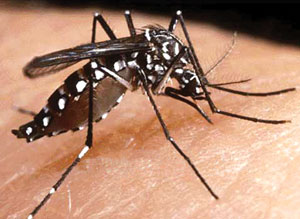
Chikungunya is a viral illness that is closely related to the dengue virus which is known to be present in Kathmandu. Both are transmitted by the vector mosquito (Aedes Aegypti) and result in a similar set of symptoms.
The patient complains of fever, headache, back pain along with skin rash. A remarkable distinction between chikungunya and dengue fever is the inflammation (arthritis) of small joints of the hands which is usually not found in dengue fever.
For chikungunya, as in dengue, there is no specific treatment, only paracetamol and other symptomatic treatment. There is also no vaccine available. Protective clothing, use of insect repellents (odomas) and other measures to prevent daytime mosquito bites (as opposed to nighttime mosquito bites for malaria transmission) are important prevention methods. Public health measures like not letting water collect in used tyres, flower pots, and plastic containers where mosquitoes breed are also vital. The good news is that in most instances like dengue fever, this disease is self-limiting and most people recover.