
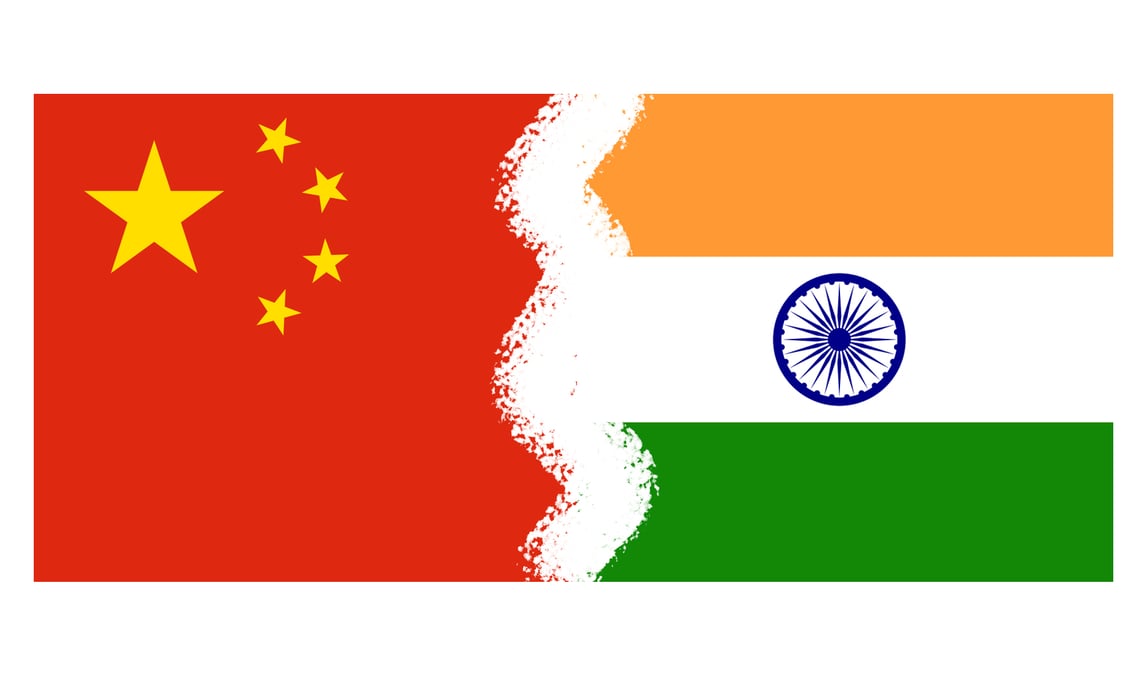
In June 2020, incursions by Chinese Army into the fraught borderlands of India’s Ladakh region triggered bloody clashes that killed 20 Indian soldiers, plunged bilateral relations to their lowest point in decades, and led to a prolonged military standoff.
In November, China and India have reached a truce, though many in India would prefer to hold their applause. Since the 2020 violence, bilateral relations have remained frozen, and India wants China to take steps to restore the status quo ante at the border. China’s unprovoked encroachments across the Line of Actual Control (LAC) in eastern Ladakh are to blame for disturbing the peace in the first place.
To show it meant business, India slowed down approvals of Chinese investments; tightened visa approvals for Chinese nationals, and canceled direct flights between the two countries. India toughened its stance on Chinese territorial claims in the Pacific, and made pointed political gestures that were bound to displease China, like responding warmly to the Taiwanese president’s congratulatory message after Modi’s re-election. (There was also talk of Taiwan allowing Indian workers.)
While the recent truce suggests that China has finally gotten the message, it is difficult to shake the impression that India was the more anxious of the two parties to reach an agreement. In fact, India’s economic establishment appears largely convinced that, far from pursuing a strategy of decoupling, or at least ‘de-risking’, vis-à-vis China, India should be using Chinese capital to fill its own investment gaps.
Given that bilateral trade has reached its highest-ever levels despite the political tensions, it comes as no surprise that India’s business community has reportedly been pressing the government to conclude an agreement that would facilitate economic engagement. In July, the government’s chief economic adviser openly advocated a strategy that would increase Chinese investments in India and deepen Indian integration into Chinese supply chains.
There were indications over the last few months that an agreement to end the Ladakh standoff was forthcoming. And a deal did soon emerge, allowing both China and India to resume patrols along the frontier.
But significant areas of concern remain. As the political commentator Brahma Chellaney observed, when Narendra Modi and Xi Jinping met at the BRICS Summit in Kazan after the truce was announced, their respective ministries produced very different statements. Whereas India described the accord as a step toward a ‘multipolar Asia and a multipolar world’, China referred only to a ‘multipolar world’. The implication was subtle but clear: Asia belongs to China.