
 |
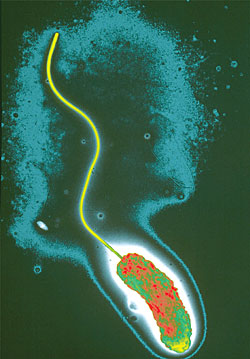
Cholera like typhoid is spread by fecal oral transmission and is endemic in Nepal. The bacteria, vibrio cholerae, produces a potent toxin which may lead to severe dehydrating diarrhoea and death within 12 hours. Clinically, however, a cholera- bug infected person may span a spectrum from being an asymptomatic carrier to a severely debilitated patient.
Even in the medical profession, many do not know that a cholera carrier (just like a healthy typhoid carrier) existed until the Haiti outbreak. Cholera, although a localised phenomenon in South Asia for centuries, has demonstrated the ability to spread internationally. Ten months after the devastating earthquake of 12 January, 2010 in Haiti, cholera resurfaced there for the first time in a century. The outbreak afflicted 300,000 people and claimed 4,500 lives and continues to be an ongoing problem. The source of this cholera has been a topic of serious debate. There are three theories.
The first suggests that subsequent to the earthquake, ocean currents from the Gulf of Mexico arrived with the pathogen to the shores of Haiti. The second hypothesis holds that a local non-pathogenic strain endemic inHaiti naturally mutated into a virulent pathogen. The third, and controversial, theory attributes the spread of cholera in Haiti to an infected human (possibly a carrier) from an endemic country outside of the Americas.