
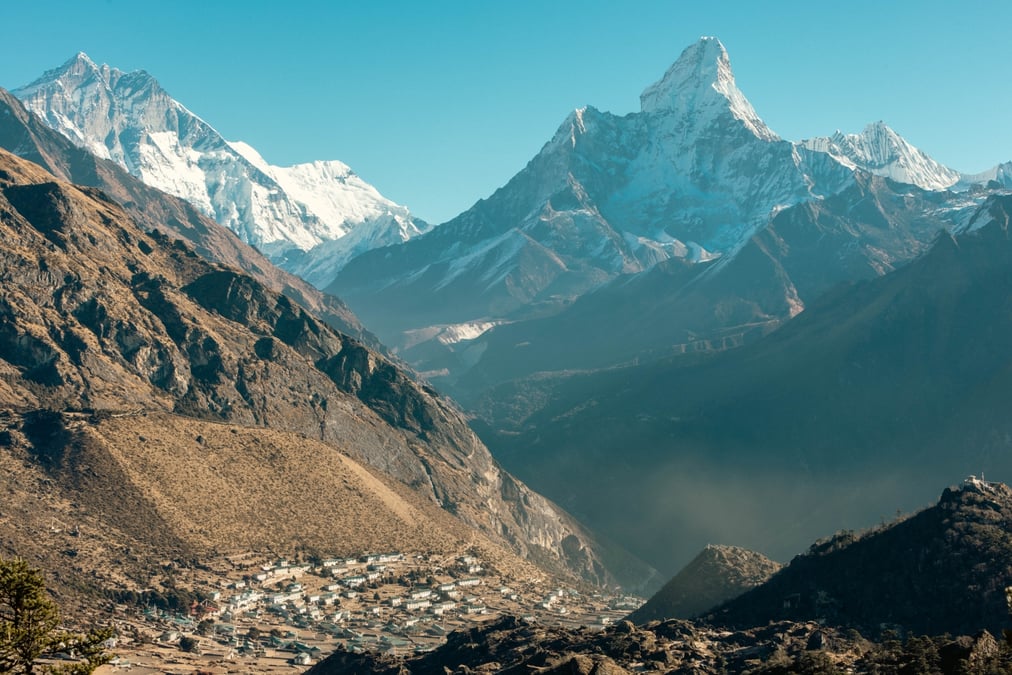
At Kathmandu airport, hundreds of visitors loaded with backpacks and trekking gear fly daily to the Khumbu region, the gateway to Everest.
Whether trekking, climbing mountains, or engaged in spiritual retreats, this sacred Himalayan valley offers exceptional adventures amidst the icy peaks.
But this comes at a price. Each year, the Khumbu welcomes between 60,000 and 100,000 people, visitors and porters combined, generating thousands of tons of solid waste that threatens the fragile ecosystem already under pressure due to global climate change.
Active since 1991, the Sagarmatha Pollution Control Committee (SPCC) has managed waste on trekking trails, base camps, within communities below some of the highest mountains in the world.
“Our first phase aimed to clean the trails,” says Yangji Doma Sherpa of the SPCC, adding that while they were successful at controlling litter along the popular trekking trails, the common practice of burning and burying tons of plastics, tin cans, glass, electronic and even medical wastes continued largely unchecked.
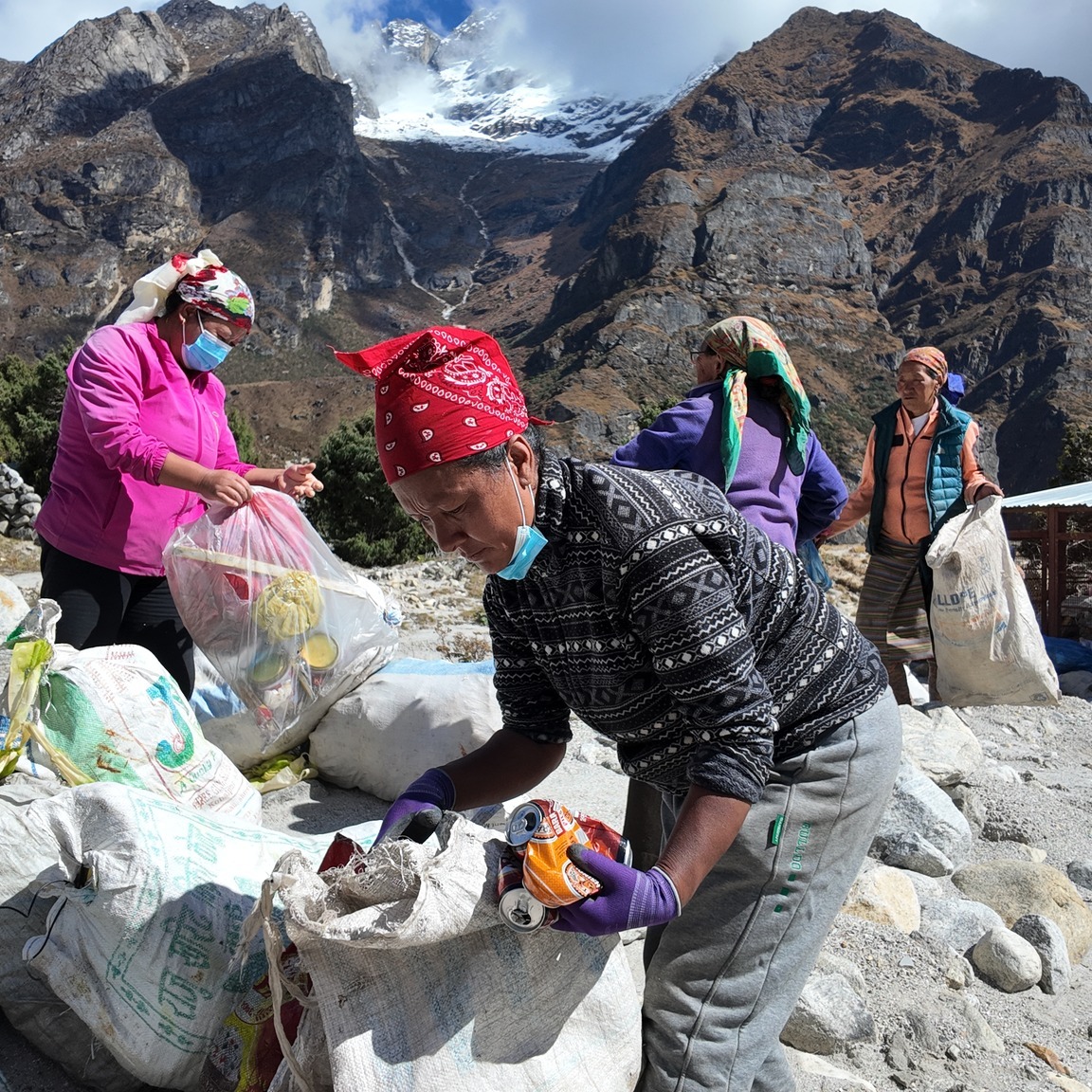
But the good news is that several different kinds of solid waste materials can be recycled in Nepal, such as aluminium, tin and steel cans, and PET plastic, while organic edible waste is used for compost and animal feed and paper reused by locals.
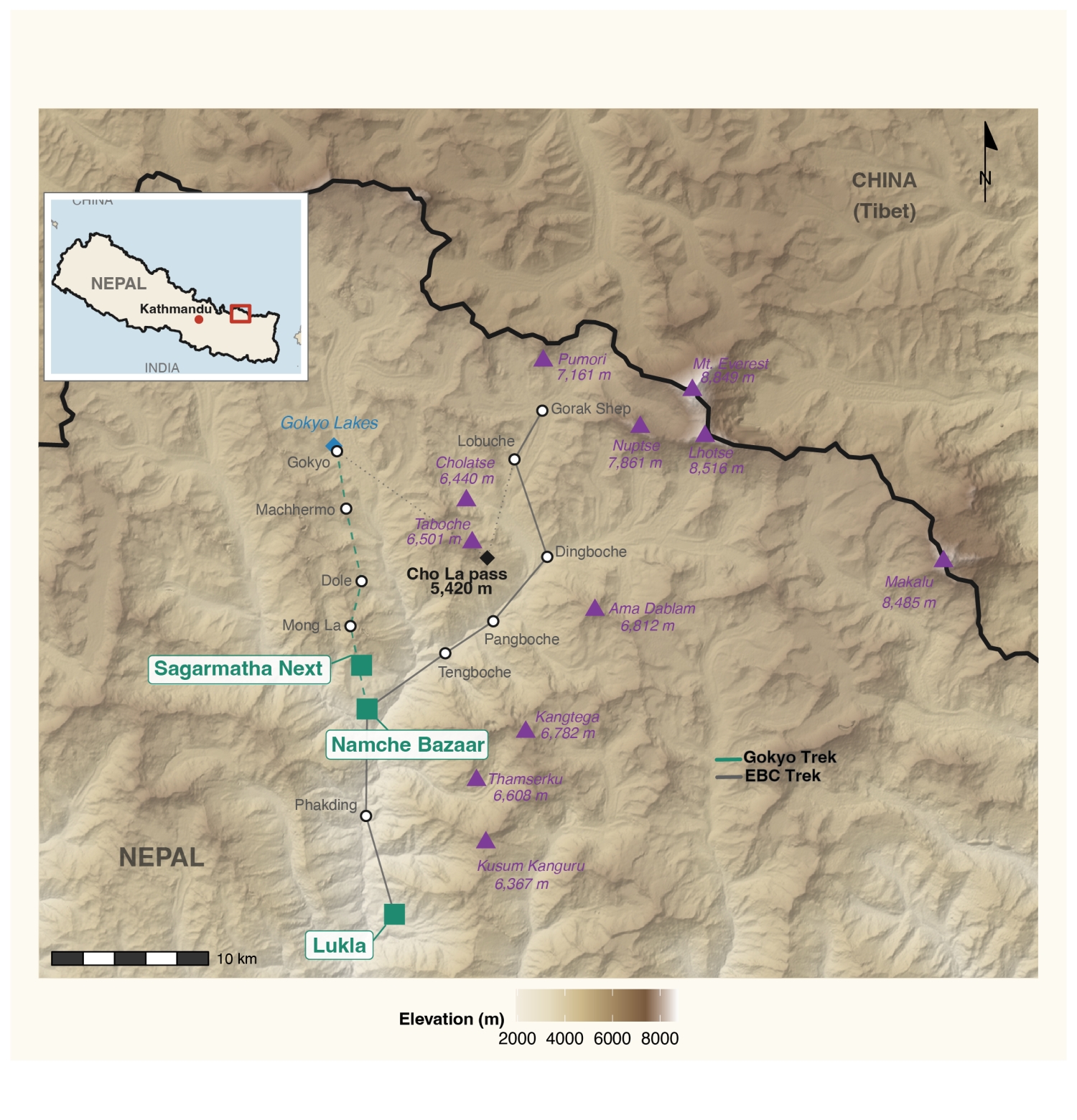
Since 2022, the non-profit Sagarmatha Next in Namche Bazar has been raising awareness among local communities and visitors alike about alternative waste management practices while supporting the work of the SPCC to develop a form of tourism that is more respectful of the environment and Sherpa traditions while reducing trash.
In response to requests from the local government and communities, Sagarmatha Next co-founder Tommy Gustafsson teamed up with mountain geographer and conservationist Alton C. Byers of the University of Colorado Boulder and Arizona State University environmental anthropologists Milan Shrestha and Netra Chhetri to develop a solid waste management plan with SPCC and local stakeholders.
“Sagarmatha Next and SPCC had already conducted a detailed survey of all 70 plus landfills located within the park, including their locations, contents, size, and probable impacts,” says Byers.
“Once we understood the local point of view and their expressed request for help in developing a solid waste management plan, it was fairly simple to put together a plan that emphasised recycling, re-use, reduction, and greater use of locally available food, as opposed to the non-sustainable practices of constantly burning and burying solid waste.”
The plan, supported by a National Geographic Grant awarded in 2019, was developed and finalised in 2020. Then in 2023, SPCC and Khumbu Pasang Lhamu Rural Municipality (KPLRM) developed the Sustainable Waste Management Plan of Khumbu, incorporating major strategies proposed by the 2020 solid waste management plan.
Since then, SPCC and KPLRM have been conducting waste management activities consisting of three stages:
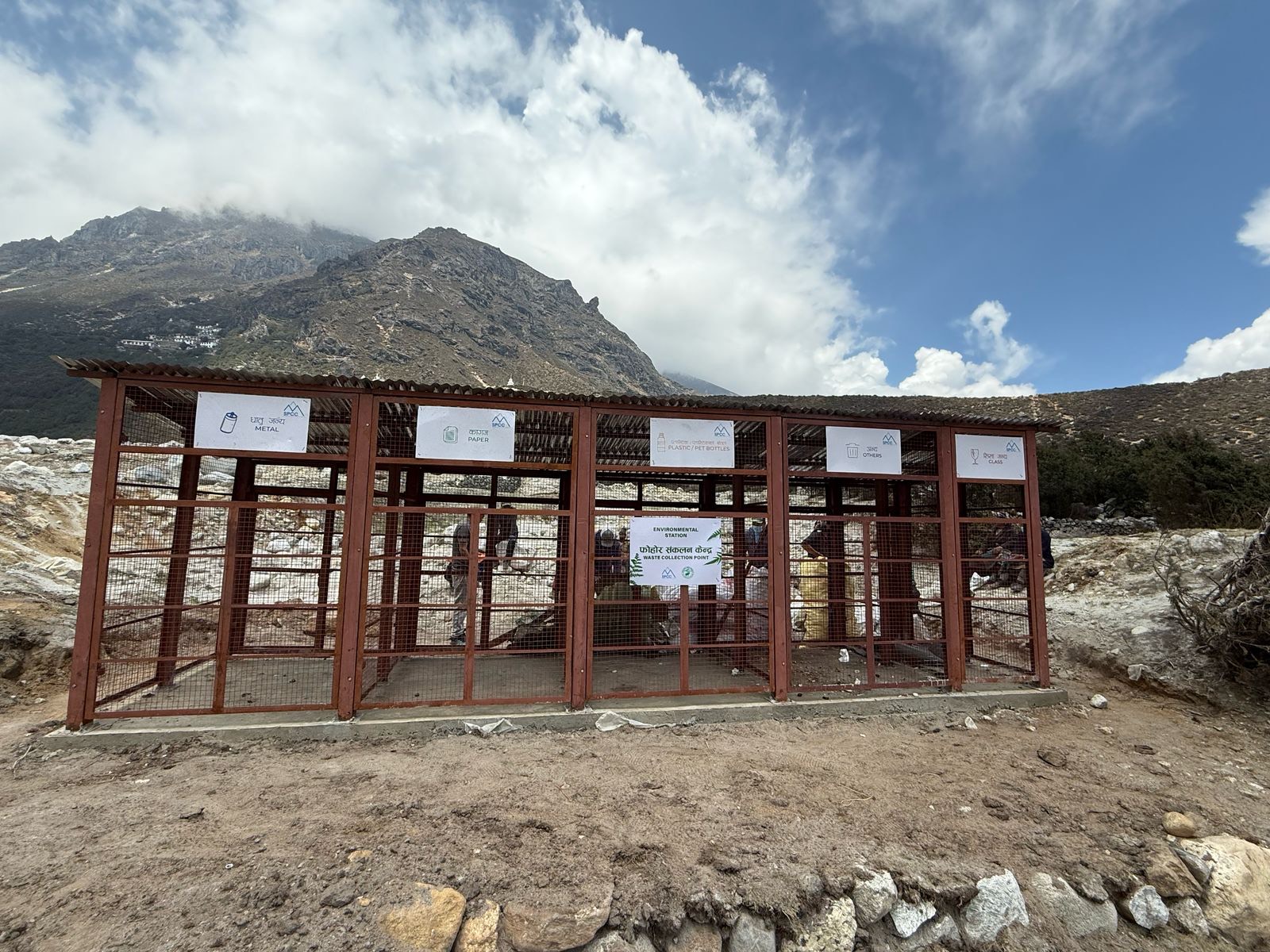
Collection and sorting the waste at “Environmental Stations” located in most villages
Pre-processing and packaging the waste at “Material Recovery Facilities”
Transporting the pre-processed waste to Kathmandu for recycling or disposal
To date, the SPCC has constructed 125 garbage bins primarily located along trekking trails and in some schools; nine Environmental Stations throughout Khumbu with another 18 planned; and one of the much more expensive Material Recovery Facilities in Namche, with a second one planned for construction in Lukla.
AWARENESS, ACTION, ART
Sagarmatha Next acts as an awareness centre that also provides financial support to SPCC and local community actions.
“Our role is to awaken consciousness, inspire everyone who comes, and to explain what's being implemented from the collection point to recycling,” explains Gustafsson, co-founder of Sagarmatha Next, a mountaineer and former business executive who has lived in Nepal since 2016.
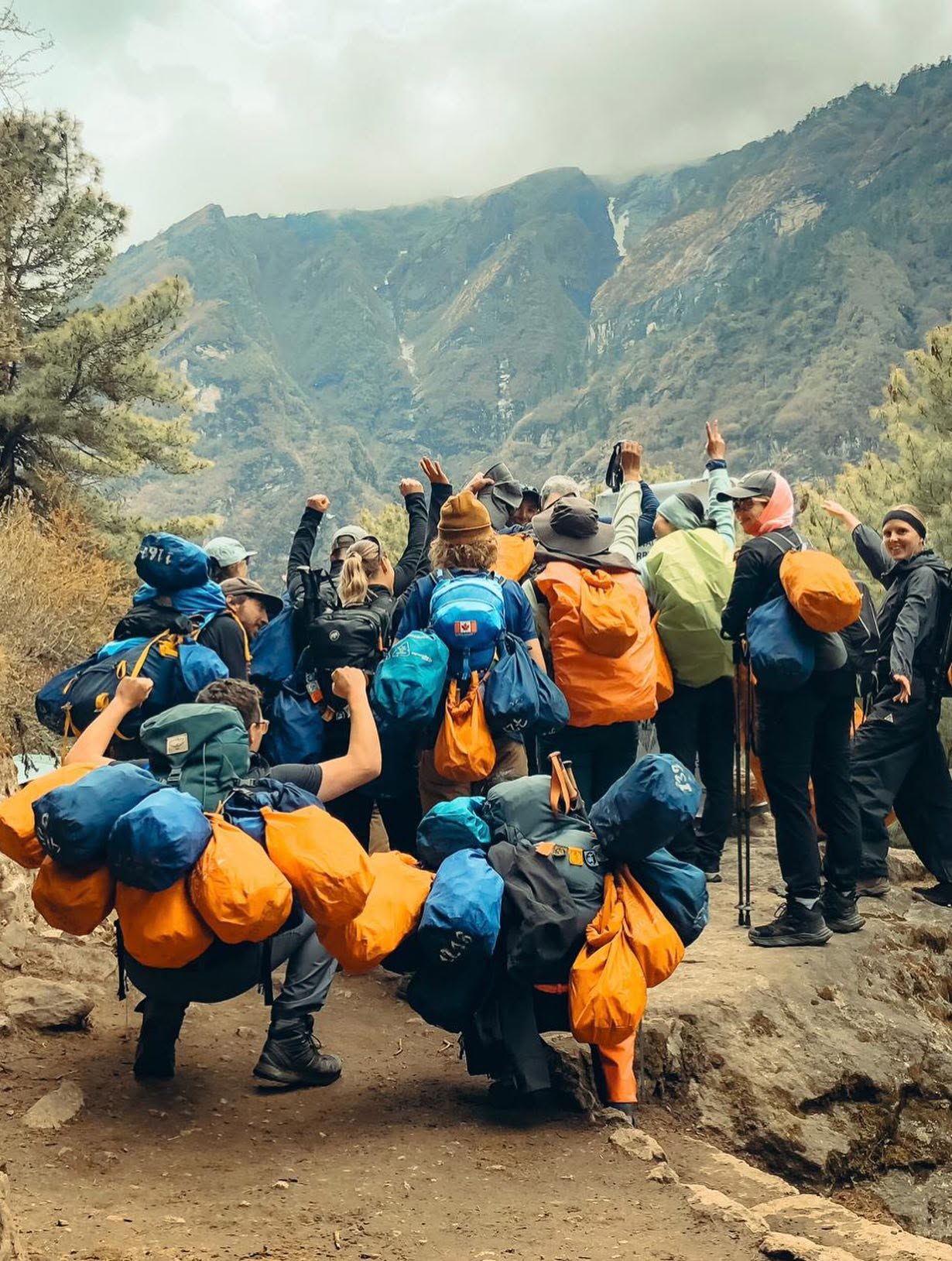
SPCC and Sagarmatha Next launched the ‘Carry Me Back’ initiative, where each trekker transports 1kg bags of pre-processed waste from collection points to the Lukla airstrip, facilitating their transport to Kathmandu.

“Every trekker can participate and leave something behind, for the environment and future generations, which gives much deeper meaning to the journey,” explains Laxman Lama Blon, operations manager at Sagarmatha Next.
Visitor feedback is generally very positive. Over the past four years, more than 35,000 participants have carried out over 45 tons of waste through this initiative.
Beyond concrete actions, transforming the perception of waste constitutes a strong ambition of Sagarmatha Next. Visitors to the centre immerse themselves through interactive tools offering perspective on the valley's history, challenges, prospective solutions, virtual reality experiences, and an art gallery where local and international artists exhibit their creations. Since 2022, more than 75,000 people have visited.
Estonian artist Ines-Issa Villido, in residence at the centre in the fall of 2025, says: “Sagarmatha Next is a place of connection, at the heart of where problems exist. Waste is an integral part of my work; it offers the opportunity to transmit the message more powerfully. It requires combining creativity and technical skills to create something complete and beautiful from waste. It's intriguing and fun.”
This waste management model with support from local communities, could eventually serve as a model for waste management systems in other high remote mountain regions of the world facing similar challenges.
FUTURE CHALLENGES
Every spring, the SPCC ‘Icefall doctors’ set ladders and fixed ropes on Everest, securing the route from base camp to Camp 2. The first to arrive and the last to leave, SPCC staff are also responsible for managing and carrying waste back down.
The process begins at base camp: solid waste is transported to Gorakshep, where it is first sorted and segregated, then brought down to Namche using dzopkio. Recyclable waste is taken further down to Surke by mule, and onward to Kathmandu.
According to Yangji Doma Sherpa, 7,000kg of waste was carried down to the capital in 2025 and a further 5,000kg of ‘Carry me Back’ waste was handed over to Blue Waste, the recycling company in Kathmandu.
Above base camp, beyond 6,000m, solid and human waste often remains frozen in the ice, exacerbating the threat to human health and high altitude ecosystems. As one promising counter-measure, each climbing expedition is now required to pay a refundable $4,000 garbage deposit through its trekking agency to the Department of Tourism once the agency obtains the team’s climbing permit.
The trekking agency then registers with SPCC upon entering the Khumbu, and compliance is verified before the deposit is returned.
Starting in 2015, the SPCC has enforced an 8kg garbage rule: each climber must return 8kg of waste from above base camp, with at least 2kg from Camp 2 and above starting from the 2026 season, and must also use SPCC-issued human waste bags.
Similar requirements apply on other popular peaks, including Ama Dablam, where climbers are required to bring down 3kg of waste and their human waste bags. The SPCC also maintains offices at Lobuche Peak and Island Peak base camps.
But the challenges remain. French alpinist Benjamin Védrines has witnessed the dilemma of managing human and solid waste in the cryosphere while on expedition in Pakistan. He explains that at base camp waste and human excrement were collected by high altitude porters in boxes and drums respectively, then carried on mules to a village some five days’ walk away.
Higher up, a dedicated local team climbed each year to Camp 2 to recover what it could, although a large amount of waste stayed frozen in the ice, and the team lacked the means to stay longer or go further.
“The intention is beautiful. But it saddened me to see these men going up to Camp 2: they were taking colossal risks… of losing their lives. It seemed surreal,” he says.
Védrines believes that drones may represent a tangible alternative in the foreseeable future. On Everest in Nepal, cargo drones have already been successfully tested to bring waste down from Camp 1. Drones are not yet able to reach the highest camps, where collection is still left to Sherpa and western climbers and occasional cleanup campaigns.
Whatever the tools, change must begin with each of us, visitors and local communities alike.
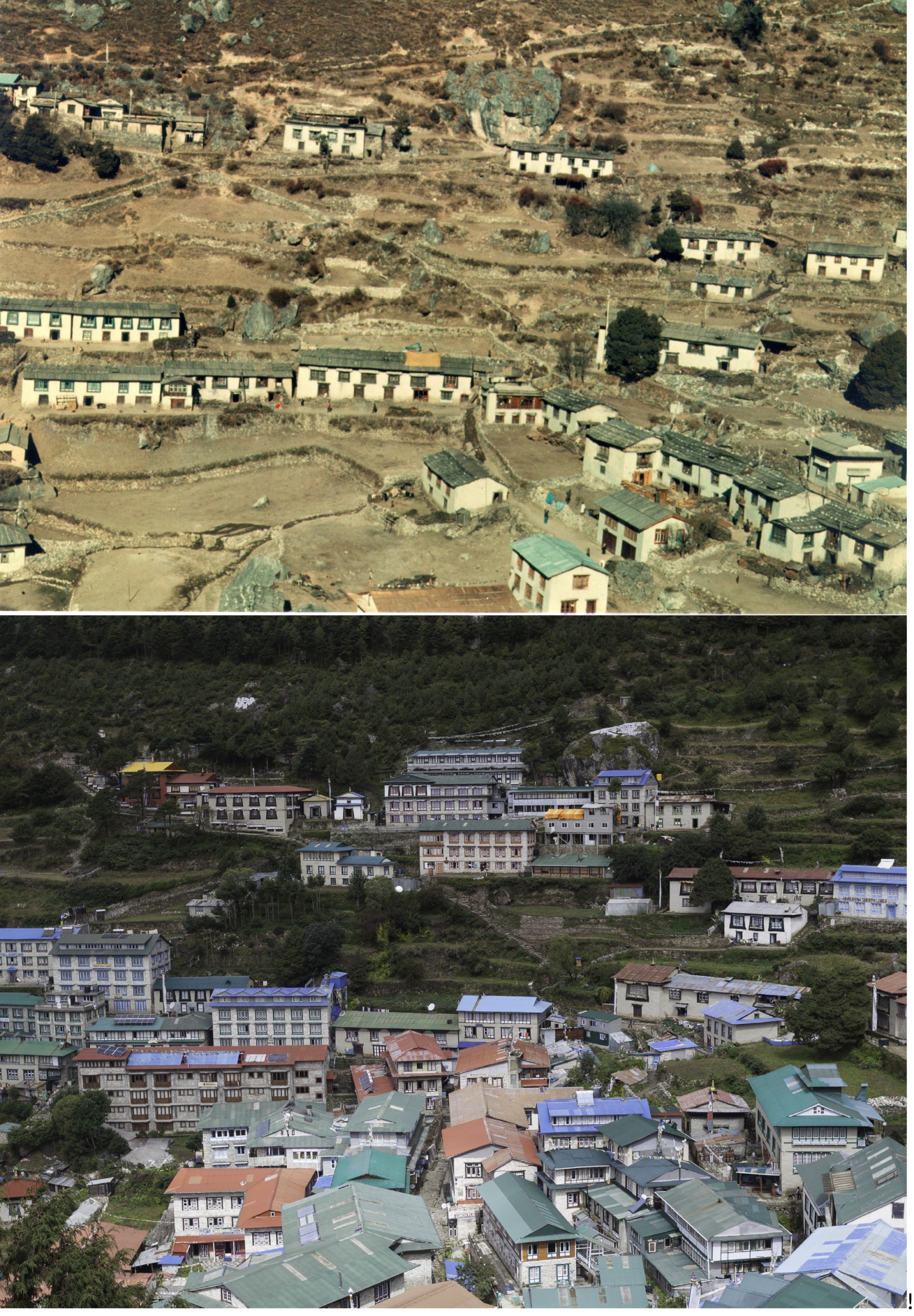
Until 1960, most high mountain communities in Nepal lived mainly agropastoral lifestyles. But Namche Bazar, perched at 3,440m, as a gateway to Everest, had more potential. It is today a tourist hub, a centre of Sherpa culture and an essential place for acclimatisation. But this transformation is recent.
“Before the arrival of tourism, which truly boomed in the 1990s, Namche was an important trading point. Rice from the valley and buffalo hides were exchanged for salt and meat that came from Tibet,” recounts Pemba Gyaltsen, manager of Khumbu Lodge, the first lodge established in Namche Bazar in 1973.
Living conditions were spartan: no electricity, no running water, firewood for heat and fuel, and oil lamps for light. “We had to fetch water from the stream below. To fill 20l, it took about 20 minutes. Life was therefore quite difficult at that time,” he recalls.
Leïla Ezzat, who holds a PhD in environmental sciences from Sorbonne University, has conducted research on aquatic ecosystems, ranging from coral reefs to high-mountain streams.