A multi-storey building of the Nepal Engineers' Association (NEA) at Pulchok is now almost complete, towering over modest structures in the vicinity. During the years it was being built, Hisila Yami was busy mobilising women across Nepal.
The NEA tower was partly designed by a young and energetic architect who used to bicycle around town collecting membership dues as the NEA's treasurer. After democracy in 1990, the NEA honoured Hisila's commitment. When Krishna Prasad Bhattarai hesitated-how could a bachelor premier garland a married woman in public-Hisilia had craned her neck to receive the garland and the sindoor with a polite but firm: "Communists don't believe in customs with gender bias."
She showed similar zeal in protesting beauty pageants that came to town with the new market economy. She went off for higher studies in England and returned to go underground soon after. Hisila Yami, the engaged intellectual of the Institute of Engineering, had now become Comrade Parvati.
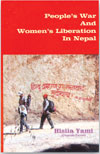
Her book, People's War and Women's Liberation in Nepal records the confusion of her mind in excruciating detail. She tries to say things she knows to be only partially true, and it shows. The book begins with a prosaic publisher's note probably penned by an aging apparatchik somewhere in Jharkhand. It reads like leaflets of the ex-Soviet Union. The foreword by Chairman Prachanda is shorter but no less platitudinous, and he openly admits the sole purpose of this book in English is propaganda.
Don't bother if you have no stomach for rhetoric straight out of Mao's China of the 1960s. Reading this feels like a spell in a time machine, proof that history repeats itself-as farce.
"I had been a liberal feminist before I became a communist," says Hisila in her foreword. Many activists from Hisila's generation have opened NGOs and mellowed, the fire in their bellies has gone out, but Hisila soldiered on. There is no denying her commitment to the cause, but if you want to find out what makes her tick you won't find any answers in this book.