
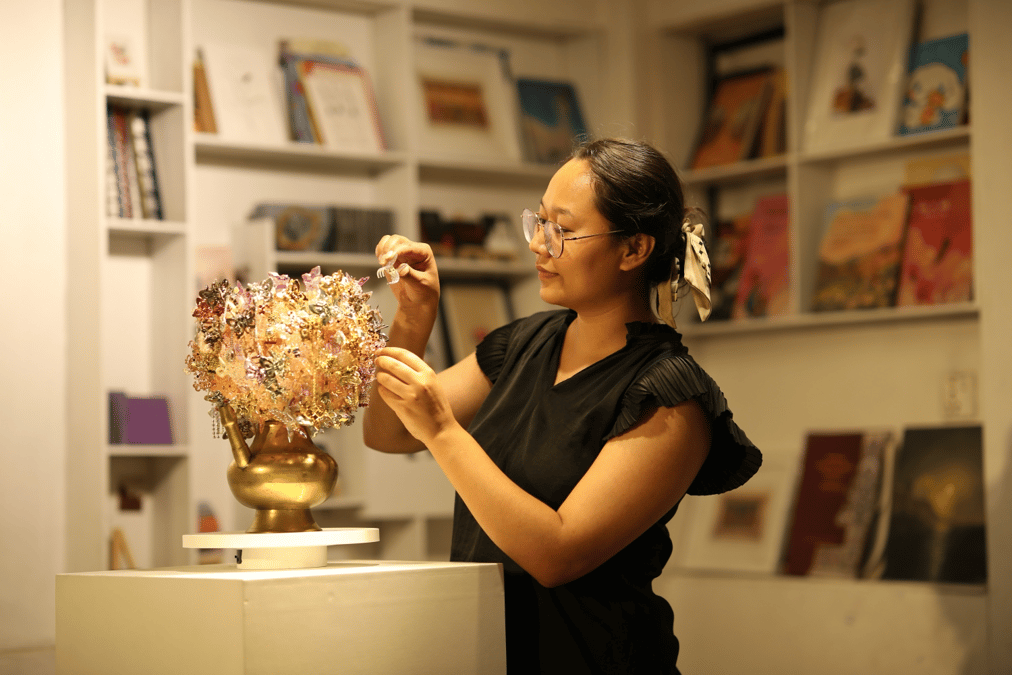
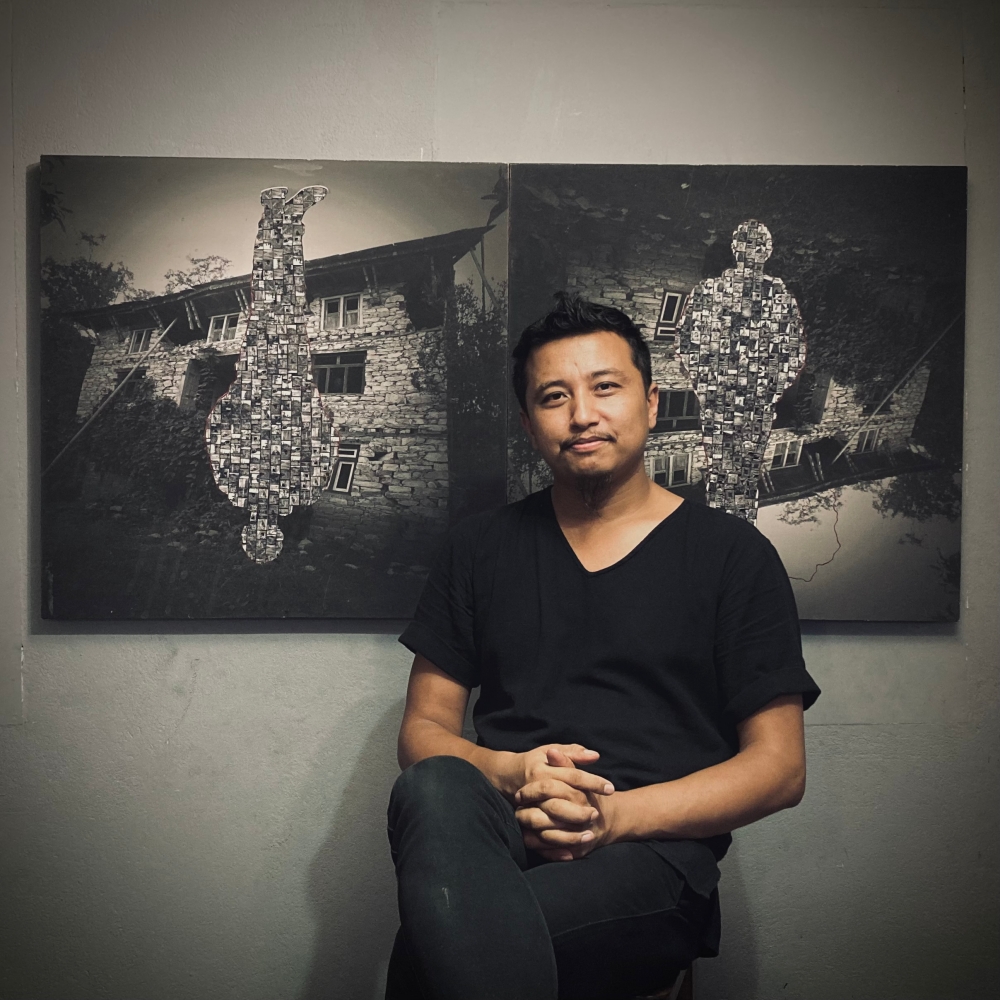
When Kailash K Shrestha graduated from art school in 2007, there were few studios for artists in Nepal, and he wanted to fill the gap with space to connect artists in a way that their collective effort would be visible to the community.
As Shrestha built his career and body of work, his ideas took concrete shape after he was recognised by the Australian Himalayan Foundation with the Young Artist Award in 2008. He began by setting up Artudio as a personal space, first in Thamel, then a bigger one in Lazimpat.
Shrestha envisioned a triangle of creation, curation, and education, which was later incorporated into the studio’s logo. Over time, even as studios and opportunities for artists began to increase across Kathmandu, Shrestha searched for a more collaborative space, and moved to a larger place in Swayambhu.
“We opened Artudio aiming for it to be a space where art is practiced in a more community-oriented manner,” explains Shrestha.
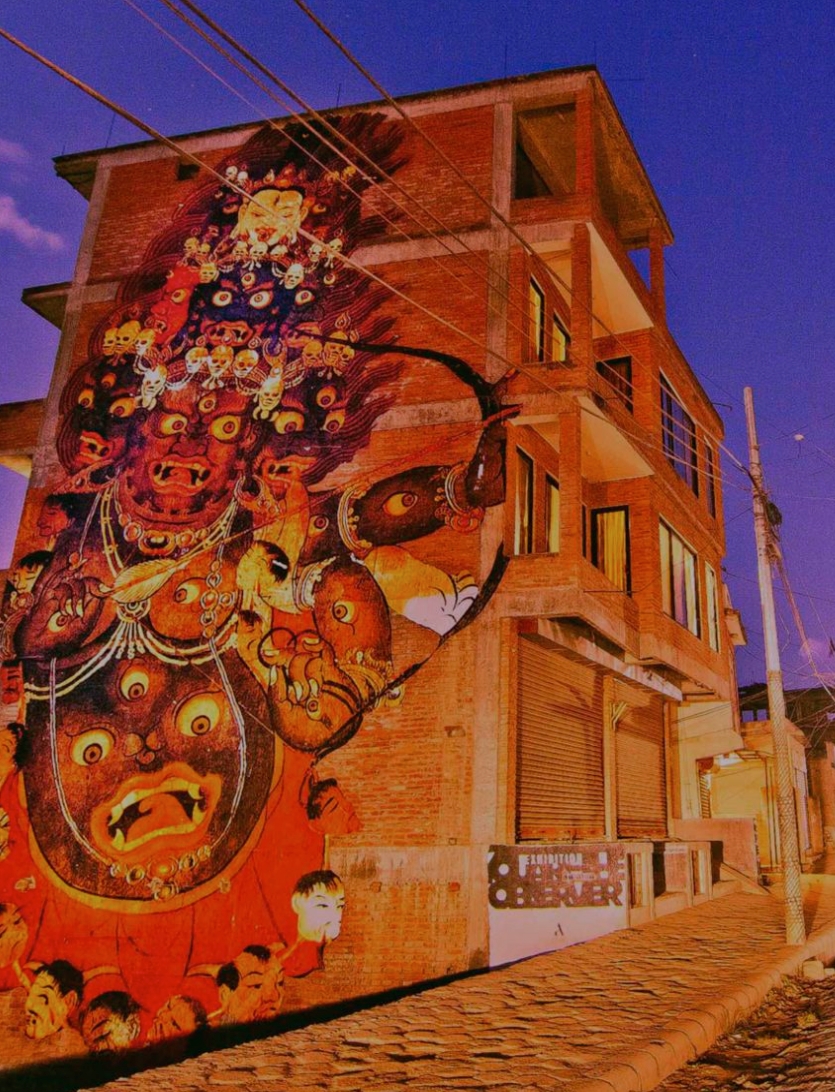
The structure at Chhauni, with the studio, gallery, and a café all under a shared roof, now serves as a haven for contemporary art. Visitors are greeted by a display of one of Shrestha’s works on the side of the brick façade. The studio space is unvarnished — artists sit on cushions on the floor and work on low tables which are themselves abstract canvases of splattered paint.
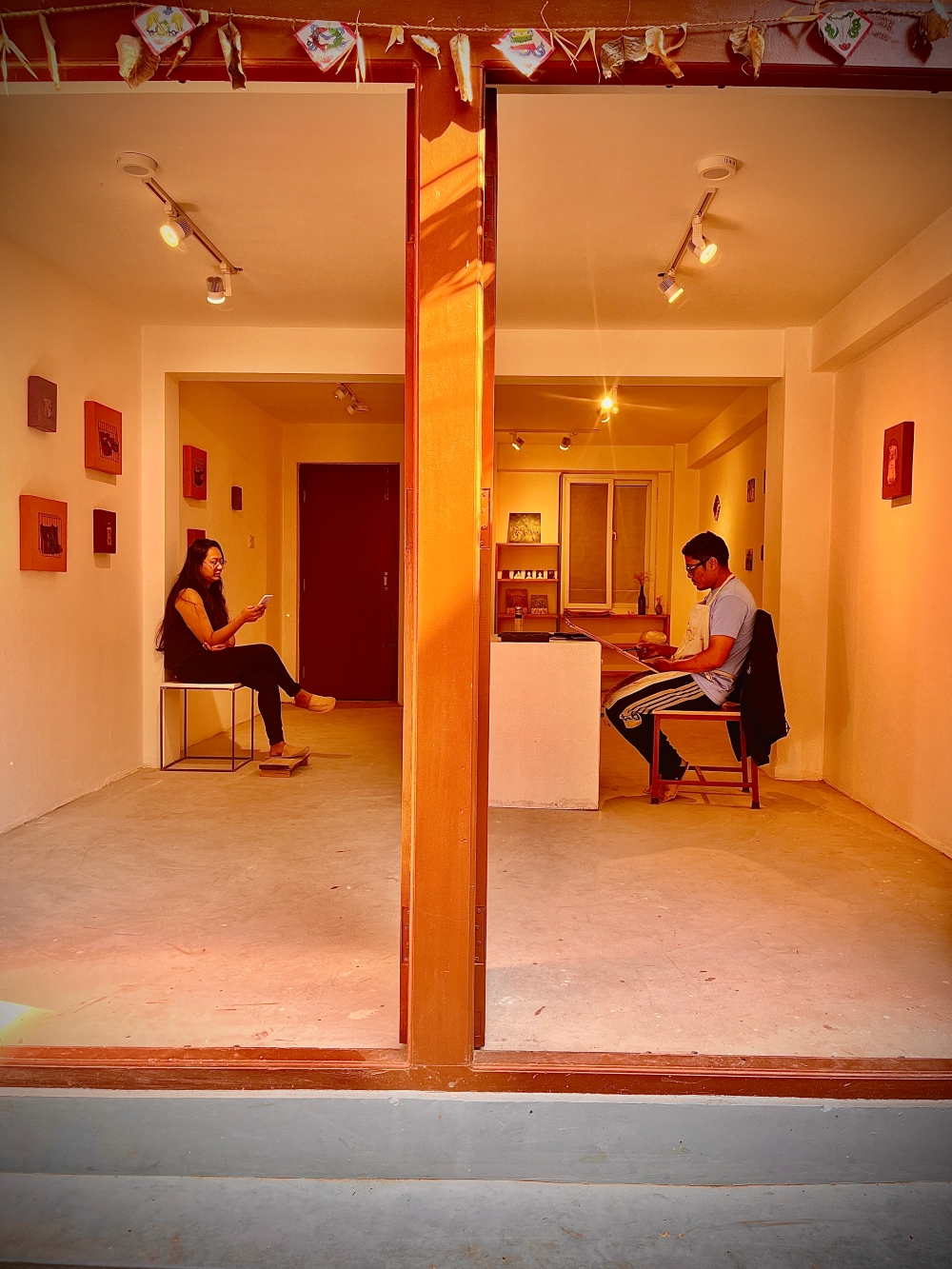
Seeking to expand its gallery, studio, and residency space in Patan, Artudio opened up a smaller, cosier place in Nakabahil seven months ago.
“With its rich cultural and artistic history, we thought a space in Patan would be fitting to facilitate conversations around contemporary art,” says Shrestha.
Artudio Patan’s most recent three-day exhibition ‘Resonance’ showcased the works of India-based artist Caroline Stedman Mishra that combined AI technology and animistic philosophies.
POLITICAL ART
Socio-politics is deeply entwined with art for Artudio. It collaborated with the late Ujjwal Thapa, the founder of the alternative political collective Bibeksheel Nepali, for the Occupy Baluwatar movement. On another occasion, the studio participated in creating murals at Bir Hospital against gender-based violence.
“We wanted to connect our art with politics, education, with society at large,” says Shrestha. “This was not to show a specific political inclination, but to reflect and foster political awareness in the community as we sought to create a public space for art.”
Its 2023 publication Street Art Nepal explored the culture of street and wall art at a time when graffiti was gaining popularity in this part of the world. Young artists from Artudio chose to sign their own art across public spaces ‘by the young artists on Nepal’.
“We chose not to attribute the art to any individual because public spaces belong to everyone,” explains Shrestha. And out of respect for public spaces, the participating artists were careful not to have their works come across as preachy or self-righteous.
Artudio’s residency program, initiated in 2016, is open to both Nepalis and foreigners on an individual as well as reciprocal basis. This means that Nepali artists have the opportunity to train and work outside Nepal, while fellows from across the world arrive here to explore and experience Nepali art.
Artudio’s art school has allowed young children to engage with art. One of their initiatives, ‘Art Saturday’, brings together aspiring artists across age groups to explore and discuss art.
“There are still very few independent opportunities to practice and foster art in Nepal," says Shrestha. “The idea is to make available spaces for people, especially young kids, to explore their creativity away from classroom environments or fancy galleries.”
Shrestha feels Nepal should mobilise its traditional and modern art forms to push its soft power around the world. He says, “Art can be an important tool to project the Nepal brand and elevate the nation as a global hub for contemporary art.”