
|
|
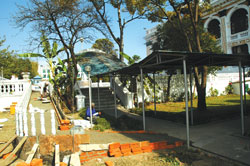
| THE NEW COURT: Singha Darbar may be getting more acessible physically, but it has a long way to go. |
Last week, the compelling sight of the interim legislature being sworn-in obscured one rather important fact. Nepal is now deeper than ever in constitutional never-never land.
To me, there doesn't even seem to be a government, as such. Of course, the interim constitution has empowered the prime minister with a level of authority that would have pleased Saddam Hussein, but where is the rest of the governing apparatus? The last cabinet was empowered by the previous parliament. This one is to be appointed by the PM. Has it been? If so, when?
I'm afraid the legal limbo is worse than that. Even if we accept that somehow, seamlessly, the last council of ministers is still in charge, along with His Political Highness the PM, is anyone actually governing this country? For government is about more than simply calling oneself a minister and being ferried around town in a shiny vehicle with a flag fluttering up front.
Governing means leading, forging consensus, finding creative ways to deal with largely unexpected challenges. It means providing inspiration to a people increasingly left out as a new court based at Singha Darbar and political party headquarters takes over from Narayanhiti. The people launched Jana Andolan II to stake their claim to government, not for a re-division of the spoils of power between discredited old actors and scary new ones. They did it for real change, for economic and social justice, for jobs, healthcare, and security.
The various agreements between Maoists and political parties have certainly changed the face of government here. Grey jacketed young women and a few representatives of civil society now sit in parliament. But in public, little else is changing. Ministers-whether legally empowered or not-seldom seem to do anything about their ministries. Or at least, anything public.