
 It is the nature of human beings to be curious, and our species has the capacity to inquire and explore. Who possesses these qualities in abundance more than us astronomers, both amateurs and professionals?
Exploring the universe satisfies not only our intellectual need to know, but also provides an emotional satisfaction through the wonder and awe we experience when we consider the vastness of the universe compared to the small speck of dust that is our home planet, Earth.
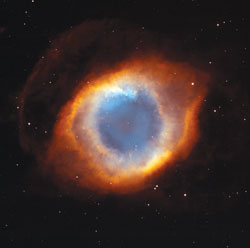
Those folks who are not familiar with stargazing might be sceptical if I say that there is incredible beauty and inspiration to be found in the depths of the sky. The globular cluster of 300,000 stars in Hercules, known as M13, or the Helix Nebula (NGC 7293) in Aquarius would be just as popular for their grandeur as any terrestrial wonder like Mt Everest or the Pyramids of Egypt.
But the problem here is that many of the celestial objects are not available to the naked eye, and we need the help of a telescope to see them. Therefore, let's do everything in our power to take astronomy to the citizens! The government should consider providing binoculars and telescopes to schools and colleges.
Back to business. The warm, clear skies of October provide a wealth of viewing opportunities. After sunset, you could see the zodiacal constellations of Taurus, Aries, Pisces, Aquarius and Capricornus from east to west. Just overhead, find the Great Summer Triangle formed by three brilliant stars: Vega, Deneb and Altair. To the east of the Summer Triangle there is the Square of Pegasus, which looks like a large box-shaped figure. In the southern skies, you can enjoy a lonely white star, Formalhaut at the 'mouth' of the Southern Fish.