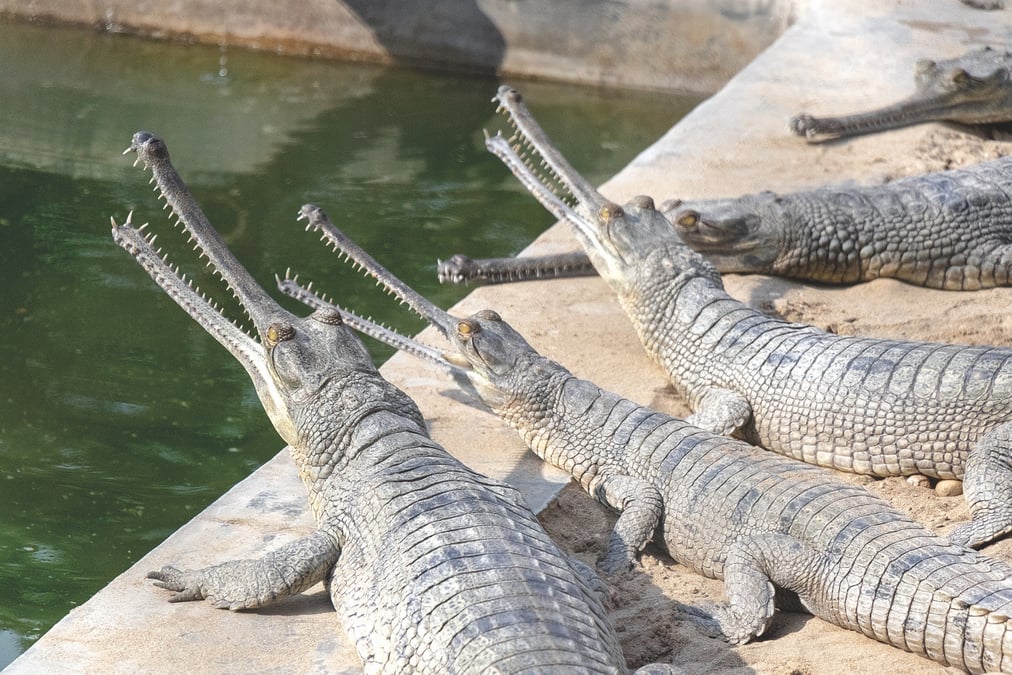
The Gharial Breeding Centre in Chitwan National Park has for decades played a critical role in saving the endangered fish-eating crocodile from extinction. Now, the gharial faces a different set of challenges.
Climate breakdown is raising the temperature of Nepal’s plains. The Narayani and Rapti Rivers that flow through Chitwan National Park are increasingly polluted. Gharials are often trapped in fishing nets and die. And the reptile has a sex problem.
In nature, the gharial’s sex ratio is already skewed, with 8 females for every male gharial. Now, climate change may be widening this gender gap.
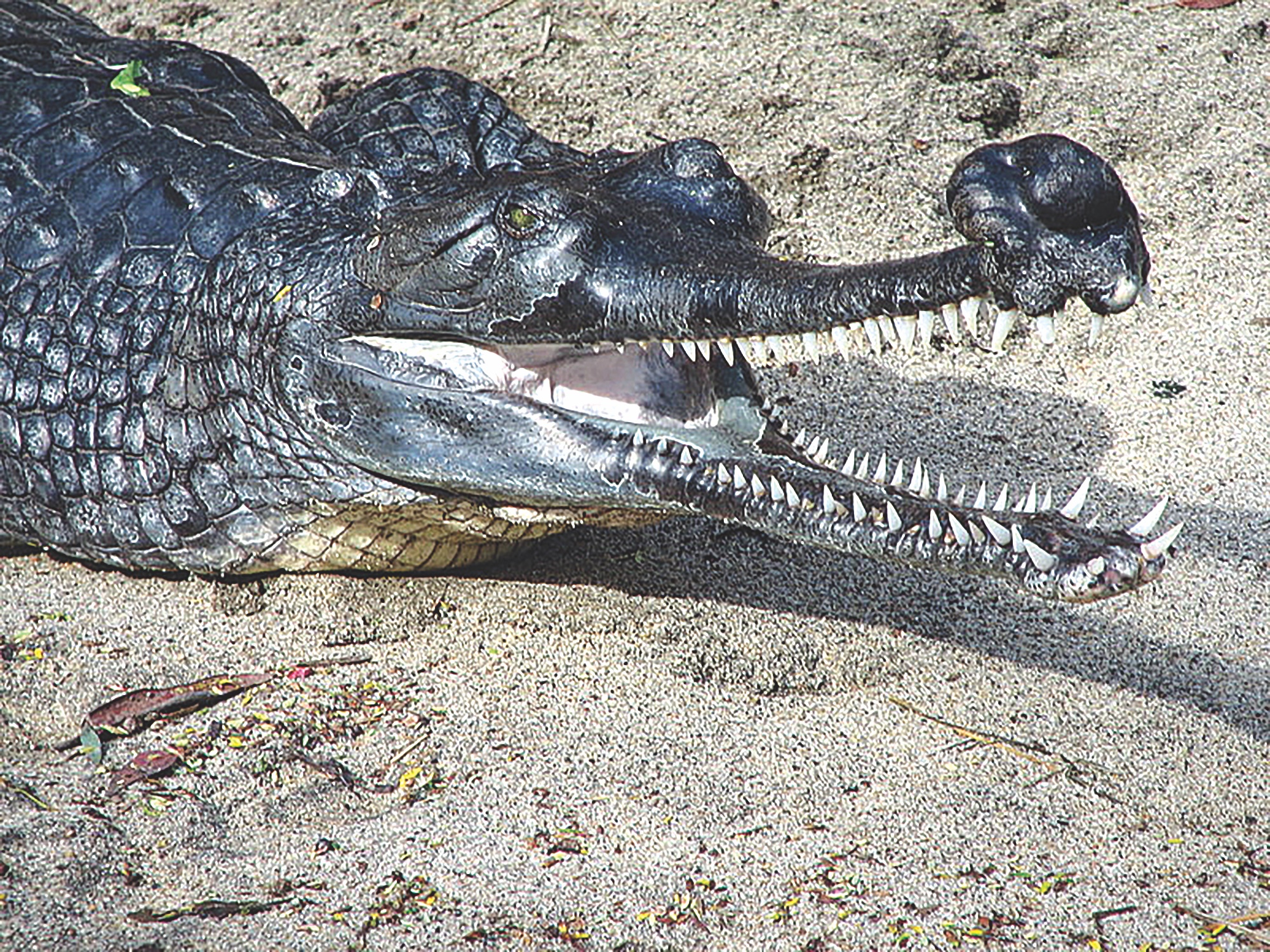
In fact, during a recent visit the breeding centre had only one male among 32 adult gharial. The male gharial has a distinct bulbous growth at the tip of its snout, which only develops when the reptile reaches adulthood.
“It is as if the gharial as a species is predisposed to struggle in its natural habitat,” says Prem Poudel of WWF Nepal, whose Terai Arc Landscape (TAL) program supports conservation in protected areas. "The eggs hatch in July, right in the middle of the flood season.”
Gharials lay up to 90 eggs at a time in deep pits along the sandy banks of the Narayani and Rapti in spring. It is only later when growths appear on their snouts that breeders can confirm if they are male or female.
Research has shown that if gharial eggs are incubated at higher temperatures, more of them are female when they hatch. This is how global warming could be skewing the sex ratio even more towards female.
The breeding centre in Kasara hires Bote fisherfolk indigenous to the area as nest watchers to locate and collect eggs. The eggs are then incubated until they hatch.
This year, the breeding centre collected 247 eggs, out of which 195 hatched. The gharial are released when they are five years old.
Over the years gharials have been released into Chitwan’s rivers, but also in the Karnali and Babai that run through the Bardia National Park. In 2019, conservationists discovered the first nesting site of 100 gharials hatchlings in the Babai, and in 2022, 28 baby gharial were found in a tributary of the Karnali.
Besides the 32 adults at the breeding centre, there are currently 759 hatchings, sub-adults and juvenile gharial. Meanwhile, 265 gharial were counted last December in their natural habitat inside Chitwan National Park, 152 in the Rapti and 113 in the Narayani. Of them, only six are male, three in each of the rivers.
“When we opened the national park, we directed our attention almost exclusively on Nepal’s declining tiger and rhino populations,” recalls Ram Prit Yadav, who was a ranger in the late 1960s even before Chitwan National Park was established, and became its first warden. “It was only later that we realised the wealth of the biodiversity here, including the gharial.”