At the start of May, Bunu Dhungana brought some things in the belly home to Nepal. When she had curated the first iteration of the show in 2023, in Delhi, she had hoped she would be able to bring it home, and she did. The exhibition opened to the public in Kathmandu at Nepal Art Council on 2 May and closes on 16 May.
The exhibition brings together works by Asmita Badi, Irina Giri, Shradha Devkota, Tripty Tamang Pakhrin, Shristi Shrestha, Ujjwala Maharjan, and the curator, Bunu Dhungana herself. And there’s an installation of yours truly.
In the step up to the show, Bunu organised calls for the artists. Tripty joined at odd hours from her newfound home in Syracuse. As did Shradha from her home in London. Ujjwala joined, from her many different trips to India and other places in Nepal.
The rest of us joined from wherever we were in Nepal during call hours, probing the unknown, most of us unsure what we wanted to present to the public. The only thing we had clarity on was the theme Bunu had suggested: mother-daughter relationship. And we were to exchange letters with our mothers.
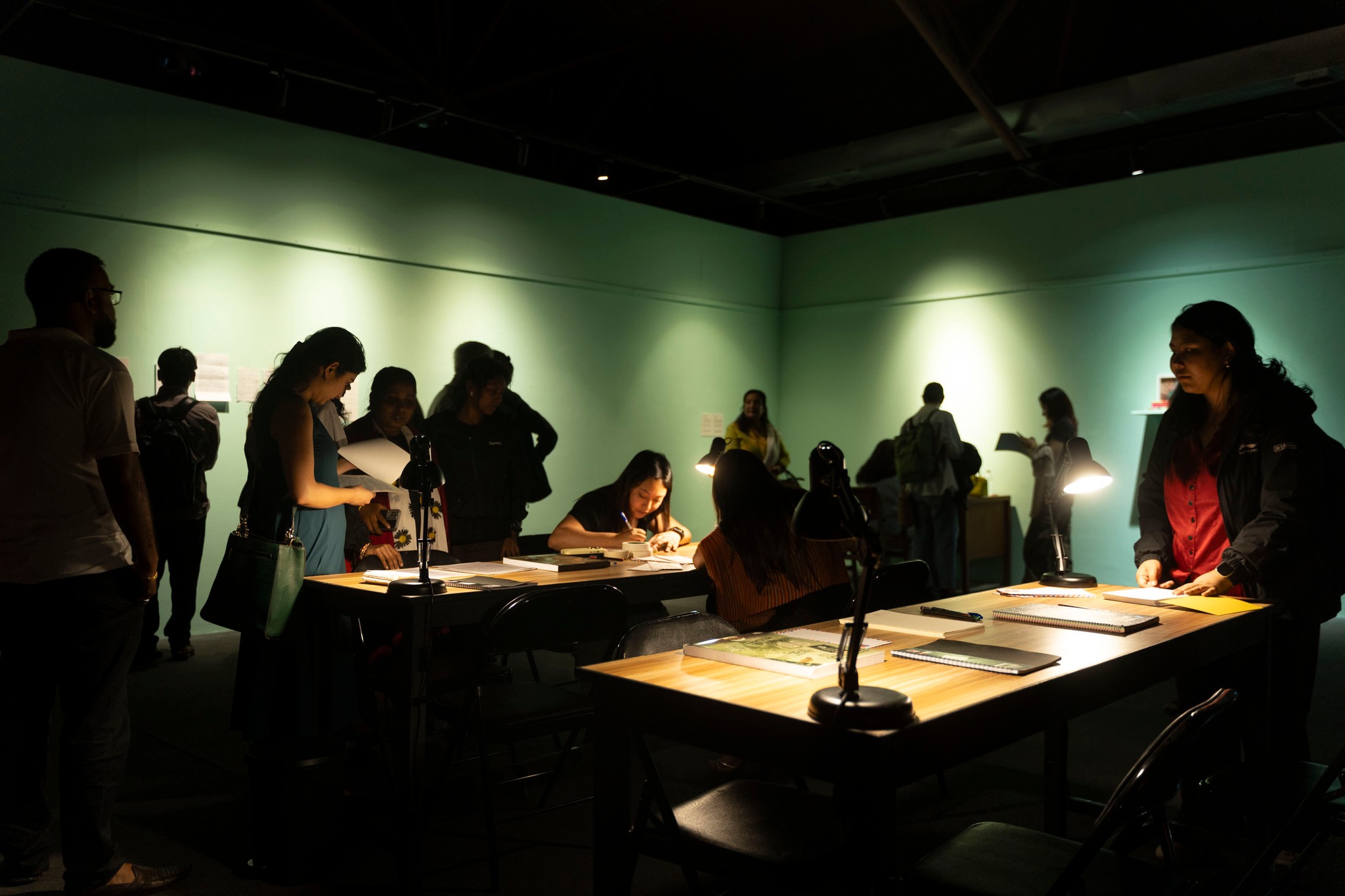
Some of us wrote letters to our mothers from the comfort of our homes, some from Pokhara, or whichever town we were in at the time of writing-- sending it by snail mail, which thankfully, hasn’t gone obsolete yet! Our mothers responded to us from their comfort nooks, each one, taking it up seriously like little girls responding to school assignments.
Standing before the wall that has the mothers’ letters at the exhibition, one is easily struck by the basicness of the stationery used by the mothers to write to their daughters. They use pages torn out from a notebook, loose examination sheets or even an abandoned diary. So simple and so straightforward. And in that, powerful. Like the truth of the uterus that is all mothers.
In the letters, their emotions take center-stage, as maternal emotions do, coming from a place of wanting the best for their daughters-- to protect them, and to keep them happy and healthy.
Daughters’ desires are not too different from that of the mothers. But they come in more complex forms and through different mediums.
They write an entire journal on these feelings, write pages and pages, enough to fill a room, weave poems and songs from the rhythm that connects the phantom umbilical cord to the mother. Daughters compose images-- some of oil and smoke, some of suffocation, of stillness, of water and ice and of open spaces and of moments of strife, like something heavy being dragged up a stairway by a lone woman.
“While not all the works were made exclusively for the show, I did create new pieces - paper made from a letter I wrote to my mothers, and a series of linoleum cut prints. These processes made me reflect more deeply on the role of repetitive, physical labor in my practice and how it relates to the everyday labor of my mothers,” says Tripty, who documents work dedicated to her two mothers.
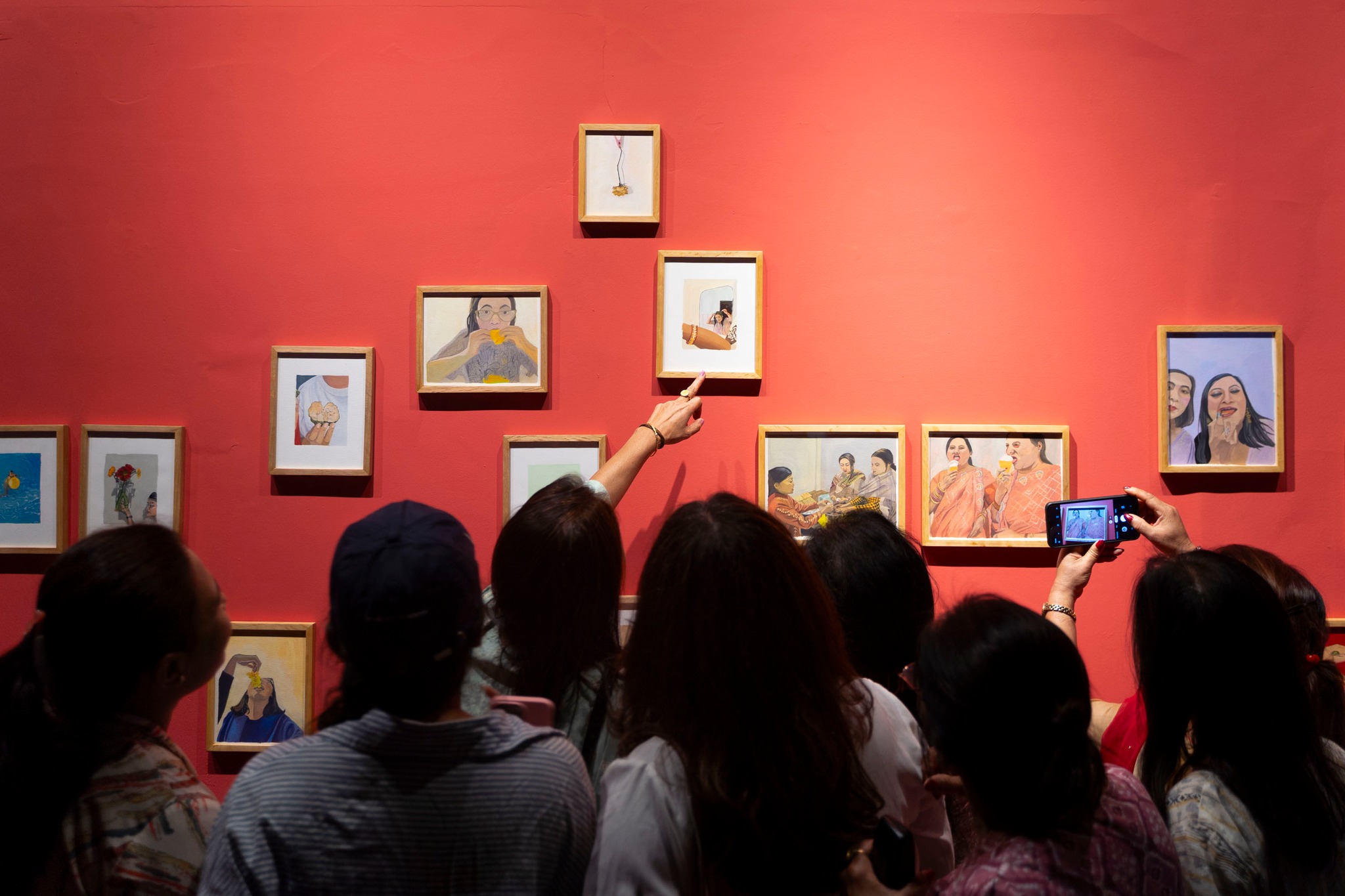
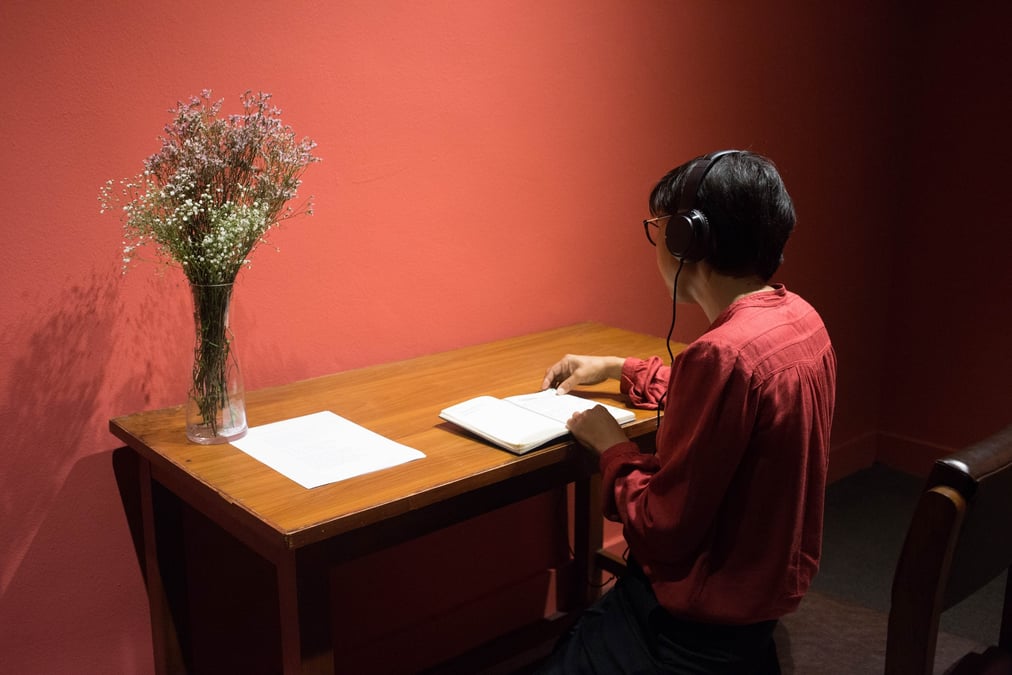
And there are bright hues in gouache, where mothers and daughters are arrested in moments of fun and chit-chat or even just being at the table watching Tiktok. There’s abandoned sound in a dark, spotlit corner, which takes the listener through a journey of contemplation and upheavals. And there are stories from the kitchen, the base for most mothers in the world. For many of us, it is sometimes impossible to separate the fragrance of spices from our mothers or to tell the spices apart from the scent of our mothers.