
Until the early 1980s, mental stress and excessive acid secretion in the stomach were thought to be responsible for peptic ulcer disease (PUD), a condition where patients feel a burning sensation especially on an empty stomach at the lower end of the breastbone region for days. Doctors advised them to take it easy and prescribed plenty of antacids.
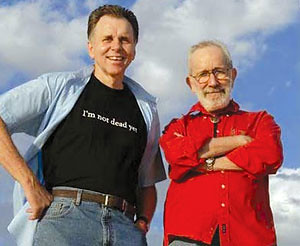
However, it was only in 1982 that the real culprit was identified. To the astonishment of the medical fraternity, two Australian scientists Barry Marshall (pic, left) and John Robin Warren (pic, right) from Perth discovered that bacterium called helicobacter pylori (H pylori) causes PUD and gastritis. Although drugs like aspirin and ibuprofen can independently cause PUD, H pylori are much more common sources and may well exacerbate mucosal injuries in the stomach and duodenum triggered by drugs.
Marshall and Warren shared the Nobel Prize in 2005 for revolutionising the treatment for PUD and bringing relief to thousands of people across the world. Today, doctors usually recommend antibiotics as treatment. Generally one antacid and two specific antibiotics are used for a total of two weeks, and the recovery rate approaches 90 per cent.