
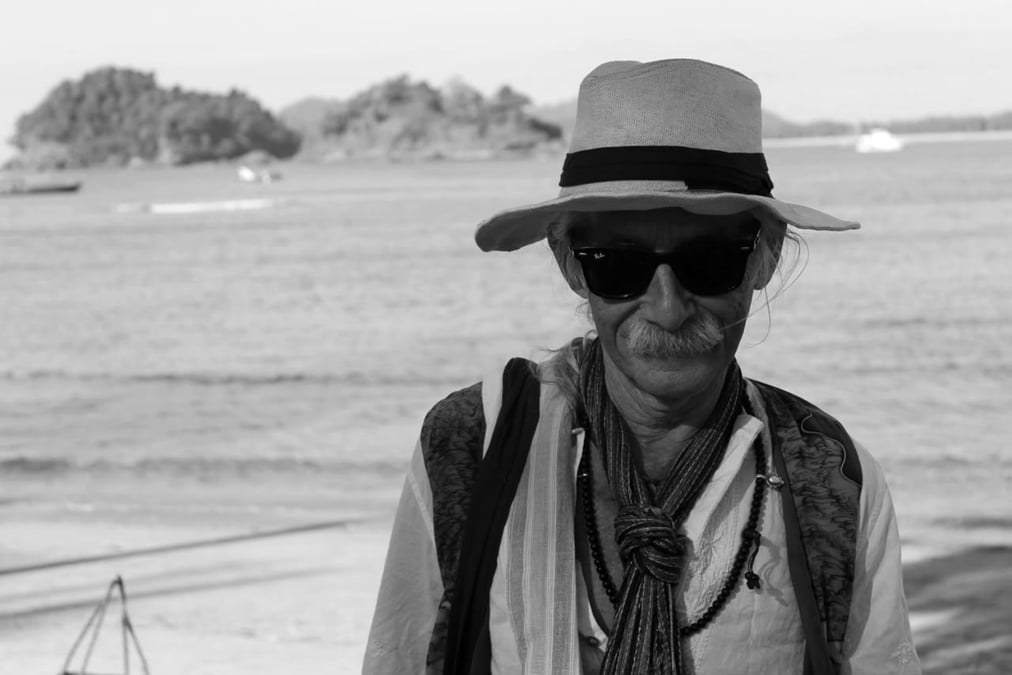
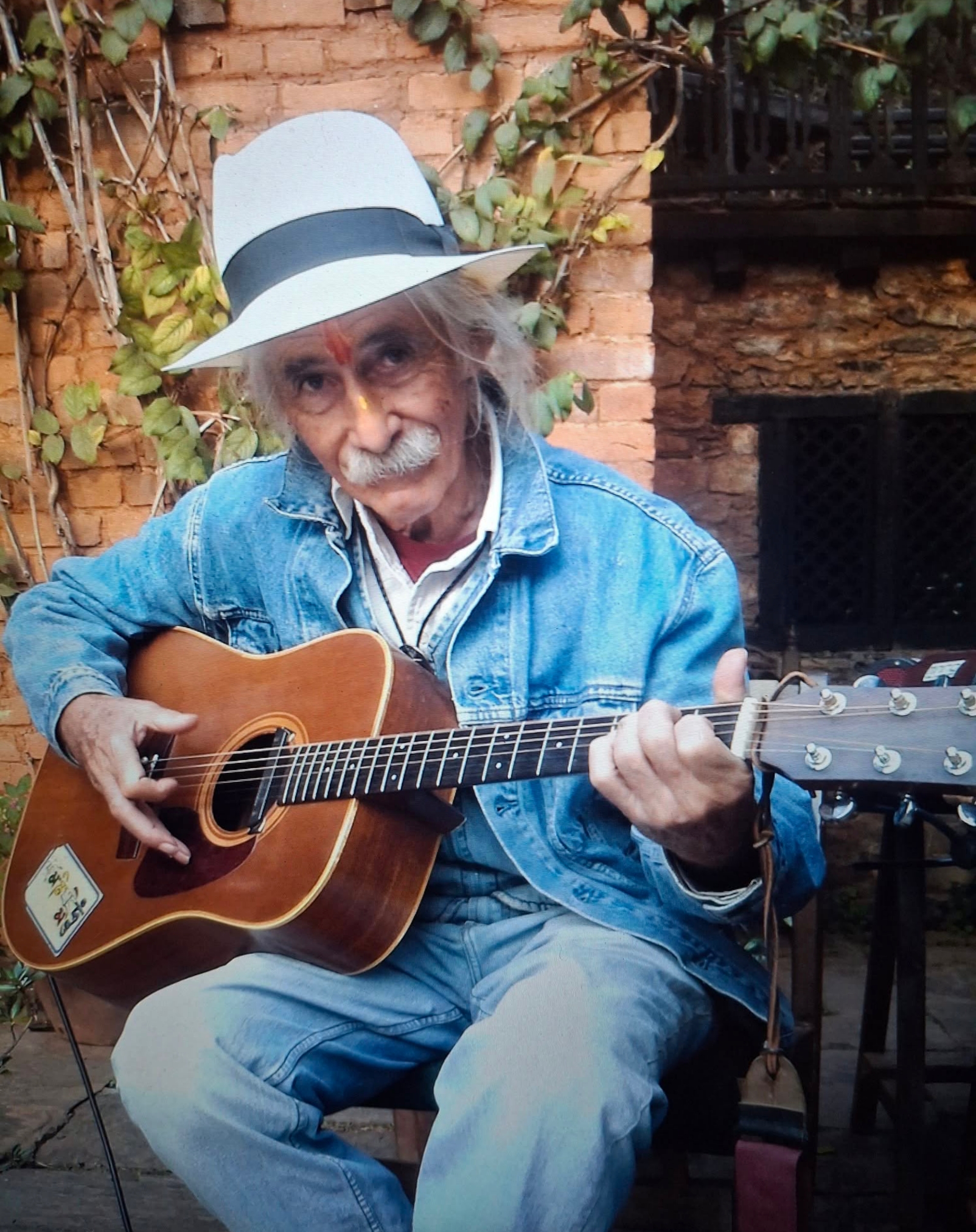
The Irish bard, Desmond Macgcnaimhshi, a music legend for 36 years, passed away on 24 October on Kimdol Hill at the foot of sacred Swayambhunath in Kathmandu.
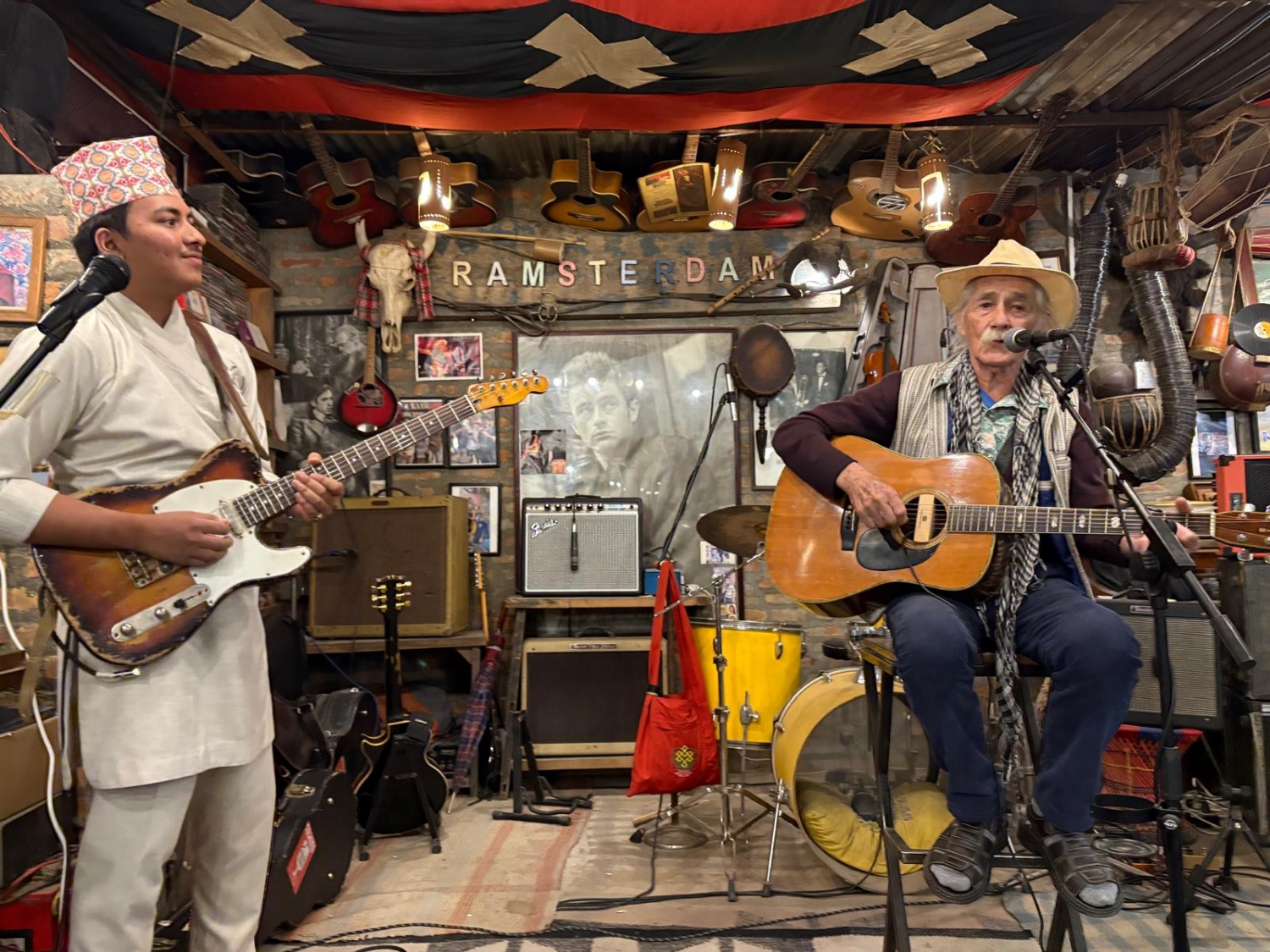
With his long grey ponytail and abundant moustache, Desmond played his last set at Ramsterdam in Boudha just five days previously as he had for the past 15 years, bringing joy to friends and audience.
I met Des as we called him, in the 1990s. We had much in common, both being 60s dropouts and traveling the world. Except I came over the Pacific, leaving corporate America after finishing a military stint.
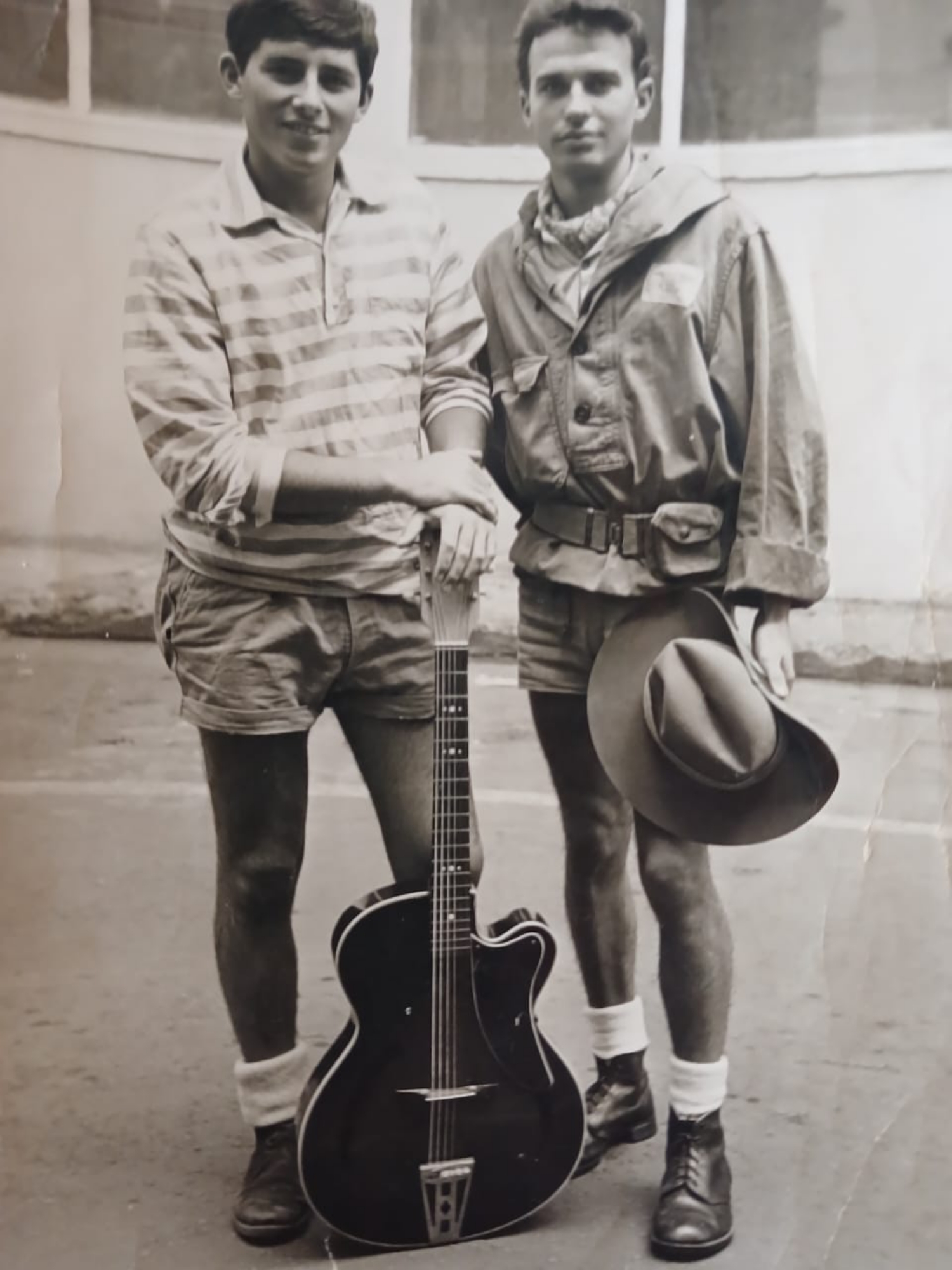
Desmond was born in the Gaeltacht, a region of Ireland impoverished since the potato famine in the nineteenth century. It’s ‘where only bad and nothing good happens’ but also where inhabitants learn the art of sharpening their wit on trouble.
Desmond was part of the Dublin rock and roll scene in the early 1960s, playing with a band called The Caravelles. He joined the merchant marines as a painter and then jumped ship at the first interesting port, which was Morocco.
He never looked back, living his life in many countries wherever he felt a connection to the earth and spirit worlds and could play music. He chose Kathmandu as his long, last chapter.
In 1974 he met and married Joan Jacobs, the love of his life, and they resided in Sri Lanka, Goa, and other parts of India. When they moved to Kathmandu in the late 1990s they saw the valley as their spiritual home, appreciating Buddhist teachings and feeling surrounded by a sense of the sacred.
He opened a recording studio in Kimdol below Swayambhu and played with many bands like Too Loose to Trek, Phil’n the Blanks, and Usual Suspects. He also played regularly at The Irish Pub, Upstairs, Spam’s, and New Orleans. He was instrumental in launching Ramsterdam as a happening place on Mahankal Road in Boudha.
Sometimes his musician pal, Beppe, would come in from Italy to play with him. Desmond also visited his friend on Elba Island, where they toured and were requested to perform every evening, playing 45 gigs in two months, much to Desmond’s delight. They also recorded some of Des’ original music at Beppe’s recording studio.
Des wrote much of his repertoire himself. While he played a fine Mr Bojangles and Delta Blues music from the southern US, he preferred to play his own works and sometimes made that clear.
His songs reflected his travels, a heart that had known love, and encounters with dilemmas and suffering, all tempered with Irish soul and wit and buoyed by masterful music on his guitar.
“You don’t find the song – it finds you someday,” he would say. As it goes with the blues, some of his pieces drew on people lost and forgotten by others.
‘Can’t even give it away’ recalled a glimpse of a prostitute in Italy, her looks on the wane, trying and failing to get business along a highway outside of town, but held kindly in Des’ eye. He also often reminded us that the Irish were the first slaves of the world “and don’t forget that!”
For thirty years Desmond escaped the winters of Kathmandu by traveling to Koh Payam, an island in Thailand, and playing in another music scene that he had helped to create. International musicians gather there for the winter, playing an open mic format every night, moving from venue to venue across the island. I visited his scene last year and found that Desmond is revered there as well.
INSPIRATION
Des had a growing following of young Nepalis who were inspired by his mastery of acoustic guitar and the authenticity of his songs. At the Friday night gigs at Ramsterdam, he was often joined by the owner’s son, Benjamin, who graduated from being Desmond’s student to sharing the stage with him.
These rock and roll artists could get the crowds to leave their chairs and hit the floor dancing. Whether with acoustic or amplified music, an evening with Desmond became infused with joy.
I grew up with Italian Americans who carried on about not liking the Irish, which was based on the Irish having reached America first and taken all the good jobs. But I was immediately drawn to this Irishman with mischief in his mouth and a sparkle in his eyes.
We both liked to raise up mischief, while keeping an eye out for meaning. For the past 10 years we would meet up with a posse of friends every Saturday at the farmers market to address the world’s problems - for which we made great headway, in intention.
Desmond could talk learnedly and humorously about anything from affairs of state, books, or the music world. His presence enlivened the table. As shared by a friend: “Even if he was trying to convince you of the worst possible outcome of any situation you or he were contemplating, which was his pessimistic inclination, he would conclude by laughing at his gloomy self.” And we would all laugh too and feel better about the world than when we started.
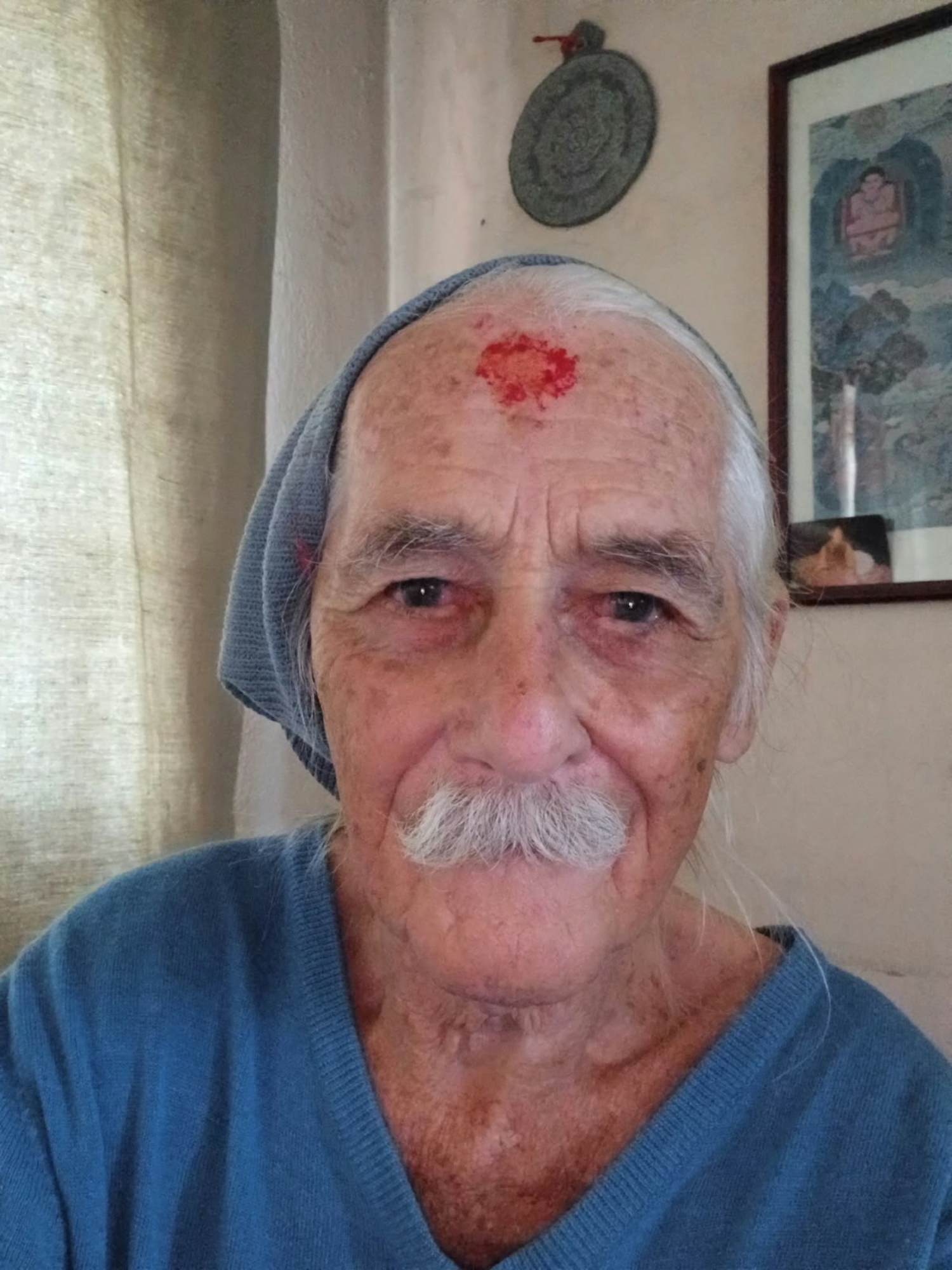
Desmond Macgcnaimhshi was one of the last remaining 1970s ‘hippy trail’ expats who utterly cut his own path in life. He lived and died as he chose, playing music throughout his 85 years and passing away in his sleep on his beloved Kimdol Hill.
Bon Voyage, my friend, we will miss you dearly. May you pass through the next Bardol unhindered by obstacles. Svaha: may it be so.
When your rooster crows at the break of dawn
Look out your window and I’ll be gone
You’re the reason I’m a-traveling on
But don’t think twice, it’s all right.