
|
|
| SPICE OF LIFE: There are many grains and staples other than rice. Many are easily grown in Nepal. |
Four years ago I visited Doti as part of a team of five health workers. On our first evening we ate together in a local hotel. When it was time to pay, we were surprised when the owner said that my bill was Rs 20 whereas the others all had to pay Rs 75. "They ate rice, you just had roti and tarkari," the owner explained.
On another health camp, five years ago in Accham, a pregnant woman complained that she had not eaten food for 15 days because in her condition it made her feel sick. But she didn't look as if she had eaten nothing for two weeks. When questioned further, she said: "Oh yes, I have been eating roti, vegetables and milk, but I have had no khana, so I'm worried that my child will be sick." She didn't believe me when I told her there was nothing wrong with her.
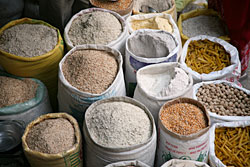
Since when did the word for 'food' in Nepali (khana) come to mean only rice? Nepalis have traditionally lived on a rich variety of staple crops. Rice, wheat, maize, millet, potatoes, buckwheat, oats and barley are grown in different areas according to climate and environment. But in recent decades these traditional foods have been replaced in many areas by a monoculture of rice, grown intensively in the Tarai and transported to the hills ('Speaking in tongues', #397).
White rice is not only less nutritious than all the other staples mentioned above, but it has also caused people to abandon their traditional crops. Subsequently, areas which were once self-sufficient in indigenous crops have now become dependent on rice aid from the government and international agencies.