
Migrant workers in Saudi Arabia are enduring widespread ill-treatment including forced labour to build giga-projects as FIFA prepares to officially announce the country as host of the 2034 World Cup next week, a rights group said.
Details of pervasive labour exploitation are contained in a 79-page report by Human Rights Watch (HRW) titled ‘Die First, and I’ll Pay You Later’ including exorbitant recruitment fees, wage theft, dangerous working conditions, and barriers to mobility.
Most of the projects are funded by the Saudi Public Investment Fund (PIF), and HRW condemns FIFA for proceeding without enforcing robust human rights commitments, raising concerns about potential exploitation tied to the massive infrastructure demands of hosting the tournament.
“The human engine powering the construction of Saudi Arabia’s multibillion dollar giga-projects is the migrant workforce, who are facing widespread rights violations in Saudi Arabia without any recourse,” says HRW’s deputy director for the Middle East, Michael Page.
“FIFA’s fake evaluation process to award the 2034 World Cup without legally binding human rights commitments will come at an unimaginable human cost, including adverse intergenerational impacts on migrant workers and their families,” Page added.
The report is based on interviews with 155 current and former migrant workers, mainly from South Asia, and families of labourers who have died. Workers are often forced to pay illegal recruitment fees, and in Saudi Arabia employers frequently violate contracts, withhold wages, and impose severe restrictions on job transfers.
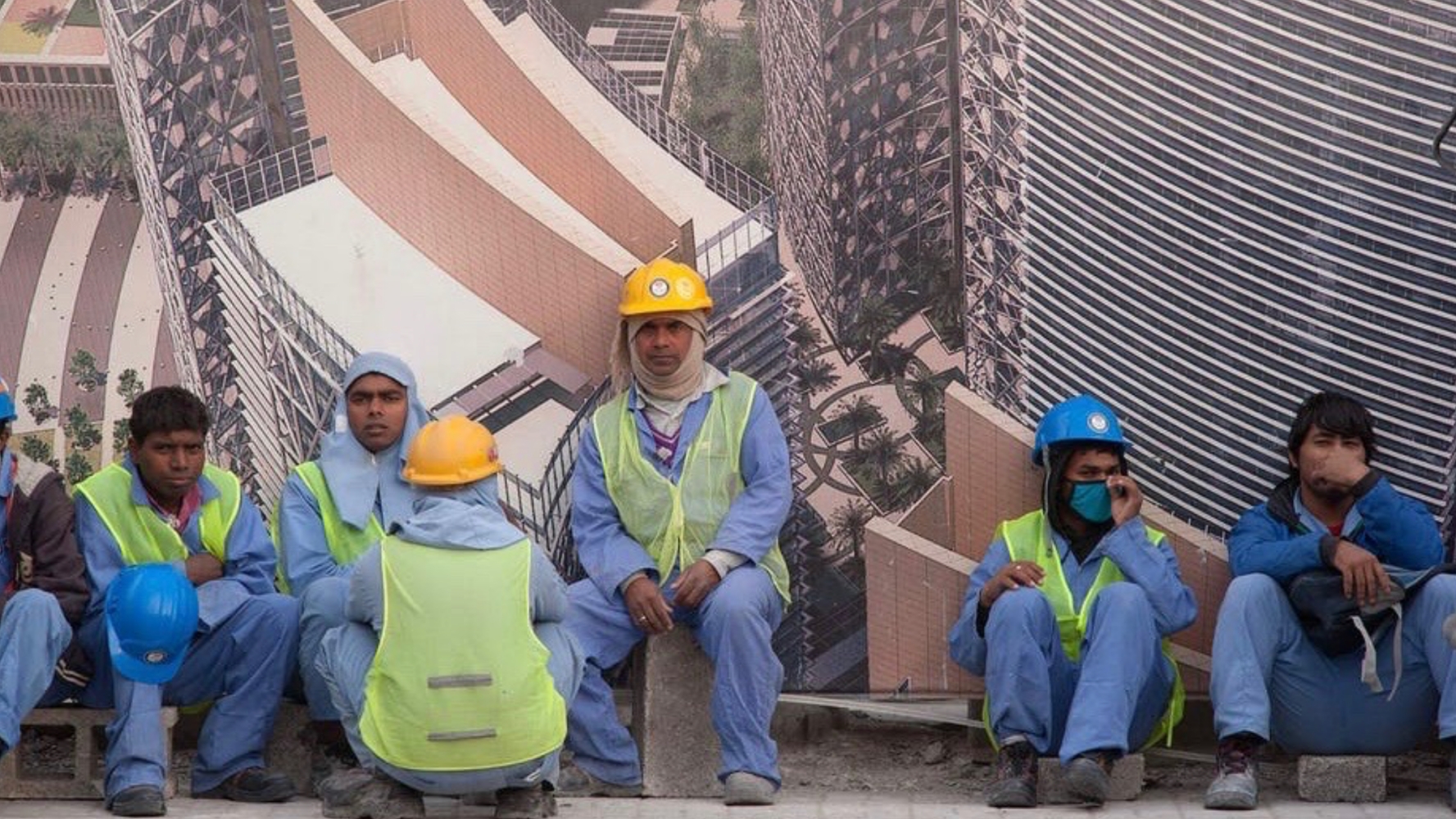
One worker reported being denied wages after two months, with a manager telling him, “Die first, and I’ll pay you later.” Another worker employed at the NEOM project described paying up to $3,200 to move to another job, while many were forced to sign agreements to reimburse employers for leaving their positions.
The number of migrant workers in Saudi Arabia is more than 13 million, and is expected to increase further as planned giga-projects are built. Of them, currently about 380,000 migrant workers are from Nepal.