
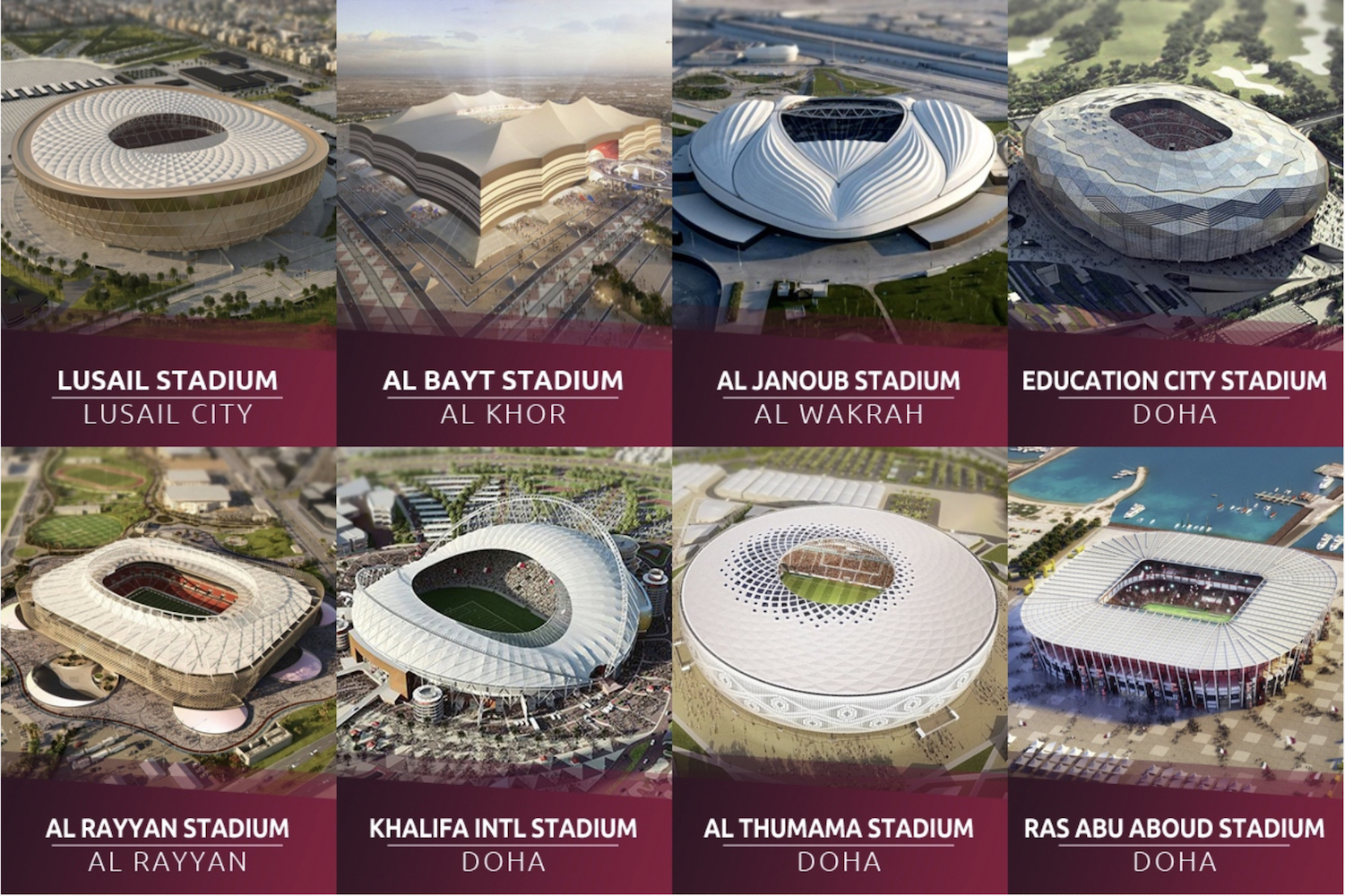
Exactly a year from now on 18 December 2022, the world will be glued to the media watching the final game of the World Cup live from Qatar. December 18 will also be International Migrants Day as well as Qatar’s National Day.
For Nepalis, the 2022 World Cup is personal. The eight stadiums in Qatar where the games will be held are built on the blood, sweat and tears of tens of thousands of migrant workers, including from Nepal.
“There is lots of excitement here in Doha with the FIFA Arab Cup that is going on,” says Ram, a Nepali construction worker from Dang district who worked on the impressive Lusail Stadium where the finals will be played on 18 December next year. “It seems these structures have come up virtually overnight, it is unbelievable. But I have come to realise it is all about money.”
Ram himself makes $274 per month. Although it is a raise from the $206 he earned when he first started four years ago, he had to pay $1,000 to a recruiter in Nepal for the job. There are hundreds of thousands of Nepalis like Ram, the unknown builders of the impressive infrastructure. Lusail Stadium does have a wall full of photographs of some of the workers who helped build the stadium.
Read also: The Days of International Migration, Editorial
But Ram and migrants from other countries may have perhaps felt a deeper sense of pride to be associated with the World Cup had they been treated with more dignity, paid on time and in conditions free of exploitation and abuse.
In an online media briefing on Wednesday organised by Human Rights Watch (HRW), researchers said that although labour laws are relatively better in Qatar, things have not improved on the ground, and there is pushback from construction contractors working on World Cup infrastructure.
"Qatar's legal framework is better than other countries' in the region, but the conditions on the ground are still bad. If they want to be a role model as they claim, much more needs to be done to protect workers rights," said May Romanos of Amnesty International.
Qatar won the bid to host the World Cup a decade ago and has been on a massive construction spree. After international media spotlight in 2018 it promised to reform labour conditions, but there are still reports of unpaid wages, high recruitment costs, deplorable living conditions, and death from heat stress.
There have been at least 30 deaths of migrant workers at World Cup construction sites, rights group say, 18 of them unexplained. In Kathmandu, the coffins arrived on flights from Doha, and the same planes took more migrant workers to Qatar.
‘Died in his sleep’ (सुत्दा सुत्दै मर्यो) has become a colloquial Nepali term and the fatalities were attributed to ‘natural causes’. Mostly, there was nothing natural about them – they were a result of overwork, heat stroke and official apathy.
Nepali workers were dying in Qatar, but they were also dying to work in Qatar. And therein was the conundrum. The money they earned building stadiums in Qatar, helped them build homes for their families back in Nepal.
"At least 70% of the deaths are unexplained which is not acceptable, especially in a country with such an advanced health system,” said Nicholas McGeehan of the rights group FairSquare. “Being a migrant worker in Qatar today is really bad for your health, and can kill you."
Rameshwar is from Sarlahi district and works as an electrician in Qatar. He supports a Brazilian football team, works at a labour supply company. Like many other Nepali workers, he is worried that he will be sent home in 2022 before the FIFA games begin.