A long time ago in the beginning
There was no vast cosmos,
And there was no beautiful earth
Later the omnipotent Ningwaphuma arrived
And she created the earth
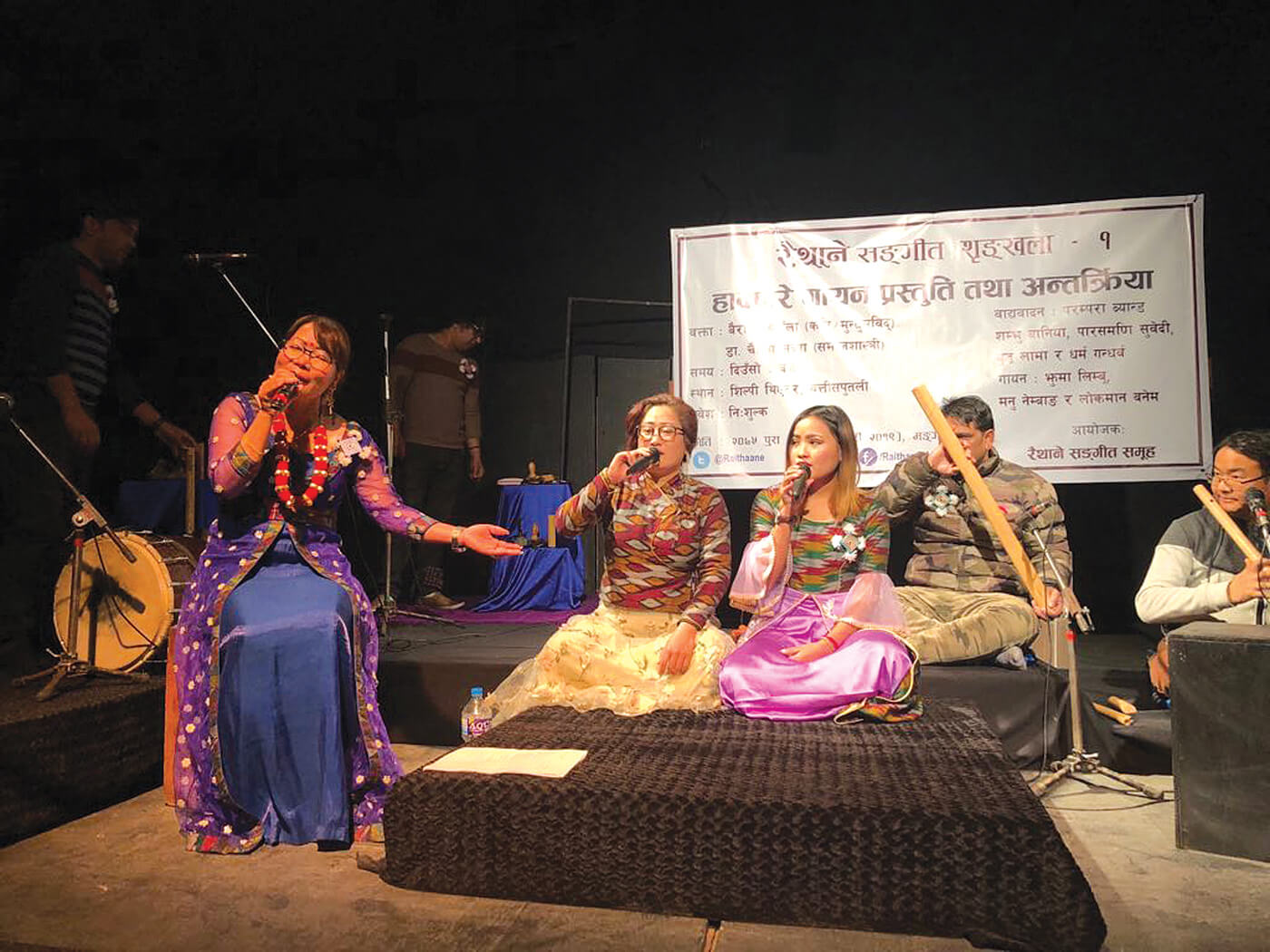
It is rare to hear folk songs in the Limbu language in Kathmandu, but this was Manu Nembang, Jhuma Limbu and Deepa Suhang (pictured) singing a traditional song from their community at Shilpee Theatre this week. The event was organised by Raithane Music to promote true folk melodies that people live by, and which are endangered by assimilation.
This was Raithane Music’s first performance and started off with Hakpare, a melody popular among the Limbus from eastern Nepal. It is a kind of Mundhum, songs passed down orally from one generation of Limbus to another, with information about the community’s traditions, beliefs and worldview. Sung by priests, healers and shamans, the Mundhum is also called the ‘Veda’ of the Limbus, since they contain instructions for life.
Read also: Songs of our past, Amar Gurung
Fasting, feasting and festivities of Gaura, Sewa Bhattarai
Mundhums contain age-old lyrics that trace the history of the Limbu community. Hakpare is believed to be the oldest melody or style of Limbu music tradition sung during important occasions like weddings, births, and even deaths.
“When one person starts singing a Hakpare, another person may contradict him, and yet another may add information to clarify it. And so Hakpare progresses as a form of dialogue,” says sociologist Chaitanya Subba who thinks that since Hakpare contained references to people living in caves, the songs could be from the period the Limbus first settled in what is now eastern Nepal 10,000 years ago.
Hakpares can be sung during weddings and about what life was like before people started getting married, and how a young couple’s courtship proceeds. The ones sung during pregnancy wish for the baby’s safe birth, and the songs of death wish for the departed soul’s safe passage. And then there are the dense songs that sing of the history of the earth, and how human civilisation came about.