

Goitre was once so endemic in Nepal that it was considered a sign of beauty. Entire villages across northern Nepal that relied on Tibetan rock salt suffered from iodine deficiency, and cretinism was widespread.
Read also: The salt of the earth, Jag Bahadur Budha
Unlike sea salt which contains adequate iodine, the micronutrient mostly evaporates from rock salt, and people who used it were affected by iodine deficiency. Those suffering from it had throats disfigured with large growths.
A successful public-private partnership between the government, Salt Trading Corporation and aid agencies iodised salt under the brand आयो नुन and this all but eradicated visible goitre — it went down from 55% in 1965 to only 0.4% in 2007. This is one of Nepal’s public health success stories.
However, in solving one problem, we may have created another. The country is now facing thyroid disorders caused in part by excess iodine intake. Recent studies show an increasing prevalence of thyroid disorders, even among younger Nepalis.
A 2019 community-level survey in five districts found the prevalence of thyroid disorders at 4.32%. Nearly three-fourths of those were subclinical hypothyroidism, 13.7% primary hypothyroidism and another 13.7% were hyperthyroidism.
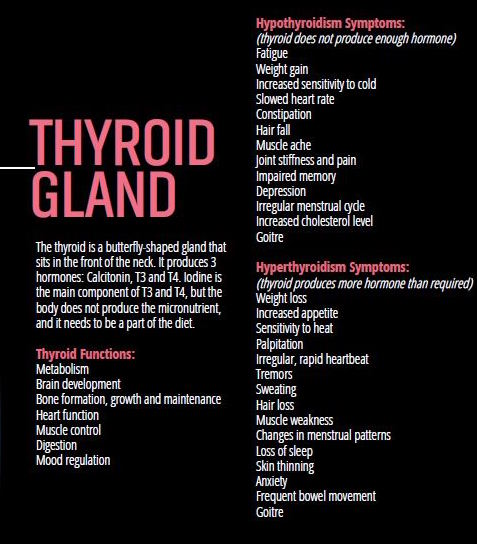
Hypothyroidism is when the thyroid gland does not produce enough hormones. In hyperthyroidism, on the other hand, the gland is overactive and produces too much hormones. Subclinical conditions do not need immediate treatment.
The figures for hospital-based surveys are much higher. In a paper published in 2015 based on 5,230 cases from Teaching Hospital in Kathmandu, 29% were diagnosed with thyroid disorders. Higher prevalence was found in the 31-45 age group.
However, experts are cautious about pinpointing excess iodine in the diet as the only cause for thyroid disorders.
“The prevalence of thyroid disorders has indeed increased in the last 10-15 years, but this could also be a result of better diagnosis even in rural areas,” says endocrinologist Ansumali Joshi.
The recommended daily intake of iodine is 150 micrograms, but is higher for pregnant and lactating women.
A 2016 survey showed that 67.5% of households in Nepal have excessive iodine intake in food. School-age children were classified in the ‘excessive’ range, pregnant women in ‘adequate’ and women of childbearing age in ‘more than adequate’. Iodine intake was higher in the central and western parts of the country and the Tarai.
“Iodised salt has reached every corner of Nepal and because there is excessive use of salt in food items, logically people are overdosing on iodine,” says cardiologist Prakash Regmi. “Excessive salt intake is already a leading cause of heart and kidney diseases. And excess iodine is now adding thyroid dysfunction which can affect the brain and the nerves.”