
 |
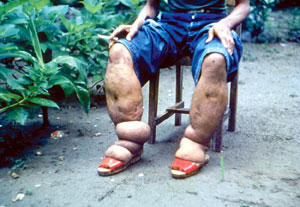
The parasite (Wucheria bancrofti) which the mosquito injects into humans is elusive, and Dracula-like appears only at night in the human host's blood circulation. Clinically, the presentation of lymphatic filariasis can range from being asymptomatic to the full-blown elephantiasis, (Hatipaile in Nepali).
In Nepal the disease also presents itself as a hydrocele (water- filled scrotum) and keeps surgeons busy. But this is one of the more common, easier operations that senior doctors will delegate to the lowly interns. Although lymphatic filariasis is not usually a life-threatening disease, clearly it is a nuisance at the very least.
The good news is that there is very effective medicine (diethylcarbamazine, DEC) for the prevention and control of this condition. In addition, all the precautions against mosquito bites (using mosquito nets to insect repellents) also apply to this disease.
In Nepal and other countries of endimicity, community-based intervention is the current approach to eliminating lymphatic filariasis as a public health problem. The rationale behind this approach is that mass annual distribution of the drug, given once every year for about five years will profoundly suppress the bug in human hosts. If the suppression is sustained then transmission (spread of the disease) by mosquitos is interrupted.