
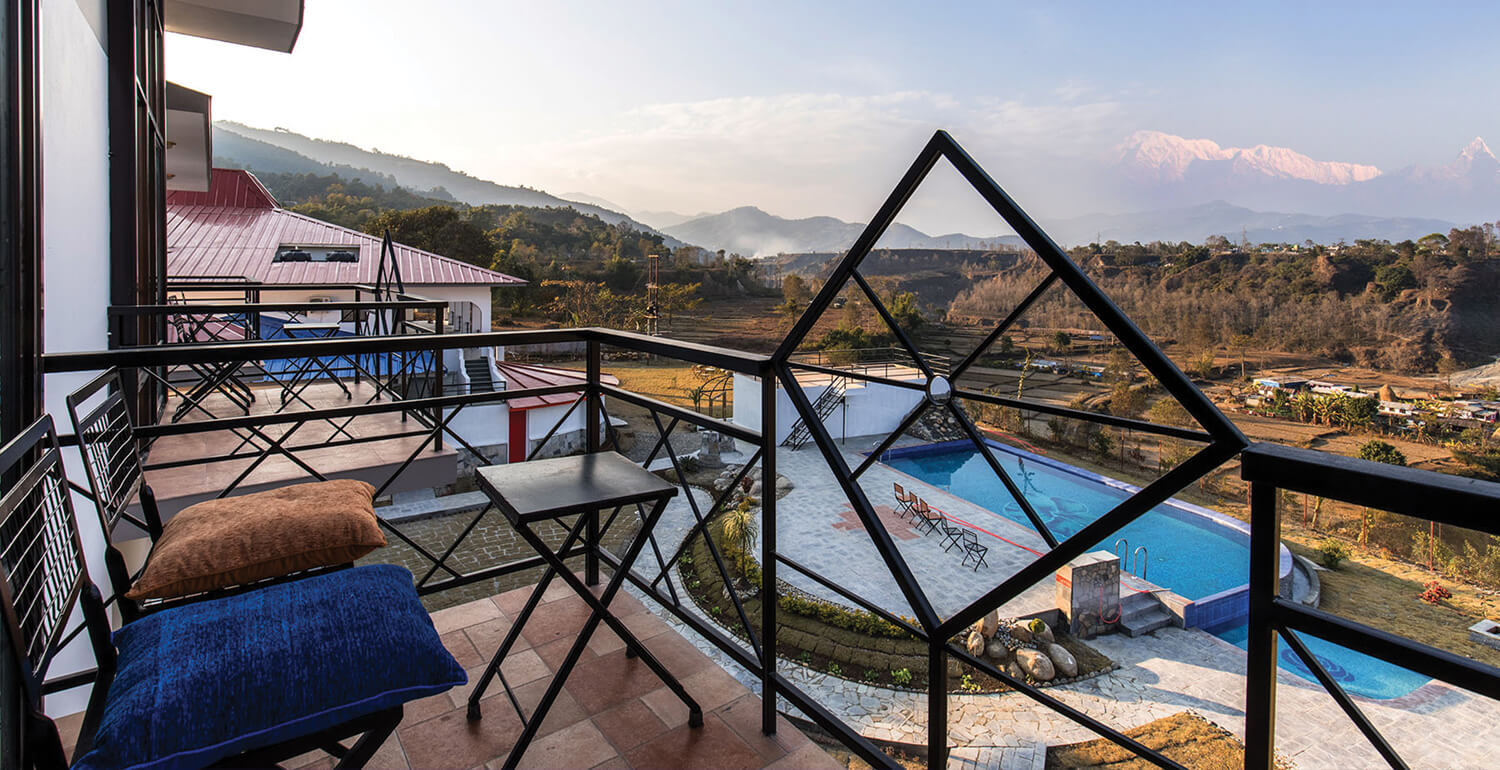
Pokhara is changing before our eyes. Its lakeside area is packed with hotels and restaurants, and the paddy fields of the suburbs are filling up with concrete and tarmac. Innovative hoteliers are increasingly branching out into side valleys and up the surrounding hills.
One such hotel is Sunshine, which describes itself as a ‘boutique resort’, with 22 rooms looking up to the panorama of the Annapurnas. What you have here instead of Lakeside is an ornithological paradise above the Phusrey Khola, a tributary of the Seti on the southern rim of the Valley.
There are great walks to be had all around, and the fragrant air reminds us of the old Pokhara of little farms, grazing buffalos and fluttering butterflies. Sunshine is located exactly in the transition zone between the rock-strewn basin that makes up Pokhara’s valley floor and the hills that rise up from it.
Several hundred years ago, there was catastrophic glacial lake outburst that brought down a flood that deposited boulders and debris 150m deep along the Seti River. This is what made Pokhara’s uniquely flat terrain, which also backed up the Harpan rivulet to form Phewa Lake and the other lakes for which Pokhara is famous.