
• Shanti Lama from Lalitpur (left) was raped by a recruiter who promised her a good job in Kuwait if she kept quiet. Nine months later, she was sent back by her employers when she gave birth to a baby girl. 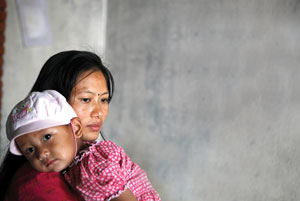
• Prema Rana of Surkhet was locked up for five years in her employer's house in Lebanon, she returned without being paid. She says she was tricked by a recruiter named Sher Bahadur Lama.
• Ganga Sunar of Baglung was sent to Saudi Arabia by her recruiter on a forged passport. She committed suicide while there.
• Binita Thapa of Chitwan returned mentally disturbed from Lebanon. Her husband is in debt trying to get her treatment.
These are only some of the many heart-wrenching stories of thousands of Nepali women who are sexually abused, physically tortured and even murdered by their Nepali recruiters and employers in the Gulf.
Last month, six women were rescued from a building in Kathmandu where an agent had kept them locked up after the husband of one of the victims reported her as missing.
Until 2007, Nepali women were being trafficked in large numbers because going to the Gulf for employment was banned by the government. Purna Chandra Bhattarai, the director general of the Foreign Employment Department, admits that the state lifted the ban and legalised individual contracts for domestic workers after growing pressure from the media and civil society. But sending workers abroad without legal protection and proper verification of employers, exposes the women to exploitation and abuse in Nepal itself.
"Making sure that your citizens are safe and well protected should be a priority for any country, but the Nepali government legalised individual contracts, without putting in necessary safeguards," says Bal Bahadur Tamang, chairman of Nepal Association of Foreign Employment Agencies. The multi-million dollar migrant labour sector, the largest contributor to the country's GDP, however, seems more important to the government than its expendable population.
In June last year, the Kuwait government decided to drop immigration charges against all illegal workers, after which 1,300 Nepali domestic workers contacted the Nepal Embassy there, requesting to be rescued. At least 15 women had children born after they were raped by employers.
The risk for Nepali women working in Gulf countries is so serious that only a handful manage to get out alive and without being abused. Last year, Durga Chunar of Gorkha was beaten to near death by her employer in Kuwait. She was rescued by the police and sent back to Nepal after receiving treatment for a month at the embassy.