
|
|
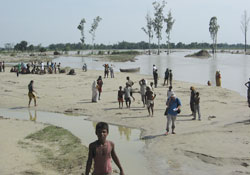
These are the worst floods in living memory. And just as the waters receded and people starting going back to their homes, there was another wave of flooding early this week.
Bad weather and flooded roads hamper relief, but it is the security situation that is worrying relief officials.
"Humanitarian assistance must be delivered without obstruction," says the ICRC's Nepal head, Mary Werntz, "it should be distributed solely on the basis of need, independently of all political, communal and other considerations."
The UN's World Food Programme (WFP) which has pledged food for 60,000 people in the worst affected VDCs for three months says Nepal Red Cross is having problems with delivery.
"If we don't get safe and unhindered access, we will be unabe to provide much needed food assistance," WFP's Nepal director Richard Ragan said Thursday.
Santosh Jha of Tulsiyahi Jabdi VDC was marooned with his wife and three children in his house for over two weeks. His house is badly damaged, crops are washed away, and the granary destroyed.
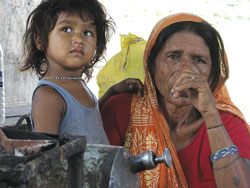 As the immediate emergency recedes, a food and health crisis is erupting. "There is food only for five more days, my roof is leaking, and my house is about to collapse," laments 30-year-old Jha. Children are falling sick due to contaminated water.
Nepal Red Cross workers, who are leading the relief efforts, have finally reached Jha's village. They seem to be doing their best, but in most places the relief arrived only on 8 August, nearly a month after the floods first struck the eastern tarai. "It's true, the help arrived late," admits rescue and relief coordinator, Rajan Ghimire of Caritas, "in many places it was just impossible to get to."