
 |
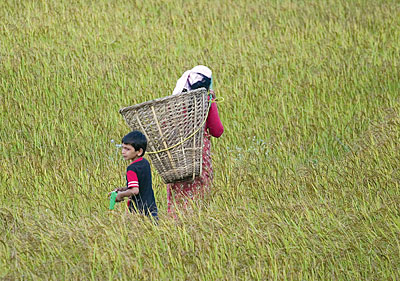
World Food Day, a global event meant to raise awareness and stimulate action on hunger, fell right in the middle of our festival of gluttony this year. Nepal's country-seat at the FAO headquarters in Rome was empty as the '1 billion hungry' project was launched. About 4 million of those hungry people are here in Nepal.
Food is basic. Our life and livelihoods are planned around it, if not only for it. It starts from the moment you open your eyes and ends with the big supper at the end of the day when you tell friends and family about the day that has passed.
But imagine waking up everyday with the pain of hunger pangs. Whether you dine at your local momo station or at Soaltee's Al Fresco might be an indicator of status for some but for others, a meal becomes a matter of life and death.
Smart agricultural policies actually go beyond fulfilling this basic need. The World Bank estimates that growth in the agricultural sector is twice as effective in reducing poverty as growth in other sectors. Brazil and China rose to become important powers in the world arena only after a successful implementation of green revolution techniques to boost agricultural yields. Despite similar gains, India, while enjoying comparable economic growth and technological advances in many areas, is still bogged down by the predicament of how to feed the 421 million who live below the poverty line.
That political parties are trying to outdo each other with creative food and agricultural policies is a sign of how seriously India takes the issue. The message is clear. A country needs to feed its people, or, as the President of the International Fund for Agricultural Development said in Rome last week, "it has no right to sovereignty."