
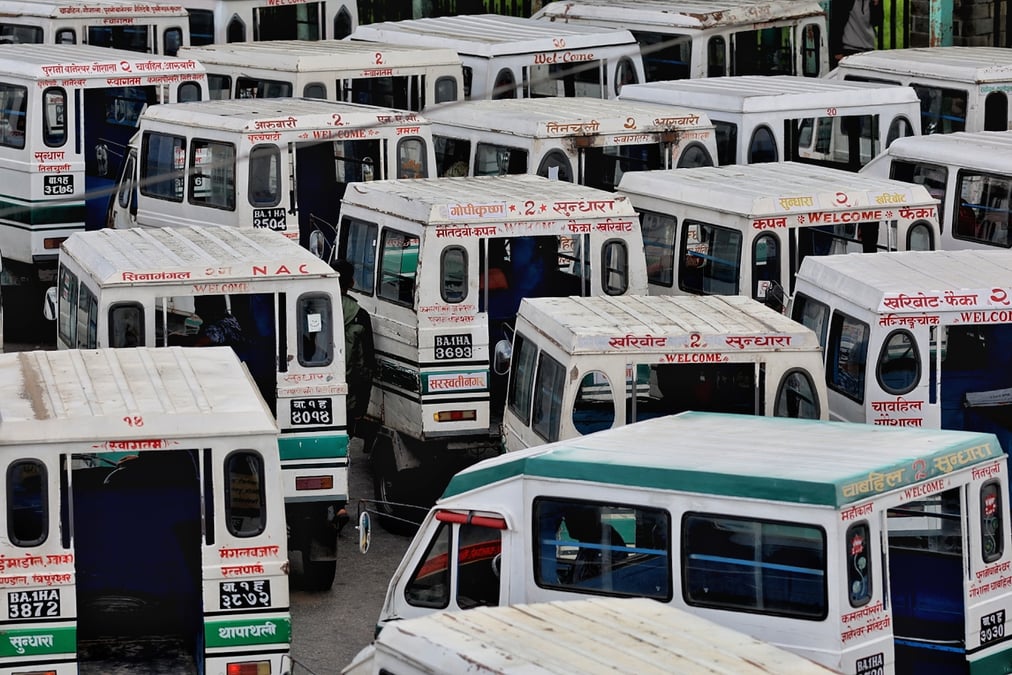
The distinctive boxy green-and-white electric Safa tempo that trundle along the Valley’s streets have become an iconic part of its identity.
Safe tempo were introduced in Nepal in 1993, when diesel-powered Indian-made Vikram Tempo three-wheelers were so polluting that a USAID-funded project converted seven of them to electric.
These were then purchased by the Nepal Electric Vehicle Industry (NEVI) which manufactured eight more in 1996 and began plying the Baluwatar to Patan route with a charging station at Lazimpat.
Since then, the fleet of battery-powered three-wheelers has expanded to 714 and they serve up to 11 non-trunk inner-city routes—making them real pioneers in zero-emission transportation in Nepal and across the region.
A majority of the vehicles have over the years changed their lead-acid batteries to lithium. And in 2018, operators successfully lobbied to exempt them from a government ban on vehicles more than 20 years old.
But starting this year, a bulk of Kathmandu’s electric three-wheelers will reach the end of their mandated 30-year lifespan. As mass decommissioning looms, the government’s ban on the registration of new three-wheelers remains.
Operators, entrepreneurs, three-wheeler manufacturers and green transport activists have been lobbying the Bagmati Province government unsuccessfully to reopen registration for new electric three-wheelers.
“All we do is make rounds of government offices,” says Prakash Thapa, vice-president of the Electric Vehicle Association of Nepal (EVAN). Thapa spoke with Nepali Times from Hetauda, where his team is trying to get permission for registrations.
But the bureaucracy always gives them the same answer: they cannot make a decision because the file is mired in red tape somewhere along the provincial chain of command.
“Ultimately, the public continues to suffer whoever is in government,” rues Thapa.
Safa tempos carry 100,000 passengers daily on Kathmandu’s tertiary routes, and in areas with less population density which larger vehicles do not find profitable to operate. Their size and speed make them ideal for commuting students and the elderly. Three-wheelers also have the lowest number of accidents and petty crimes.
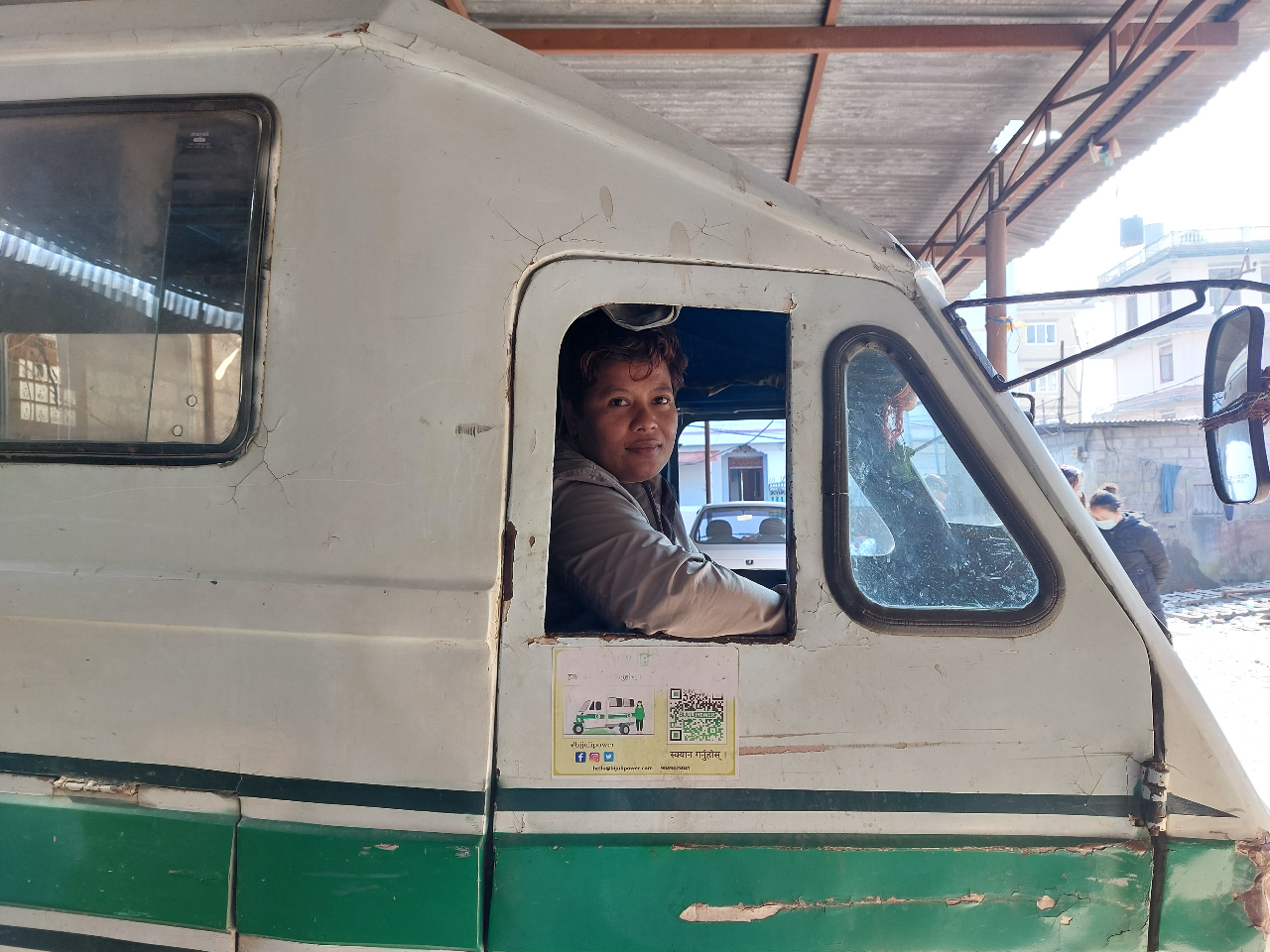
WOMEN DRIVERS
But the most significant achievement of Safa tempo is that the transport network employs thousands of women operators and entrepreneurs. Among them is Indra Maya Shrestha, who came to Kathmandu from Kavre as a 17-year-old.
She learnt how to drive a tempo, got her license, and over the years has gone from driving to now owning two vehicles. She also runs a charging station in Mahankal that can charge 70 three-wheelers at once.
One of her vehicles has three years left, while the other one has 11 years before it has to be scrapped. She says, “Although I have some time left, there is constant worry at the back of my mind. We did not expect the post-GenZ leadership to leave us hanging like this. If they are not going to allow new registrations, they should just come right out and say it.”
Manju Nepali has driven a Safa tempo since 2011, and bought her own vehicle three years ago on a loan she is still paying off. But her vehicle has only three months before it reaches 30 years, and has to be decommissioned.
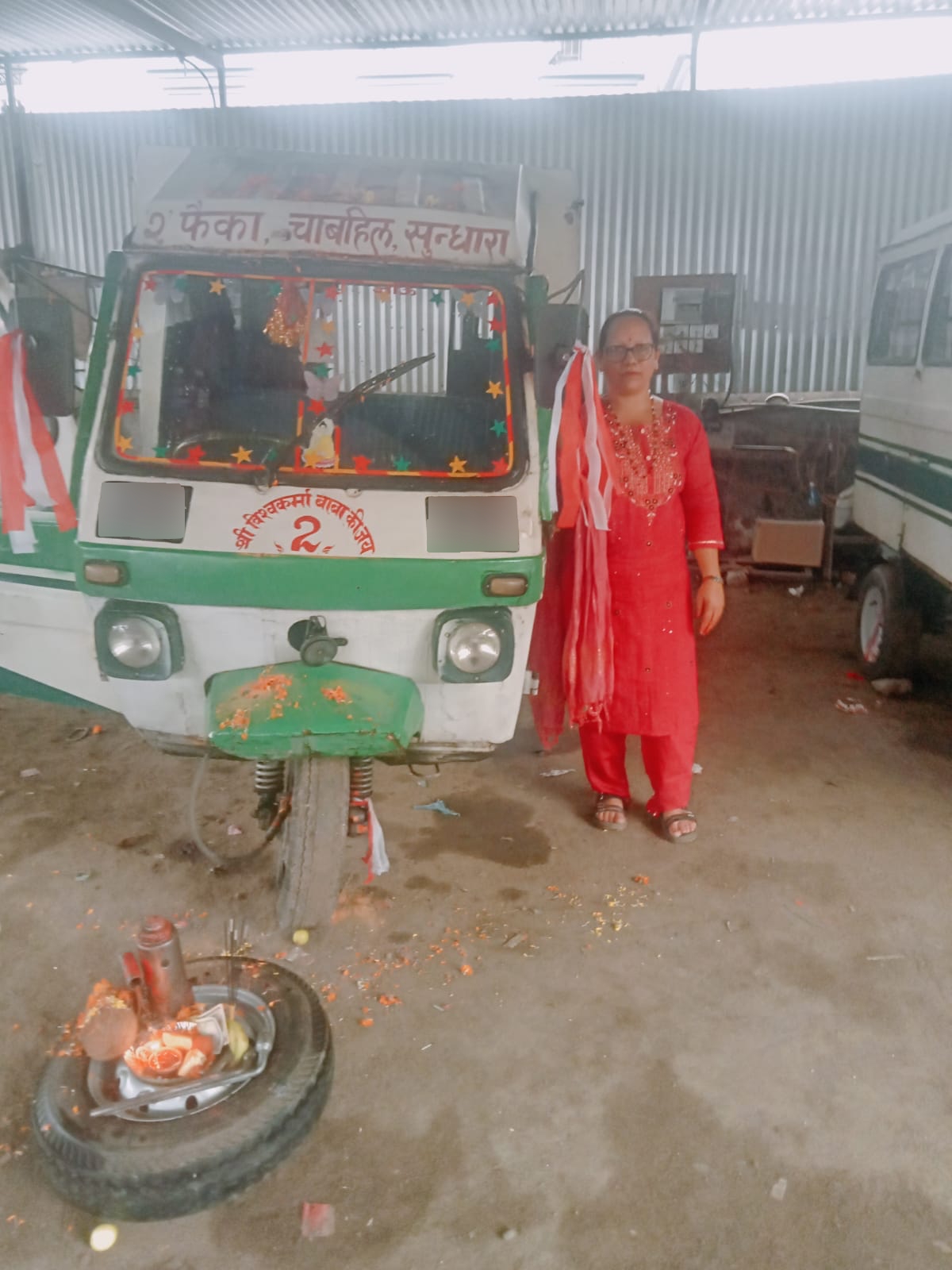
“I have no idea what I am going to do about my loans if I am unable to drive my tempo anymore,” says Nepali.
Fifteen years ago, Nepali had been working at a carpet factory, all while raising her young daughter alone, when a friend encouraged her to learn to drive a three-wheeler.
“It changed my life, I did not have to worry about my next salary, and could choose my own hours,” she says. This allowed Nepali to get her daughter an education and the means to send her to Dubai, where she now works.
“The three-wheeler network employs thousands of women who have come from disadvantaged backgrounds, and enabled them to stand on their own feet,” she says.
Umesh Raj Shrestha, former chair of EVAN says that Nepal’s achievement with Safa tempo is one of the earliest examples of locally manufactured and assembled electric transport in South Asia, even the rest of the world.
“It is our legacy, we must preserve it,” he adds.
There is speculation that microbus and other private bus operators have influenced the provincial government not to allow new registration of three-wheelers.
“But four-wheelers and three-wheelers can co-exist on tertiary roads, the government just needs to assign specific routes,” says Dharma Kumar Shrestha at NEVI.
Operators want the chassis number of their vehicles, which signifies ownership, to be transferred to new ones after the old ones are scrapped. “Replace Safa tempo with Safa tempo,” says Indra Maya Shrestha emphatically.
Others note that Nepal’s policies have begun to reflect the political leadership’s inclination towards sophisticated mass transit options, like articulated buses seen in urban spaces globally. The RSP government’s ambitious Vision 2040 for Kathmandu goes one step further than articulated buses to a metro rail network for the entire valley.
“Increasingly, Nepal’s leaders aspire to Western ideals of urbanisation – so we hear about bringing in articulated buses and other large vehicles,” says Shrestha. “And while such vehicles are important features of urban public transport, there needs to be an understanding of our context and history for a mix that best fits Nepal.”
In a post on social media last month, NEVI managing director Lobsang Lama expressed puzzlement that the government celebrates four-wheeler EV imports while refusing policy support for Nepal-made public electric vehicles aimed at the poor. Four prototypes are currently at the NEVI factory in Chapali.
“It is sad to see our tested vehicles gather dust in our factory, if other new vehicles can be replaced, why not three wheelers?” asks Dharma Kumar Shrestha of NEVI.
There are other concerns. Operational skills for Safa tempos are largely non-transferable to other vehicles. “If our vehicles are scrapped, it will be difficult to immediately shift to driving other types of vehicles,” says Manju Nepali.
Others like Indra Maya Shrestha, are optimistic that Safa tempos are here to stay: “Our three-wheeler transport system provides indispensable service to countless commuters on fringe routes. And we now have a government whose main agenda is to reduce unemployment. I don’t think this leadership will want to deprive even more people of jobs.”