|
|
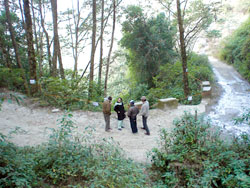
In the hills of Shivapuri National Park north of Kathmandu lies a suspected mass grave or cremation site where the bodies of 49 alleged Maoist supporters who went missing in 2003 and are believed to have been buried.
The inmates were taken in trucks from the Army's detention centre at the Bhairabnath Battalion in Lazimpat (see: Nepali Times #351, nepalitimes.com/issue/351/Headline/13579). The National Human Rights Commission along with a team of forensic experts began excavating the Shivapuri site last week. Results of the Shivapuri investigation will help answer lingering questions for the families of the Bhairabnath detainees.
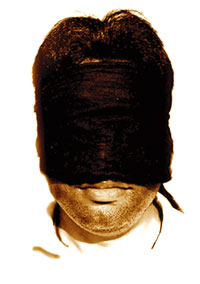
A glimpse of the reality of Bhairabnath Battalion is seen in Pranay Limbu's extraordinary documentary Forgive! Forget Not! screened at the 5th annual Kathmandu International Mountain Film Festival earlier this month. The majority of the film is told through journalist Bhai Kaji's blindfolded eyes as he miraculously survives 15 horrific months of excruciating torture at the hands of security forces who are convinced he is a Maoist supporter.
At the end of the film, Limbu asked Kaji if he seeks revenge for the atrocities he suffered. Kaji explains that revenge is never-ending. He would rather stop the cycle of violence by forgiving his torturers and helping expose the whereabouts of other detainees who have disappeared into secret detention centers run by the security forces or taken by the Maoists.
Kaji's decision to choose forgiveness over vengeance and to work toward social justice is a lesson the political parties should take to heart. A Nepali Truth and Reconciliation Commission (TRC) could lead to forgiveness and social justice if the political parties, who are authorised by the interim constitution to create a TRC, do not construct one simply for legal prosecutions and blanket amnesties.
As in Peru and South Africa, a TRC that goes beyond mere legal justice and that is driven by the victims and their communities will achieve a more genuine and holistic sense of justice, a social justice. In turn, this kind of Nepali TRC can lead to reconciliation at the local and national levels, as well as immense gratitude to the political parties for fulfilling their promise to address the injustices inflicted on the Nepali people.