

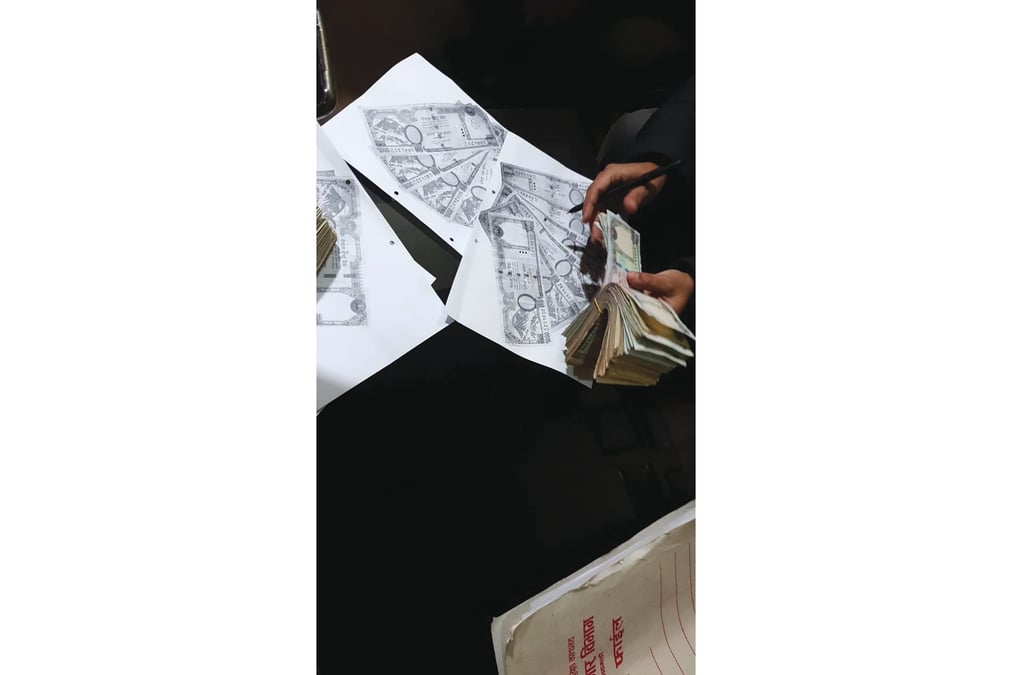
2025 marks ten years since the free-visa-free-ticket policy was introduced that caps worker paid fees at Rs10,000 if employers do not cover it. But there is not much to celebrate since workers continue to pay excessive recruitment fees.
Many reports have covered the implementation failure of this policy: workers pay, they receive receipts stating Rs10,000 even when they have paid significantly higher, and recruiters pay taxes on just this amount as the rest is, pick your label: black money, bribe, commission. The legally stipulated amount sometimes might not even cover the ‘cut’ often offered to those in power as part of the ‘setting’ to facilitate migration. All this is an open secret.
The recruiters association, NAFEA, demands that the legally allowed service fees of Rs10,000 under the free-visa-free-ticket scheme be revised to a month’s wage. In the current climate, this is a reasonable demand. The Philippines has a cap of one month, while India has set the limit of INR20,000, or 45 days’ worth of wages. In the case of outgoing workers from Nepal to Korea under the Employment Permit Scheme (EPS), the fees are over $1,000 -- but all workers are charged the same, there is a transparent breakdown of costs that apply equally to all, and workers are able to recoup this cost within a month.
All these features of transparency and predictability are missing for workers headed to the Gulf and Malaysia where the free-visa-free-ticket policy applies, but rarely implemented. Workers are arbitrarily charged as per the recruiter’s or individual broker’s demand. There is no certainty when they can recoup costs, usually it takes many months. In this context, the debate around around Rs10,000 versus 1 month in service fees is moot, since workers are paying significantly higher.
The free-visa-free-ticket scheme also does not allow for other policy alternatives. Even though workers are paying heavily by borrowing informally, policies to lower costs such as via no-collateral interest rate loan schemes are not prioritised. If a worker is paying the recruiter a reasonable fee-- all things considered-- as a month’s salary with transparent and favorable job terms, they would still be treating it as a shady under-the-table deal.
The Nepal government can do a lot more to clamp down on fraudulent recruiters, empower migrant workers with correct information and have proper monitoring systems to bring costs down, because there is no limit to how much workers are being charged currently.
But we have to consider the transnational drivers of recruitment costs in the international labor market and the limitations of a unilateral policy like the free-visa-free-ticket scheme.
The free-visa-free-ticket policy is based on the employer-pays model. The name itself is a give-away: the employer pays. But in the current reality, the employer does not always pay. In some cases, the employer may cover the costs, but HR representatives and other intermediaries might still engage in shady dealings.
Of course, this is not meant to give recruiters a pass. Through unhealthy competition to secure contracts, recruiters have allowed employers or their representatives to avoid paying for various or all aspects of the recruitment fees or costs. Even when recruiters do receive payment from the employer, they often charge workers as well, profiting from both sides simply because they can. Individual informal brokers, too, continue to prey on workers.
But in this mess, why do some workers still migrate at zero cost then? Surely the free-visa-free- ticket policy is working in some instances? Not really. It has more to do with policies and actors outside our borders.
For example, many recent recruitment drives offering zero-cost placements have originated in Malaysia. This is not a result of the free-visa-free-ticket policy, but rather a consequence of some Malaysia-based companies becoming stricter with their recruitment practices and due diligence after facing export bans from countries like the US.
In fact, workers ethically deployed in many recruitment drives for Malaysia have benefited more than what the free-visa, free-ticket policy typically requires. Not only did they avoid paying fees, but their domestic transportation and lodging costs were also covered.