
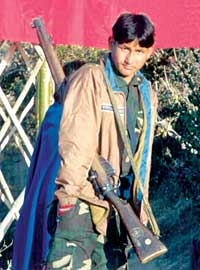
 Just six km from Nepalganj in the town of Khajura, the Maoists held a three-hour mass meeting on the evening of 18 June. About 300 armed rebels dressed in combat fatigues marched openly down the streets of the town, barely a few minutes drive from the regional army headquarters.
Even if it knew about the show of force, the army with all its sophisticated weapons and helicopters did not attack them. The rebels then got into their buses and jeeps and casually drove off along the highway to their bases in Bardia.
The Maoists were trying to thumb their noses at the military, which had just conducted an operation into their heartland in Rukum (see 'Rukum after the sweep', #205). The army said that since their soldiers did not encounter any Maoists, the rebels did not actually have control of the hills. But by parading right under the noses of the army in Nepalganj, the Maoists were trying to prove that they are still very much around.
"Our people's army is now capable of defeating the royal army," boasted Anaul, the head of the Maoists' Banke-Bardia command, while addressing the crowd in Khajura. There seems to be no shortage of bravado on both sides.
From what could be seen in Khajura, Maoist morale is high and there is considerable support for charismatic commanders like Nanda Kishore Pun (Pasang) who led the Maoist raid on army bases in Beni in February and on Achham two years ago. There have been some rebels who have opted out and surrendered to the army, but these numbers do not seem to be as high as the army makes out. 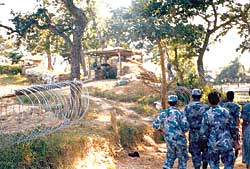 Maoists sources say several battalions in western Nepal have been upgraded to brigades and the best militants are trained and promoted to being 'urban guerrillas', equipped with captured automatic weapons and inducted into a commando task force to launch attacks in the towns and cities.
"The old regime is already nervous because they have seen what we can do, and even the royal army fears us now," says Athak, a central committee member of the western tarai rebel command.
The Maoists have said in numerous statements that their revolution has now entered a 'strategic offensive' stage and that they will now infiltrate the cities and carry out urban guerrilla attacks. This seems to have started, although in a small scale with daily news of bombings, targeted assassinations and abductions of school children and teachers in tarai towns and even Kathmandu Valley.
The movement of security forces has been restricted by devastating landmine attacks along the main highways. Security sources say they have defused numerous landmines laid along the Mahendra highway, and admit there may be more already placed under the road to be detonated when an army convoy passes through. The security forces' response to this has been to scale up fortification of their bases and increase personnel guarding government structures. Even the traffic police post in central Nepalganj now looks like a pillbox. 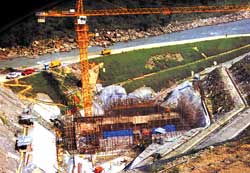 The Maoist-affiliated 'Tharuwan Autonomous Region' in western Nepal now holds sway over much of Banke, Bardia, Kailali and Kanchanpur. Ramchandran Chaudhary is the chief of the 'Tharuwan People's Government' and says confidently: "The old regime has been dismantled and everything is run by our government."
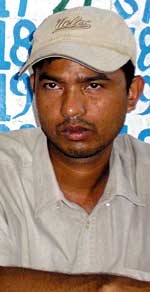 The Maoists have been traveling casually across the Nepal-India border in far west Nepal. Interestingly, they are arrested neither by the Nepali police nor India's much-vaunted Special Service Bureau (SSB), which is deployed at seven entry points in Bardia alone. They are also on guard in more than 12 border areas in Dang, Kailali and Kanchanpur. In June, the rebels smuggled large numbers of camouflage uniforms through Taratal and Kotiaghat of Bardia.