
 |
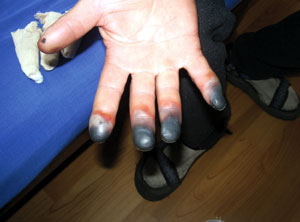
Living in the relative warmth of Kathmandu, it may be difficult for many readers to consider why frostbite is an important topic. One of the most important tragedy that happens regularly every trekking and climbing season in Nepal is frostbite amongst porters who accompany Western travelers. When they suffer from severe frostbite and need to have their toes or fingers amputated, their ability to earn a livelihood from portering is severely compromised.
Unfortunately the treatment of frostbite has not changed since Napoleon's army in 1812 tried to invade Russia in winter but failed miserably. Hypothermia (low body temperature) and subsequent frostbite amongst army personnel was an important reason for Napoleon's defeat. Essentially there is no specific, evidence-based drug therapy for the treatment of frostbite. Hence prevention of frostbite is of paramount importance. One of the things that Baron Larrey, Napoleon's surgeon, learnt during the march into Russia was that when soldiers heated their hands and feet at night on open fires and next day continued their march in subzero temperatures, this freeze-thaw-refreeze cycle had the most deleterious effect on the frost-bitten tissues. So, once warmed after freezing, the hands or feet should not be frozen again.