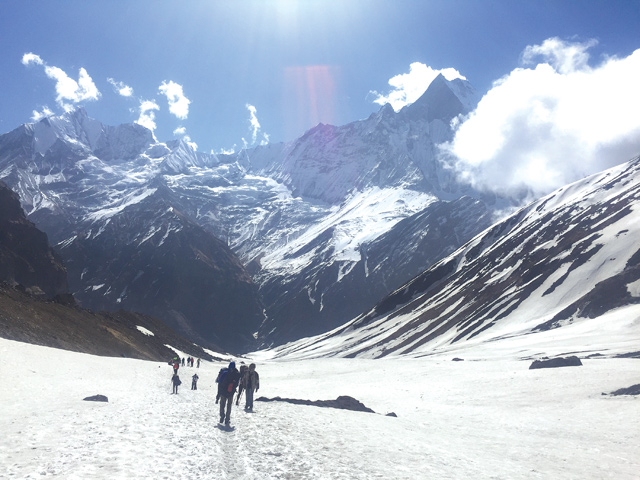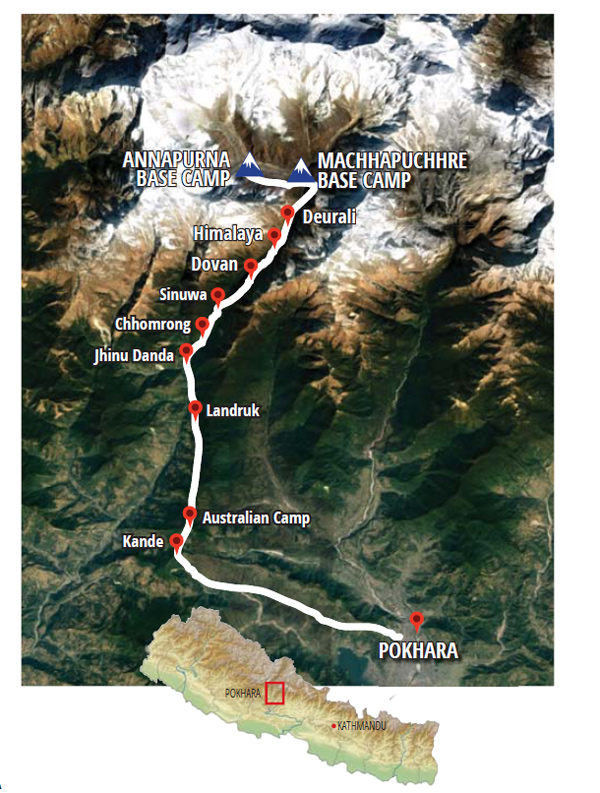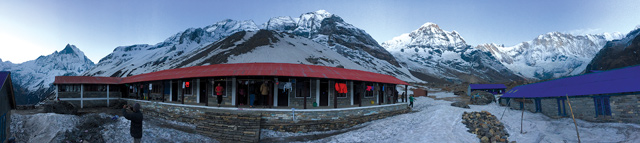
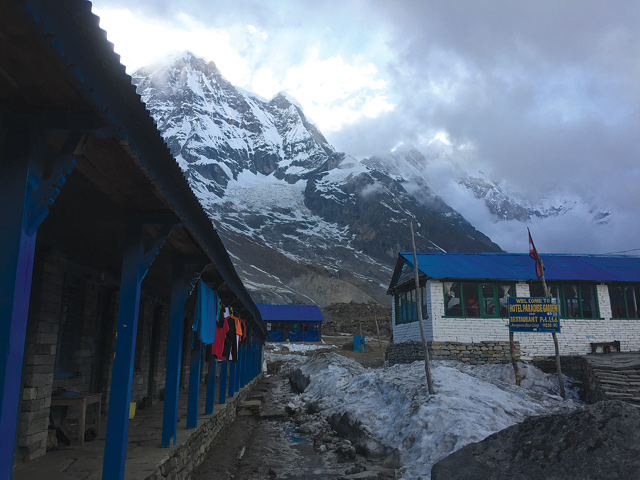
Annapurna Base Camp (ABC) is one of the most popular trekking destinations in the world, but limited hotels and lodges on the hiking trail has left visitors sleeping in dining rooms and storage areas. Tight quarters during spring season get even worse in autumn when trekker arrivals double.
The number of international visitors to the Annapurna Conservation Area, most destined for the ABC and Ghandruk treks, has increased three-fold in the last 20 years, but the number of hotels remains the same, thanks to the rigid policy of the Annapurna Conservation Area Project (ACAP), which has barred locals from opening new hotels or expanding to existing ones.
As visitor numbers continue to surge after the earthquake, the situation is becoming critical. “I tried my best to add rooms to adjust for the growing number of tourists but ACAP never allowed me to,” says Ram Gurung, whose father started New Panorama Guest House, maximum occupancy 25, in Deuarali three decades ago. “I receive more than 250 guests a day in peak season and accommodate them in dining and store rooms or wherever possible,” he adds. According to ACAP’s Pokhara office, 200-250 foreigners a day are taking permits for the ABC trek this spring season. This figure usually doubles in the autumn. There are no figures for domestic tourists. Although there are limited hotels after Chhomrong point, ACAP doesn’t cap the number of permits. More than 19,029 foreigners trekked to ABC in 2016.
“We feel really bad when our guests complain about poor accommodation services,” says Amit Gurung of Polar Trekking and Expedition in Pokhara. “ACAP needs to understand the growing popularity of ABC trekking and act accordingly. The only solution is to build new lodges along the trail.”