
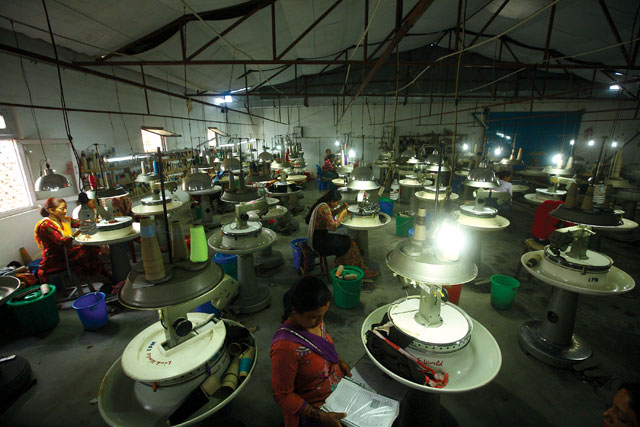
SHOP OPEN: Seamstresses work on sweater designs at the Everest Pashmina Warehouse two weeks after the the earthquake on 25 April. Photo: Gopen Rai
It was Saturday and Kali Bahadur Pahari (pic) was at his home in Badikhel when a 7.8 magnitude earthquake shook Central Nepal. The first floor of his two-storey house was badly damaged. Luckily, his family escaped unhurt.
A long time employee of Everest Pashmina Knitting and Weaving Industry in Jharuwabasi, Pahari came back to work a few days after the earthquake. Like him, there were other employees eager to get back to work even though the back wall of the building where the sewing stations were located had collapsed and the main office and warehouse were damaged.
Fifty employees worked together to clean up the mess and get the factory up and running. An engineer was called who assessed the buildings and supervised the reconstruction of the back wall. Three weeks after the earthquake half of the 300 employees are back at work, producing handcrafted pashmina products.
Reopening the factory so soon wasn’t an easy decision for Santosh Gurung, owner of the small family-owned business in the south-west corner of the Valley. One-third of the workers had damaged homes and a seamstress lost her life. But seeing that his employees were eager to be back at work, he decided to go ahead with the production.
“Opening the factory was important not only for employees who depend on us for livelihood but also because we owe it to our customers to deliver the products on time,” says Gurung. “It is also the best way to begin the recovery process.”
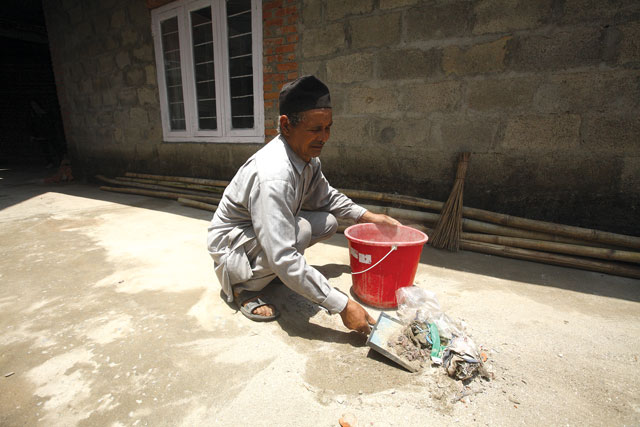
Fifty employees including Kali Bahadur Pahari worked together to clean up the mess and get the factory up and running.