ॐ भूर्भुवः स्वः तत्सवितुर्वरेण्यं भर्गो देवस्य धीमहि धियो यो नः प्रचोदयात्
Most Hindus wake up to this mantra in the morning as it is chanted over the tv, radio or in a neighbourhood temple. It is only the most popular and powerful Vedic chant, the Gayatri Mantra.
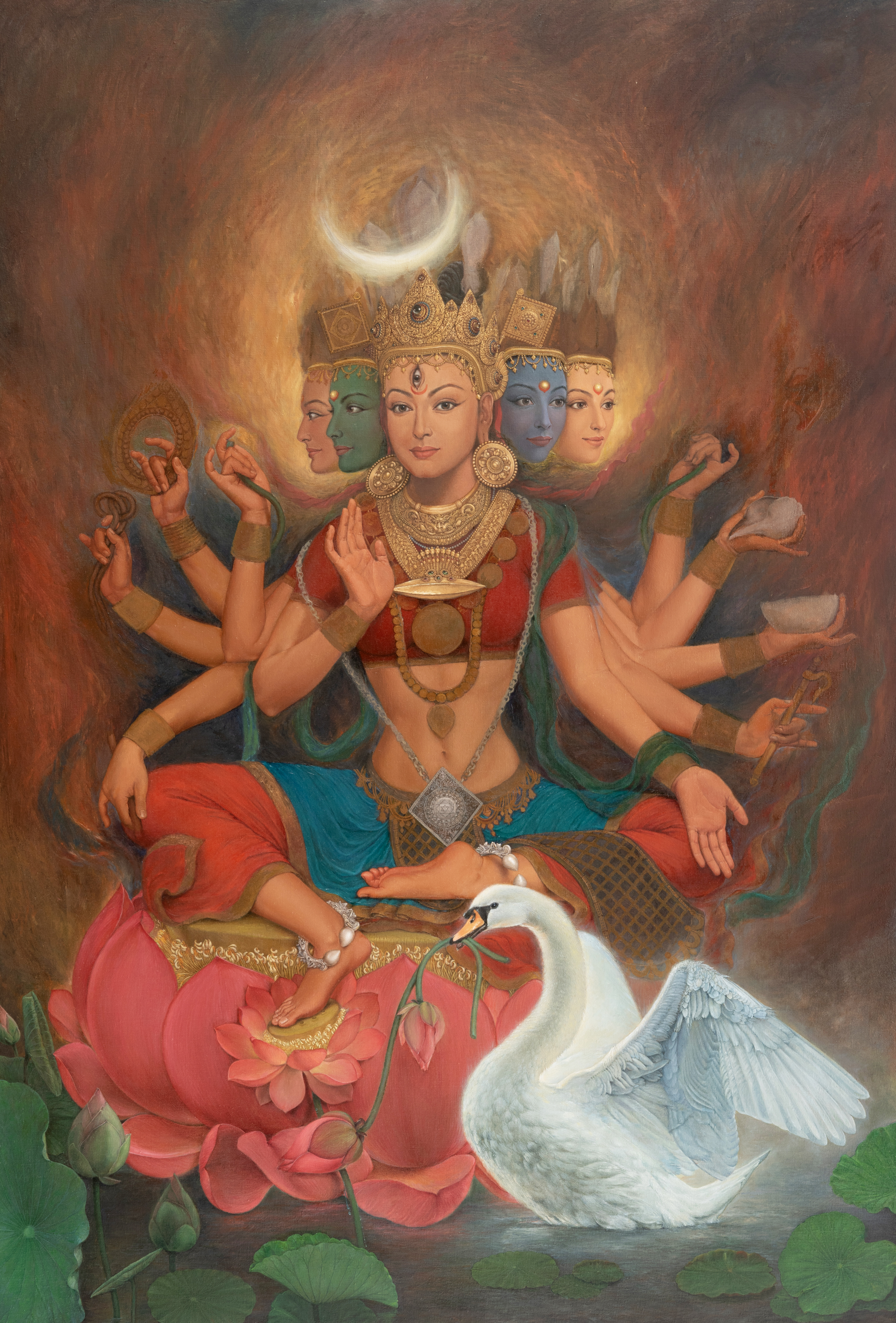
But most have never even visualised the face that goes with the goddess. Gayatri Devi is the wife of Brahma, the mother of the Vedas, the female deity who encompasses the divine trinity - creator, sustainer and destroyer.
Hindus have been worshipping Gayatri Devi for millennia. Now, through his devotional art, Uday Charan Shrestha has depicted this powerful deity and her mantra that calls to invoke the divine energy in us.
The work itself took 20 years to complete, and is a masterpiece of Nepali neo-traditional paubha, a labour of love and life-long devotion.
The immaculate beauty of Nepal’s gods and goddesses has been depicted and enhanced in every period of the country’s cultural history. But in the 1990s, Shrestha attempted something groundbreaking. He introduced a genre of paubha art that was three-dimensional, energetic, vibrant and filled with emotion and passion.
For centuries, we have seen the divinity of our deities with straight faces and no emotive expressions. Paubha art evolved in Kathmandu Valley over the centuries with stylistic changes in techniques, motifs, background, and colour, but it took a while for a revolutionised look depicting goddesses with feminine beauty to come about.
At first, the change caused some uproar in traditional sects because the new genre focused more on sensuality than saintliness. But Shrestha was eventually applauded for daring to embark on a non-traditional depiction of female beauty, and proving that exquisiteness is next to godliness.
Read Also: Unnamed masters of Nepal’s art identified, Shaguni Singh Sakya
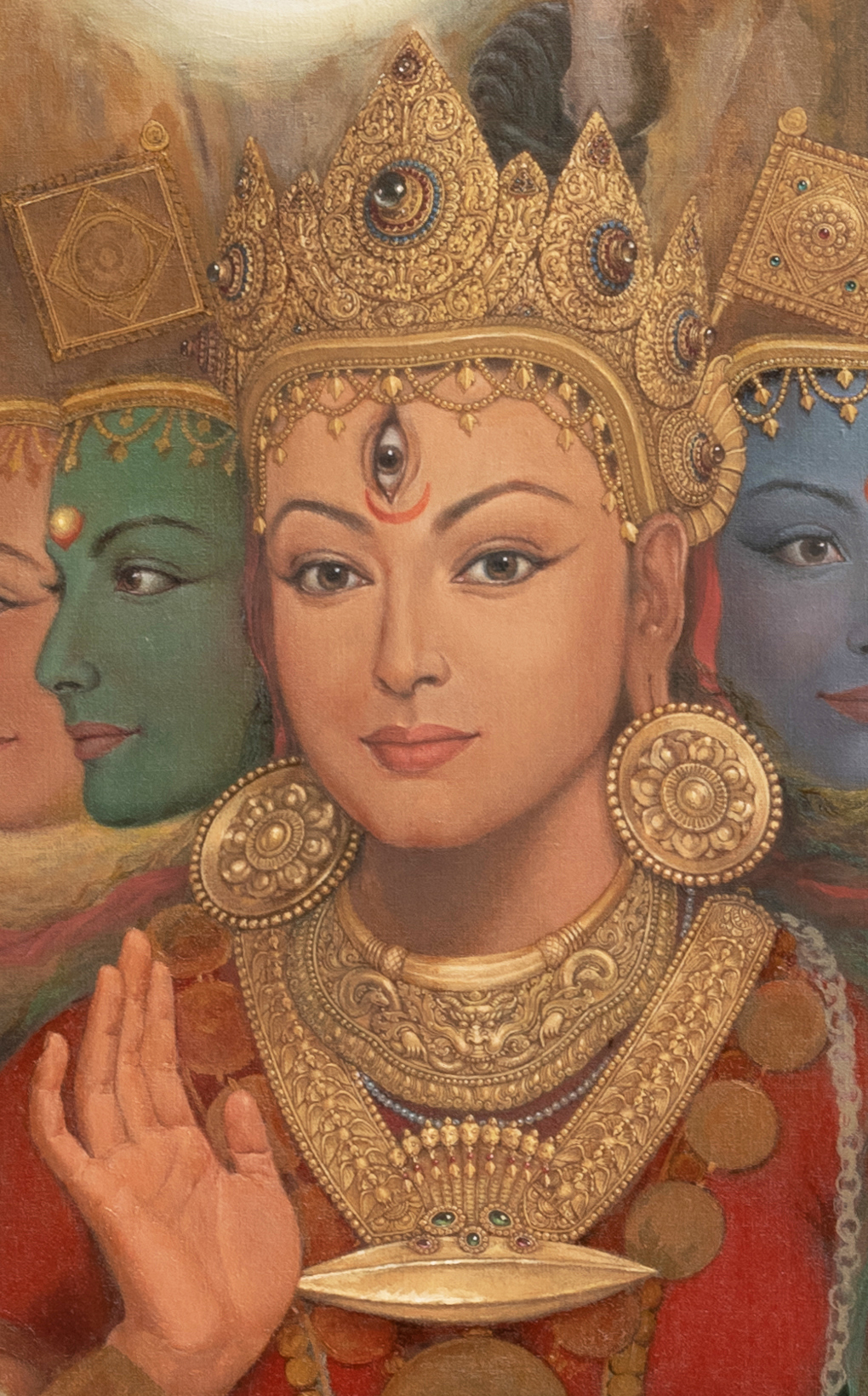
Besides the humanely expressive looks, Shrestha also added further value to paubha highlighting the jewellery with meticulous detail. Sacred jewellery is a captivating feature of many paubhas and Shrestha magnified its importance by painting it intricately.
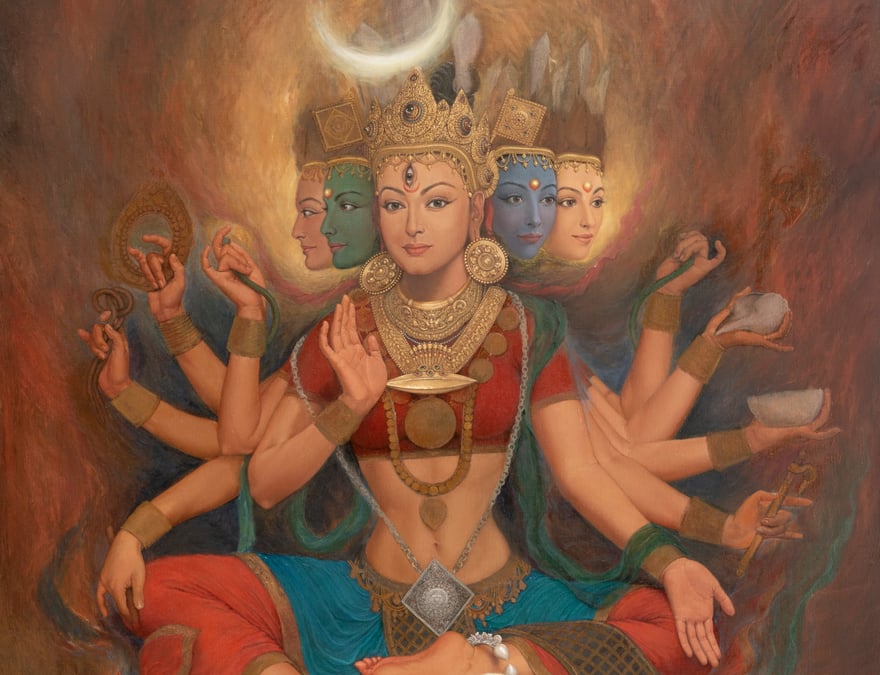
The jewellery of Gayatri Devi is considered to be one of the most elaborate ever in Nepali paubha art history. Goddess Gayatri has five faces representing the five fundamental elements, ten hands carrying several attributes of cosmic and spiritual powers, but it is the central face that is overwhelming in its sheer mesmerising perfection.
Many have drawn comparisons with Bollywood actresses like Madhuri Dixit, Aishwarya Rai, Rekha, or Hema Malini. But perhaps it is Bollywood actresses who try to look like our goddesses.