
 ANURAG ACHARYA |
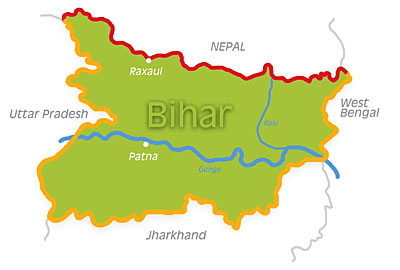
The 5:30 am Hajipur Express from Raxaul was uncannily familiar. I had travelled through Bihar many times in the last three years on my way to university in Delhi and back. But Bihar then was just a moving picture from the train window. This time, me and my colleague Navin Jha explored the state which was less known for its glorious history and more for notorious politics and crime.
We reached Hajipur at noon and from there shared an auto rickshaw with 12 people. It was 40 degrees but I instantly felt at home. For the next two days we wandered around the streets of Patna till late at night. Navin had been there before and told me how much Patna had changed. We ate dinner at a local dhaba and it were surprised to see families up and about at midnight. A woman with her sister-in-law and four year-old-son had come out to eat panipuri on Boring Road. "I still remember the days when women were attacked on the streets of Patna in the broad daylight," she said, but things have improved now and we feel safe going on our own even at night."
On the third day of our visit, we went to the Department of Information. The walls were plastered with portraits of Chief Minister Nitish Kumar's with enthusiastic quotes about his vision of a poverty-free and corruption-free Bihar.
But when there is so much to do to catch up, progress can be slow. Outside, we came across a slum in the middle of the VIP zone. Around 10 small tents made out of patched plastic bags were scattered under the sign board that read Netaji Marg. Obviously, the Netas including 'Susasan Babu' Nitish Kumar had not yet noticed these half-clad men and women outside their gate wallowing in the filthy water that had overflowed from a nearby drain. An eight-year-old boy paralysed by polio and visibly malnourished was lying in the pavement staring blankly at the sky while flies swarmed around his face. Few meters ahead, the mother who was peeling at half dried potatoes looked up for a second and then went about her work.
 |
In Mahnar we tracked down Professor Prafful Kumar Singh, a social critic. We had run out of our mobile batteries, and as I reached for my charger the professor waved his hand fan and said, laughing: "You are not in Patna my dear. This is Bihar." Power demand soars in the hot season and electricity is rationed, just like back home.
He took us to the nearby block office where the newly elected gram panchayat members were being sworn-in. Women in Bihar have been given 50 per cent reservation in local bodies while the Laalus and Mulayams continue to block women's bill from being tabled in the parliament.