
|
|
The Himalaya is the water tower that is the source of water for over one
billion people. Three of the region's greatest rivers, Indus, Ganga and
Bramhaputra start close to Mansarovar. From their sources in eastern Tibet, the
Yangtse flows to the East China Sea, the Mekong goes down to Vietnam, the
Irrawady and Salween flowdown through Burma to the Bay of Bengal.
What
happens to the snow and ice in the Himalaya will determine the future of
agriculture in countries downstream, influence the growth of cities and the
future of hydropower dams.
'Disappearance of glaciers will have major
consequences on water resources, especially in regions such as the
Himalayas-Hindu Kush,the Andes, Rocky Mountains and the European Alps where many
dry-season river flows depend on glacier meltwater,' warns UN Environment
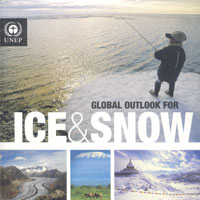
Program in a recently released book, Global Outlook for Ice & Snow.
Ancedotal evidence from the Himalaya about glaciers receding
dramatically even within one generation is backed up by evidence that global
glacial retreat in the past 100 years, and especially since the 1980s, is
related to global warming.
Global Outlook for Ice & Snow examines
the dynamic interlinkages between polar ice, ice on land, permafrost and
glaciers and how they are being affected by global climate change. The
Intergovernmental Panel on Climate Change (IPCC) which shared this week's Nobel
Peace Prize with Al Gore in its Fourth Assessment Report concluded that most of
the global warming over the past 50 years is due to anthropogenic greenhouse gas
emissions.
That should have clinched the issue, but there are still
skeptics. The trouble is, by the time we know for sure whether climate change is
a result of human carbon emissions or not it will be too late to do anything
about it.
The UNEP book is full of fascinating facts, trends and
predictions. For example, the North American Arctic is warming twice as fast as
any other region on the planet. Antarctica is not warming as fast, but may pick
up by the end of the century. Mean snow cover in North America is declining at
1.3 percent a year, this means less sunlight is reflected and there is positive
feedback to global warming.
In its section on the Himalaya, the book
notes that there has been a doubling of glacial retreat in the Himalaya since
the 1970s. Even if global temperatures rise by only 1 degree by 2100, which is
the optimistic low scenario, scientists estimate that Himalayan glaciers will
decline by 43 percent. If global temperatures rise by 6 percent (pessimistic
high scenario) then Himalayan glaciers would shrink by 83 percent.
Reduction of snow cover is already have dramatic effect on water
resources. Mountain snow contributes to water supplies for one-sixth of the
world's population. As rivers run dry in the dry season, there would widespread
human misery and perhaps water wars.
The book has a dire warning for the
Himalaya: 'The result of glacier loss is not only direct tghreat tolives, but
also great risks of poverty, reduced trade and economic decline. This poses
major political, environmental and social challenge in the coming decades.'
So, what is to be done? The book cites the IPCC's conclusion:
'Greenhouse gases must stop increasing and start decreasing no later than 15-25
years from now.' Economists have said this can be done without a decline in
living standards. But do the world's main carbon emitters (the US, China, India)
have the political will to do so?
Related Articles
. THE BIG
THAW
. Himalayan meltdown
. An
inconvenient peace prize