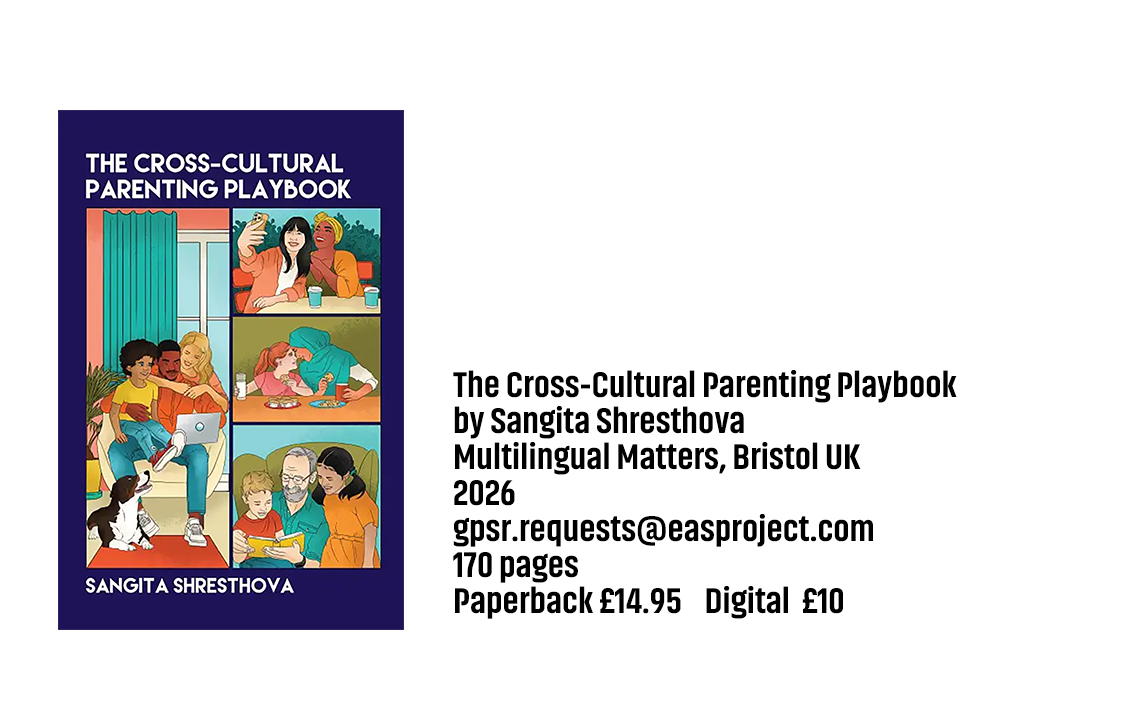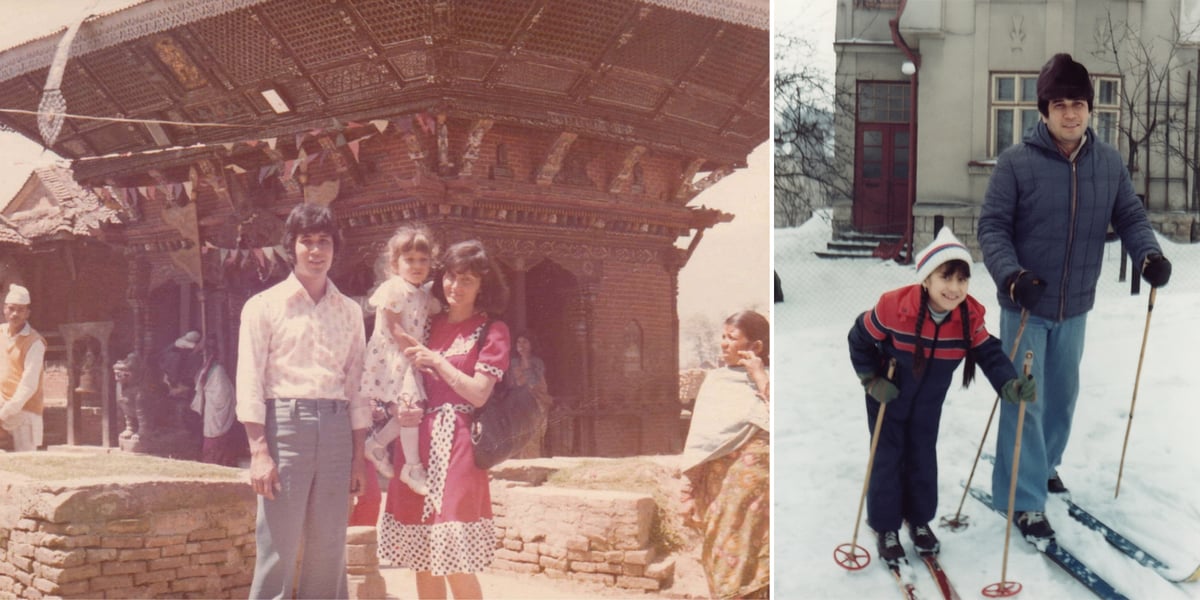
While studying at Princeton, Sangita Shresthova was asked to perform a Nepali dance at a program. She did, and a local newspaper carried a photo with the caption, ‘Native of Nepal’.
But she recalls feeling like an impostor. Her father is Nepali, her mother Czech. She is married to a Gujrati from India and she is raising a son in Los Angeles.
All this makes Shresthova a ‘Third Culture Kid’ (TCK) and the right person to write this guide on cross-cultural upbringing that is useful not just for parents and grandparents in international marriages, but for everyone else in a multicultural world.
Cross-Cultural Parenting Playbook is a much-awaited manual for an interconnected Nepali diaspora across the globe finding partners from other countries. The book can also offer valuable tips for inter-ethnic Nepali parents as cross-cultural marriages become more common within Nepal itself.
‘Identity is not about choosing between cultures, instead I need to accept the contradictions and find joy in the intersections,’ writes Shresthova as she describes feeling Nepali in the streets of Patan, being Czech in Prague, and an American now. This is an experience she wants to pass on to her 11-year-old son, Marek, who is also growing up in an Indian-Nepali-Czech family.

Each of the book’s chapters on language, media, popular culture, cuisine, are interspersed with Reflection Questions that readers can think about and seek answers on their own. These are not one-size-fits-all suggestions, the guidelines can be individualised.
Marta, the daughter of Chinese-Singaporean and Czech parents provides useful advice when she says, “I am not half-Czech and half-Chinese. I am three times something.”
Indeed, Shresthova believes that children of international parents are more than the sum of their parts — they are ‘exponential, not fractional’, they are ‘both insider and outsider’.
Sangita Shresthova’s name itself indicates a multi-cultural nomenclature. The ‘ova’ suffix to her father’s Shrestha name comes from the Slavic custom of adding it to a father’s or husband’s surname – although there is now a move towards non-gendered names.
In writing her research-based, story-driven book, the author surveyed a wide range of cross-cultural parents from China, Korea, Afghanistan, Europe, Latin America, Canada, and the US. The interviews show how international couples allow their children to live between many worlds of extended families spread across continents.
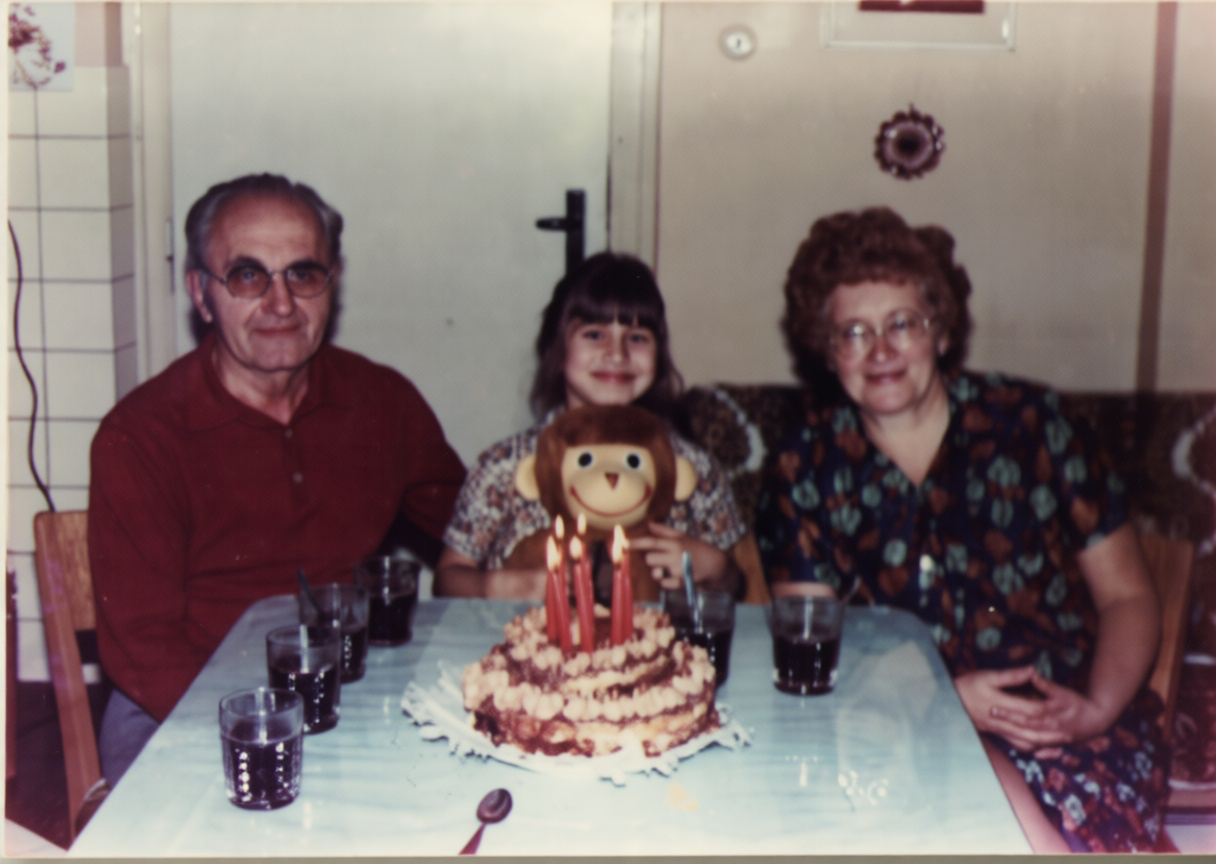
Especially useful are chapters on old and new media, popular culture, food and dance as ways to bridge both space and time for children whose parents come from different parts of the world.
Just like Trevor Noah's self-deprecating humour about his cross-cultural upbringing in South Africa, Shresthova highlights the role of humour in defusing stress in international families. One mother she interviews is a Hong Kong-Chinese married to a Czech who is also a stand-up comedian with a repertoire of ice-breakers.
Even as more Nepali families become intercontinental, the distance that separates them is spanned by Facetime and WhatsApp video chats. But visa restrictions, expensive travel and even censorship make these connections fragile.
Watching movies, cultural programs, cooking can turn blended identities into cross-cultural bonds to smoothen the rough edges.
Shresthova does not gloss over the challenges, citing statistics to show that divorce rates among cross-cultural marriages tend to be higher than average. She is frank about the difficulties her own parents had to overcome while straddling European and Nepali cultures when she was growing up in Nepal in the 1980s.
Her parents met in Communist Czechoslovakia, came to Nepal during the Panchayat era, saw the transition to democracy in both their countries after 1990, and the eventual breakup of Czechoslovakia. She is the author of books on Bollywood dance and youth activism, and is currently Associate Research Professor of Communication at The University of Southern California.
Towards the end of the book, Shresthova writes: ‘I often dream of showing Marek the Nepal I grew up in. But the Nepal I carry in my heart no longer exists. Walking through Patan’s streets or gazing at the Himalayas might one day be the start of his own relationship with Nepal. I can nurture this connection, but ultimately he must make it his own.’