
“So what do you remember, Aaron?” is a question posed, 10 years after the incident, to one of the two murderers who beat Matthew Shephard to death in 1998 in a small town in the US.
The question is asked by a member of the theatre group that researched and documented the after-effects of that incident, which has become the iconic hate crime against anyone different, particularly in terms of sexual orientation. The play in question is The Laramie Project: 10 Years Later, An Epilogue.
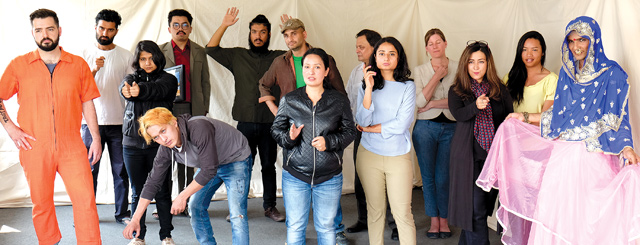
Two years ago, a Nepali production of the anti-homophobic, anti-hate play, The Laramie Project, was staged in Kathmandu. The intensity and stinging relevance of that production moved audiences here even though it was performed in English. The play is returning to Kathmandu this month as a sequel of sorts, based on the original follow-up production by Tectonic Theatre.
The original Laramie Project presented interviews of family, friends, police officers and the murderers in order to learn more about the victim and the crime itself. The follow-up returns to some of the same people to ask them about changes in attitudes, policies and legislation. But more importantly, this particular One World Theatre production, jointly directed by Bruno Deceukelier and Rajkumar Pudasaini, incorporates LGBTIQ (lesbian, gay, bisexual, transgender, intersex and queer) stories from Nepal itself.
Presented in Nepali, these stories are based mainly on strong, personal narratives from LGBTIQ authors in Pride Climbing Higher, a writing project from Creative Nepal, in collaboration with Blue Diamond Society (BDS). The project provides an opportunity for audiences, students, journalists and policy makers to reflect and debate important social issues like HIV, LGBTIQ rights, anti-hate crime legislation, the role of media and how communities attempt to define themselves and rewrite their pasts.