
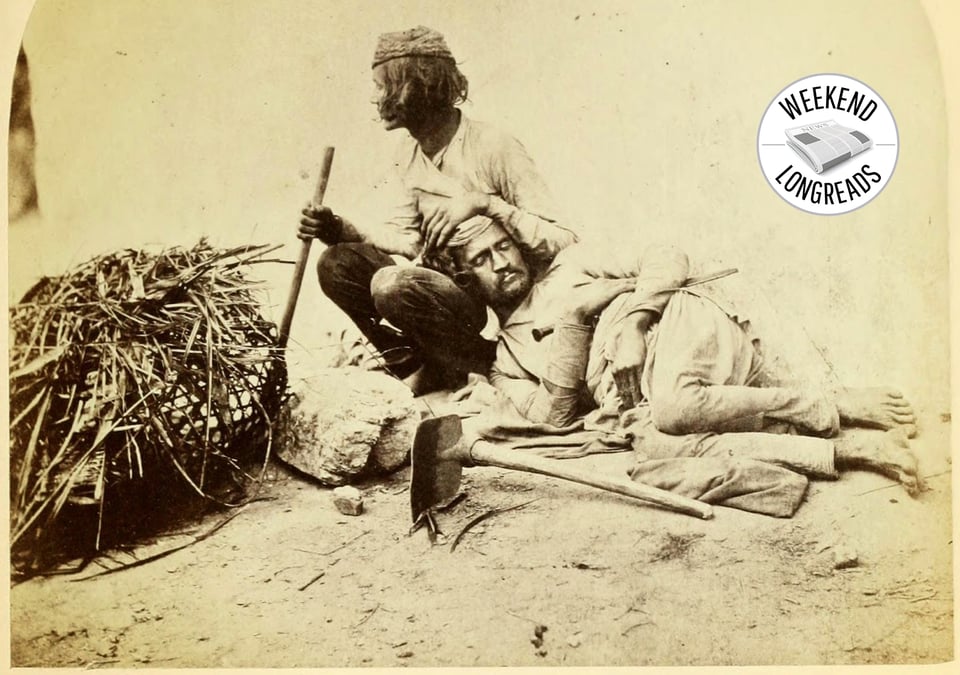
From stone spouts to cast-iron mains, Nepal’s water system and its struggle to provide safe water tells a larger story of power, disease, dependency — and lessons for the future.
From 1823 to 1891, the Nepali state made just two notable interventions in Kathmandu’s drinking water system. The first was when Prime Minister Bhimsen Thapa commissioned a stone pout (hiti) to tap groundwater within the valley’s traditional supply system.
The second came nearly 70 years later with Nepal’s first industrial-era water system, the Bir Water Works in 1891 under Prime Minister Bir Shumsher Rana.
Linking these two milestones was the spectre of cholera. From the 19th century on there were seven global cholera pandemics. Originating in Asia, the disease reached Europe and the Americas, the Vibrio cholera bacillus breeding in poor sanitation wherever it found it.
The first wave erupted in 1817, followed by others in 1829, 1852, 1863, 1881, 1889 and, finally, in 1961, the seventh pandemic which still lingers on. London, the epicentre of the Industrial Revolution, was repeatedly stricken.
In Britain ‘miasma’ foul air was blamed. In Nepal, cholera was seen as divine damnation. By the late 19th century, as Nepal’s relationship with Britain deepened, the Bir Water Works was inaugurated in 1891 as a defence against cholera.
Whether cholera also shaped Bhimsen Thapa’s decision in 1823 is less clear. Contemporary records note the commissioning of Sundhara, but do not refer to the cholera epidemic raging at the time. The silence itself is telling: Nepal’s elites were ruling in the shadow of the disease.
Bhimsen Thapa first resided in Thapathali Palace, which was built in 1802 by Nain Singh Thapa, father of Mathabarsingh Thapa, who would briefly become prime minister in the 1840s. In 1806, Bhimsen Thapa moved to Bagh Durbar, a new complex on the western edge of Tundikhel.
Historians are vague about the water supply in the residences of the nobility, but wells and water hauled from rivers, ponds, canals, and other sources were likely the primary sources. A small hiti north of Bagh Durbar, near today’s Sun Dhara, may have supplied the palace. In 1823, Bhimsen Thapa had it enlarged, making it the last and largest state-built hiti in Kathmandu.
Even as Bhimsen Thapa was involved in palace intrigues and border conflicts, Britain was engineering pipelines. By the late 18th century, Sir Thomas Simpson had invented the bell-and-spigot joint, making long-distance pipes viable. Fluid dynamics, dealing with pumps, pipes, and filters, was becoming a foundational discipline.
In Kathmandu, the scourge continued. Cholera struck Kathmandu repeatedly, in 1862, 1867, 1872, 1874 and 1875. The 1872 epidemic, according to historian Tom Robertson, claimed between 200 and 250 lives a day. On average, cholera killed between 1,200 and 1,500 people annually in Kathmandu Valley, an enormous toll for its small population.
The summer of 1885 was especially calamitous: a cholera epidemic ravaged Kathmandu and its periphery from the beginning of June until late August. The disease even breached the royal palace, reportedly killing 23 people, mostly young girls. Records show that 909 people received treatment at the British Residency dispensary, and estimates suggest that as many as 10,000 people perished in a city of 50,000.
In November that year, Bir Shumsher seized power in a coup. He inherited not only a premiership but a Valley ridden with disease. Cholera was endemic, and it was accompanied by typhoid, smallpox, goitre, syphilis, and chronic dyspepsia. The The British Residency dispensary at Lainchaur was inadequate.
“In a poor country like ours, wealth means health,” Bir Shumsher remarked, an unusually pragmatic admission that epidemics were not divine punishment but structural afflictions of urban life. He soon pledged to expand health care. In 1889, he opened Bir Hospital and staffed it with Indian doctors to treat cholera, typhoid, smallpox, and other prevalent illnesses.
PIPED WATER
Bir Shumsher also recognised the need for safe drinking water. Between 1866 and 1872, he had served as Nepal’s ambassador in Calcutta, and he must have seen water mains already in operation there, and a filtration plant inaugurated in 1870. Madras had installed such a system as early as 1800, Bombay constructed the Vihar and Tulsi reservoirs in the mid-19th century.
In Kathmandu British Residency personalities such as George Gimlette must have urged Bir’s government to quicken the construction of the hospital and water system, yet the archival traces of such exchanges still await historical scrutiny.
By the late 19th century, the British had developed a technological ecosystem for water supply, intakes, pipes, fittings, reservoirs, and trained engineers. Bir Shumsher appealed to the British Government in India for engineering assistance.
A British engineer named Mr Feigneur surveyed Kathmandu to prepare maps, and estimated the volume of water that could be brought from the Rudramati River. In 1889, a more experienced engineer, Lockhart Matthew Sinclair arrived. He was a Scotsman educated at Wellington College and the Royal Indian Engineering College, with prior experience in constructing waterworks in Jubbulpore and the Viceregal Palace in Shimla.
Appointed State Engineer of Nepal (1889–1892), Sinclair reviewed Feigneur’s plans, updated them, and chose the Bishnumati River as the source of the city’s drinking water.
Sinclair’s design included a reservoir at Panipokhari, at 1,330m elevation and 30m above Tundikhel, thereby enabling gravity-fed distribution in pipes. With a capacity of 7,327 cubic metres, the reservoir could store nine days of supply.
The system was designed to serve about 70,000 residents through both private connections and public standpipes. The reservoir was a single-compartment tank with an arched brick roof covered in earth and turf. Its brick walls were bonded with lime mortar and aggregate, and its floor was dressed with fly stone.
Work on the valley’s water supply began in 1888, three years after Bir Shumsher seized power. The following year, Bir Hospital and the Bir Water Works took shape. The project involved some 40km of imported cast-iron pipes, weighing 1.866 million kg and inscribed with the marks of Scottish foundries ‘Ally and McLean’ and ‘Glasgow’.
Construction required 620,000 man-days of labour and cost over Rs600,000. Transport costs inflated prices: a load of cement costing Rs10 in Calcutta was worth Rs33 by the time it reached Kathmandu.
Bir Water Works was inaugurated in September 1891, six years after the cholera epidemic. Water flowed out of 131 taps, including eight in Lainchaur, six in the royal palace, eleven in the prime minister’s palace, sixteen around Tundikhel, thirteen in Thapathali, seven in Thamel, and two in Naxal.
The system’s designation, the term ‘works’ , echoes the Chelsea, Calcutta, and Glasgow Water Works, underlining its industrial pedigree. Water was also supplied to Phora Durbar, Bir Shumsher’s palace of music and dance whose fountains sprayed rose-scented water in a display of opulence.
The Bir Dhara Works was more than an engineering scheme: it was Nepal’s first modern public-health intervention. Safer drinking water curbed waterborne disease, and the number of cholera outbreaks declined, but were not eliminated.
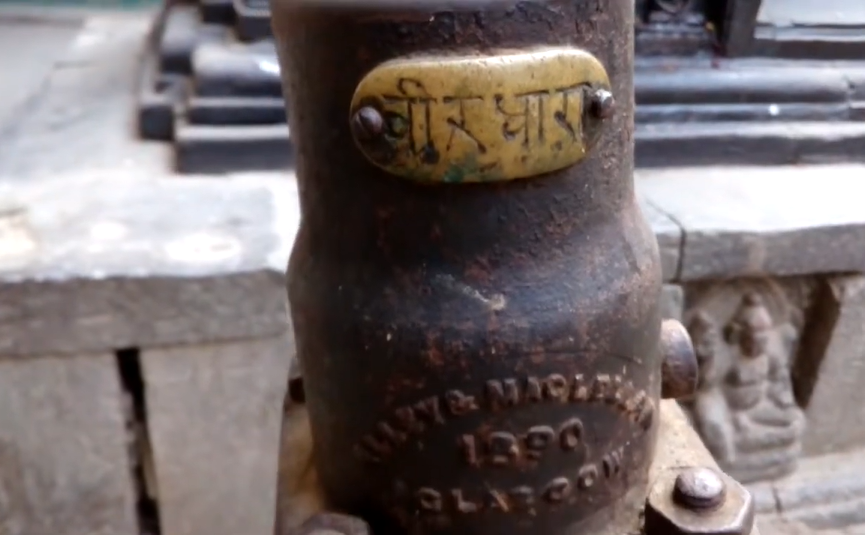
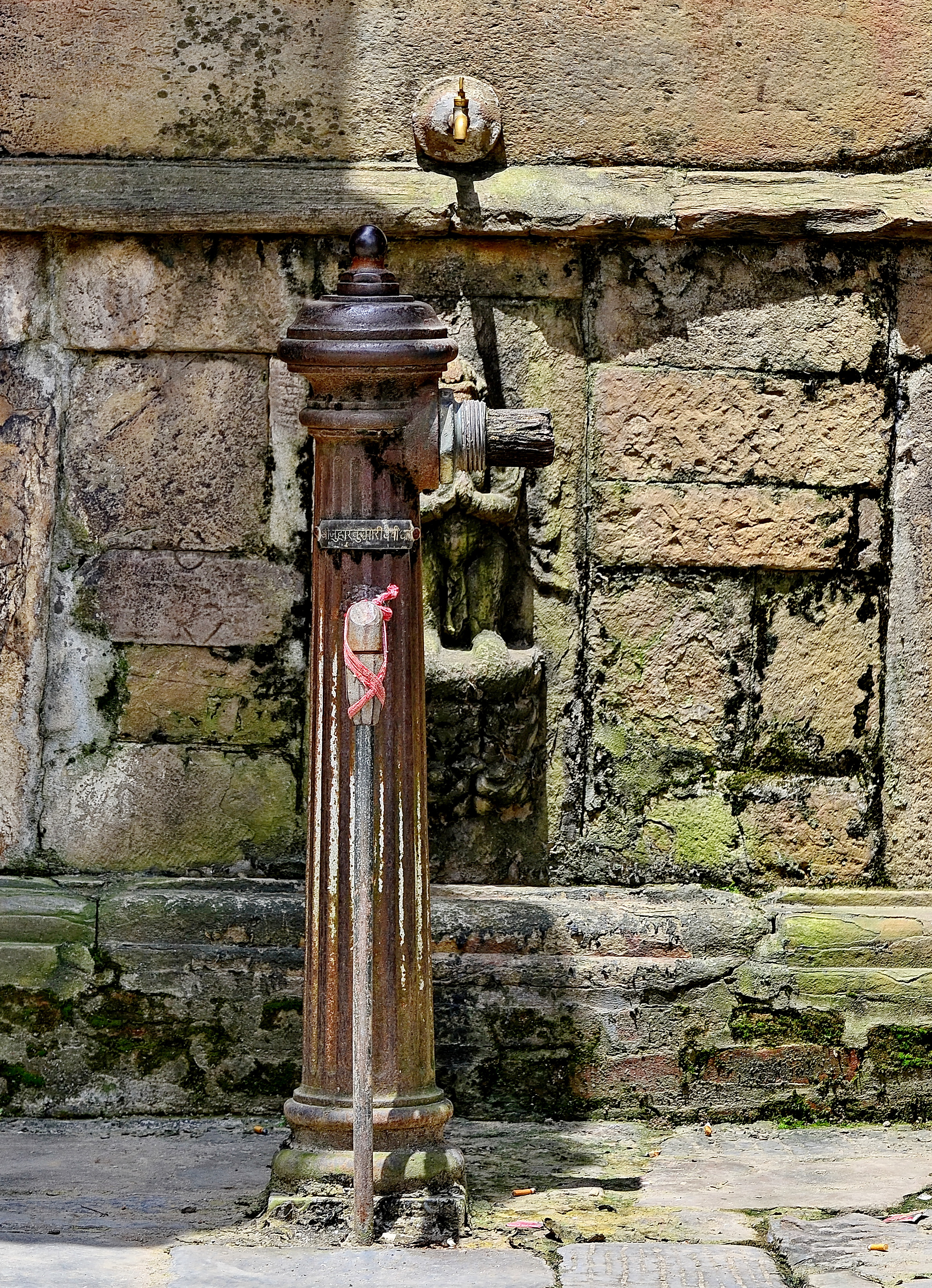
“Now we have water to fight cholera, and I believe cholera will no longer prevail. After four years of piped water, the benefits have been greater than expected,” Bir Shumsher said in a proclamation.
Despite this, the prevalence of poor sanitation, open defecation, cramped housing, and malnutrition meant that typhoid, smallpox, and dyspepsia remained endemic.
The Bir Dhara system marked Kathmandu’s transition from reliance on wells, rivers, springs, and hiti to piped water, operating for several decades and laying the foundation for the expansion of drinking water services across the country in the late twentieth century.
Extensions followed in Patan under Chandra Shumsher, and Bhim Shumsher later added the Tri Bhim Dhara. Piped water systems were subsequently constructed in towns such as Kirtipur, Bhaktapur, Dhankuta, Pokhara, Dhulikhel, and Jajarkot which itself saw a deadly cholera outbreak in 2009.
CHOLERA METAPHOR
In 1933, Nepal’s first water bureaucracy, the Pani Goswara, was established, formalising state involvement in urban water supply. Yet even till the late 20th century, households continue to rely on a mix of sources, including public water networks, private vendors, rooftop storage tanks, borewells, wells, hiti, and household filtration.
The lack of reliable water supply places disproportionate financial, physical, and psychological burdens on low-income households, underscoring how decades of infrastructure expansion have not translated into universal, reliable service. during challenges in governance, investment priorities, and regulation.
Bir Shumsher also attempted to introduce basic hygiene measures, such as pit latrines with squatting slabs. However, there is no record of these facilities being built in his palaces, later built palaces, or elsewhere.
Sanitation conditions remained poor for both the elite and the general population. Open defecation or the use of crude pit latrines without proper waste disposal was common. With no drainage or sewer systems, human waste accumulated near homes, contributing to the spread of waterborne diseases.
In 2019, Nepal declared itself ‘open defecation free’, a policy milestone, but this achievement masks the persistence of deeper problems. Urban areas generate some 867 million litres of wastewater daily, yet only 7% of it is treated before being discharged.
Sewage flows untreated into rivers and streams, spreading cholera, typhoid, dysentery, and other diseases, particularly among children and vulnerable communities. Safe disposal of faecal sludge continues to be a major struggle for many communities and local governments.
Besides Jajarkot, Godavari in Kathmandu Valley had a localised outbreak in 2024. This year, Birganj was struck by a cholera outbreak caused by a lethal combination of unreliable water supply, groundwater overpumping, poor drainage and hygiene, and unsafe waste disposal. And Nepal’s peacekeepers deployed after the earthquake in Haiti in 2010 were blamed for spreading cholera that ultimately killed 30,000 people in the Caribbean nation.
The Bir Water Works was more than a reservoir and pipes. It was Nepal’s first brush with modernity, mediated through engineering and haunted by cholera. More than 134 years on, cholera remains a threat and a reminder of Nepal’s challenges in water and sanitation governance.
The issue is not merely ensuring access to safe water but also building public trust that quality essential services can be delivered equitably, sustainably, and with resilience.
Ajaya Dixit is a Kathmandu-based researcher exploring Nepal’s water history since the mid-eighteenth century to inform ethical water and river management in a changing climate.