-
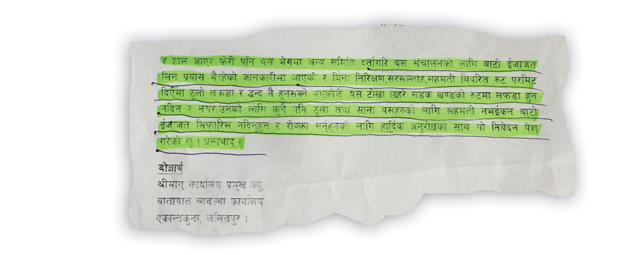
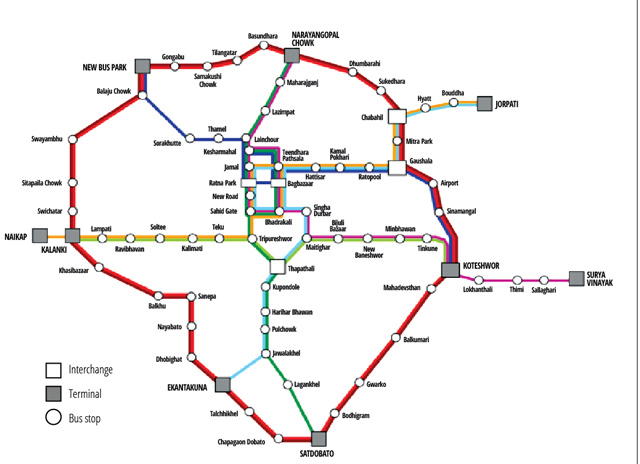
Last month, a bus cartel in Bhaktapur sent a letter to the Route Permit Division of the Transport Management Office. Dated 16 January 2016, it ordered the government agency responsible for regulating public transport to not allow City Yatayat to operate on the Bhaktapur route with its spacious new buses. The letter from the Madhyapur Yatayat Sadbhav Committee warns: ‘If you want us to remain friends, do not let (City Yatayat) seize our bus routes from Dakshin Dhoka, Bode, Thimi, Sano Thimi, Pepsi Cola, Guheshwori to Jorpati.’
-
Tokha Chhahare Minibus Entrepreneurs Association which has a monopoly on the Tokha route, warned the Transport Management Office of violence if new permits were given for the route, and warned that new permits should not be issued without its consent. It warned: ‘If new buses are allowed to ply in Tokha, there will be violence and vandalism on the road.’
-
In November, Sajha Yatayat added 30 new buses to its fleet to improve public transportation in Kathmandu Valley, but private operators have taken the cooperative’s service expansion as a direct threat. The Bhaktapur Minibus Service Committee, for example, wrote to the Transport Management Office and warned it not to allow Sajha to operate on the Bhaktapur route. ‘If Sajha buses are allowed here, our transport system will fail, and commuters will have to face hardship.’
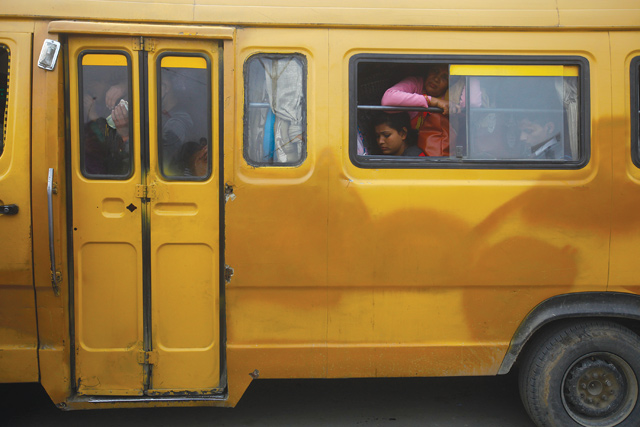
The Small-Heavy Vehicle Section of the Transport Management Office in Ekanta Kuna receives so many threatening letters from private bus cartels that they don’t even raise eyebrows anymore. Threats of violence have become the norm, and this is the main reason public transport is in such a sorry state in Kathmandu.
There are more than 250 bus ‘committees’ registered under the Federation of National Transport Entrepreneurs (FNTE) and they are actually cartels that want to protect route monopolies at all cost – by threatening the government and new bus companies.
The comfort of commuters and public service is not the priority of the bus mafia that is said to enjoy political protection -- some of them are even owned by senior bureaucrats and security officials.
Last week, a Nepali Times reporter approached the Bagmati Zone Chief of the FNTE, Dharma Rimal, posing as a potential investor interested in operating new buses on the Kathmandu-Bhaktapur route. Without mincing words, Rimal warned the reporter: “Careful, there might be problems for you if your new buses operate without our consent.” Rimal continued in a threatening tone: “It is we who decide who is allowed and who is not on this route. You will regret it if you defy us.”
When asked how come transport syndicates appear to be more powerful than the government, an official at the Transport Management Office admitted: “The FNTE is so powerful the government just cannot go against it. The kind of threats we receive if we issue route permits without their consent is frightening."
Hemanta Sherchan of City Yatayat wanted to operate on the Bhaktapur route, but got only a limited permit to operate 10 high capacity modern buses from Kalanki just up to Pepsi Cola. Sherchan freely admitted to us that the only reason he secured the permit was because of his own political connections.
“I was told by other entrepreneurs not to operate big buses because it would take their business away,” he said. What also helped was Sherchan’s affiliation with a transport committee close to the UML, and he is also an adviser to the FNTE. He revealed that all members of the transport federation have to be close to one party or other.
Protests and vandalism are the norm when the government tries to increase capacity on routes or allow better bus services to new operators. Officials who have tried to end the monopolies have never been successful, and may even face violent attacks like a transport officer in Pokhara who was shot and injured in 2004 (see box, above).
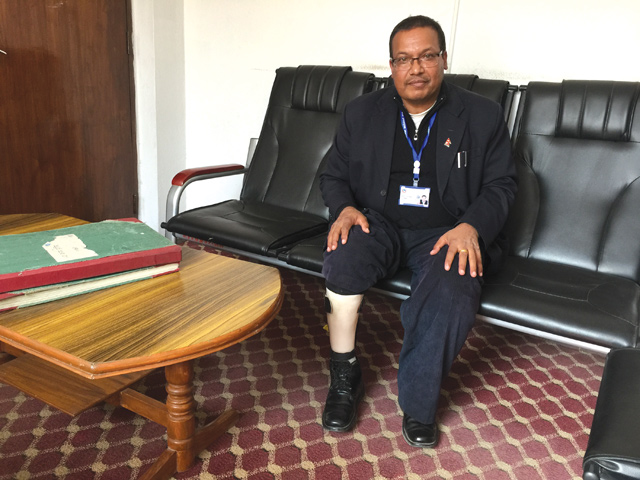
Basanta Adhikari, the new chief at the Transport Management Office, denies there is any undue pressure. “We have nothing to do with any transportation committee and we are against syndicates,” Adhikari said defiantly. “We are free to issue new route permits as per the existing laws.”