
Jean-Paul Sartre's 1946 play The Respectful Prostitute is a commentary on racism and justice in America’s Deep South.
The French philosopher delved into existentialism, power, morality and oppression through characters and symbolism as literary devices. Now, the play finds resonance on a Kathmandu stage as Miss Menuka.
Pavitra Khadka's adaptation does not merely translate Sartre into Nepali, it allows the play to breathe in a different social and political landscape while preserving its moral urgency. Social injustice and discrimination is the same story wherever in the world it is told.
Khadka seamless grafts the plot into contemporary Nepal so that the French existential philosopher’s questions belong here. It does not feel borrowed from France 80 years ago, but voices a reality of the here and now in Nepal today.
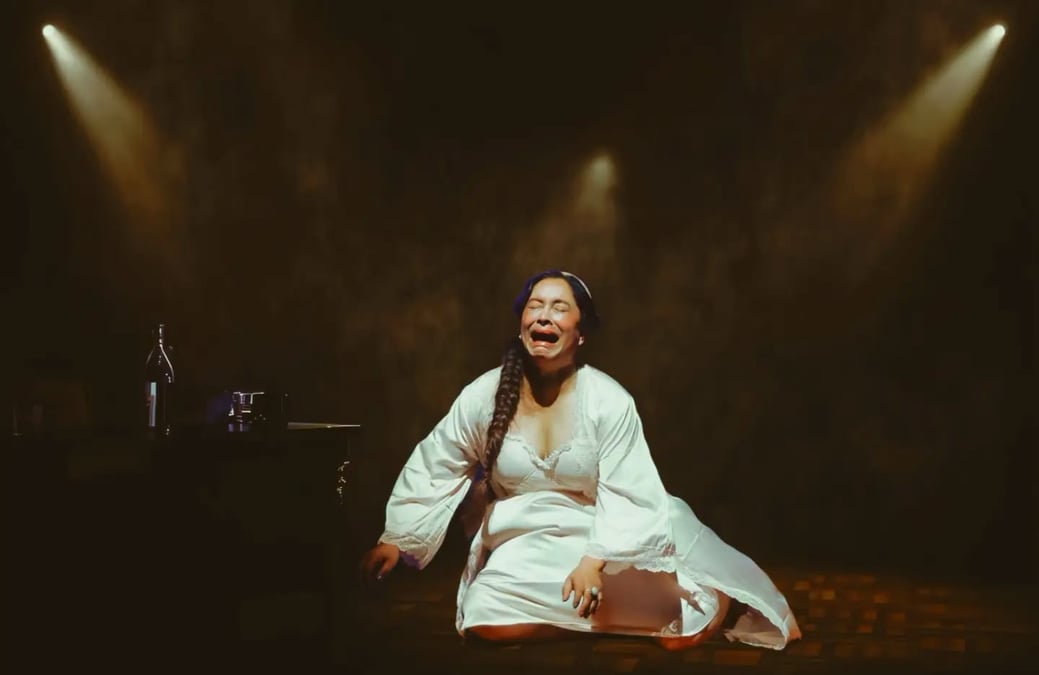
At first glance, Miss Menuka appears to be the story of a sex worker, but it quickly becomes evident that she is not the subject under examination. Society is.
Menuka carries a label that invites instant judgement, yet she gradually becomes the play's moral centre. She is vulnerable, hesitant and aware of the consequences of speaking the truth, but she never loses her sense of dignity.
The irony is unmistakable: the character whom society considers the least respectable emerges as the one with the greatest integrity.
The male lead is equally compelling because the extraordinary villain appears so ordinary. He embodies the quiet confidence that privilege produces — the certainty that one's version of events will always be accepted. His authority rests less on truth than on the social structures that instinctively protect men of influence.
Beneath his confidence lies fear: of accountability, of losing control, and of a truth that could unsettle the order from which he benefits.
Khadka has added a man from the Tarai — Nepal’s own ‘Deep South’. Racial discrimination is central to the conflict in Sartre's original play. In Miss Menuka, that tension is thoughtfully reimagined through the experiences of a Madhesi man.
All this is ever more relevant today after the tragic violence in the Tarai and the continuing marginalisation of Nepal’s plains by Kathmandu despite a federal Constitution designed to provide autonomy to the Madhes.
His presence broadens the conversation beyond gender. Like Menuka, he is judged before he is heard. His accent and identity become enough to make him suspect. The play never says this outright, yet it quietly asks us how often we allow ethnicity, geography or social identity to determine credibility.
Justice, it suggests, is rarely blind. It is often shaped by the prejudices we refuse to acknowledge.
The supporting characters are not simply there to advance the plot. Each represents a different response to power. Some manipulate it, some submit to it. Others remain silent because silence is safer than resistance.
They reveal a difficult truth: injustice survives not only because powerful people abuse authority, but because ordinary people learn to live comfortably beside it.
The audience finds itself thinking less about the characters and more about the society they represent. We continue to believe appearances over truth, status over integrity and power over vulnerability.
We continue to ask women to prove their innocence while allowing institutions to escape scrutiny. We continue to measure credibility through identity rather than honesty.
Miss Menuka lingers long after the curtain falls. It is not asking whether Menuka deserves respect, it questions whether our understanding of respect has been flawed all along.
The audience leaves the theatre wondering whether Nepal is any closer to answering some of the uncomfortable questions raised. Good adaptations preserve the original, great adaptations make it impossible to believe the story belongs somewhere else.
Pavitra Khadka’s Miss Menuka achieves that.
Miss Menuka
Directed by Pavitra Khadka
Till 22 August
Shilpee Theatre, Battisputali