
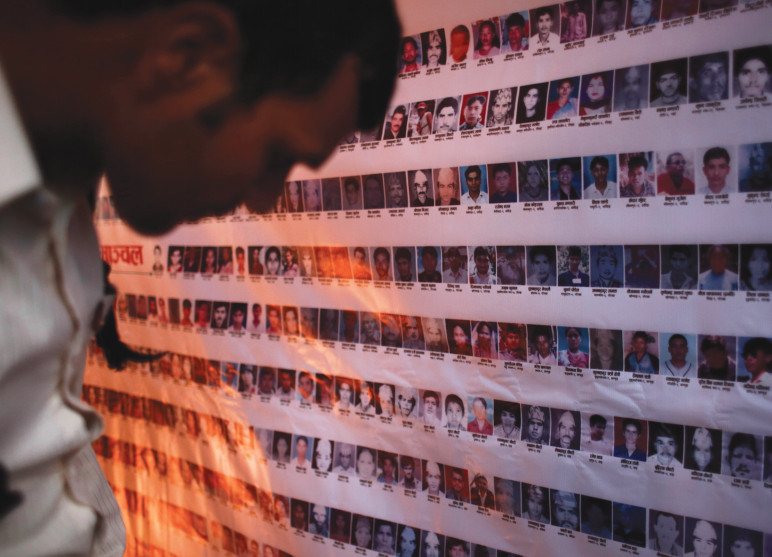
The Maoist Conflict lasted 10 years but has been over for 16. Two commissions to address transitional justice were set up following the enactment of the Act on Commission on Investigation of Disappeared Persons, Truth and Reconciliation, 2071 (2014), but families of the victims and survivors have got neither truth nor justice.
And now a Bill to amend the Act further threatens to narrow the scope of criminal accountability. In fact, some provisions are direct attempts to exempt or provide immunity to perpetrators.
The Bill unfairly classifies torture as humane and inhumane, and has made torture other than inhuman and cruel torture eligible for amnesty. This is against the Convention against Torture, to which Nepal is a party.
Even killings are divided into 'brutal' and 'ordinary'. The killing of an unarmed person or a non-combatant, or even the killing of a combatant after taking such person hostage is a war crime, and cannot be selectively categorised to bypass criminal accountability.
To exclude such killings from the scope of serious crimes is a violation of international legal standards and jurisprudence including under Geneva Conventions as well as International Covenant on Civil and Political Rights (ICCPR).
The amendment further proposes that the decision of the special court be final. But there should be a provision that guarantees the right to appeal. The Supreme Court could be entrusted with the jurisdiction for finality of decision.
And if punishment had already been imposed by any court established under the existing law of that time, a provision in the Bill does not allow for further investigation. Such a provision should only be applicable to ordinary courts.
Another issue with the Bill is the time limit for prosecution: it stipulates that a decision to prosecute or not to prosecute must be made within six months of the recommendation by the Commission. A thorough investigation is needed to gather evidence on such a complex matter after all these years and this limit is just not enough.