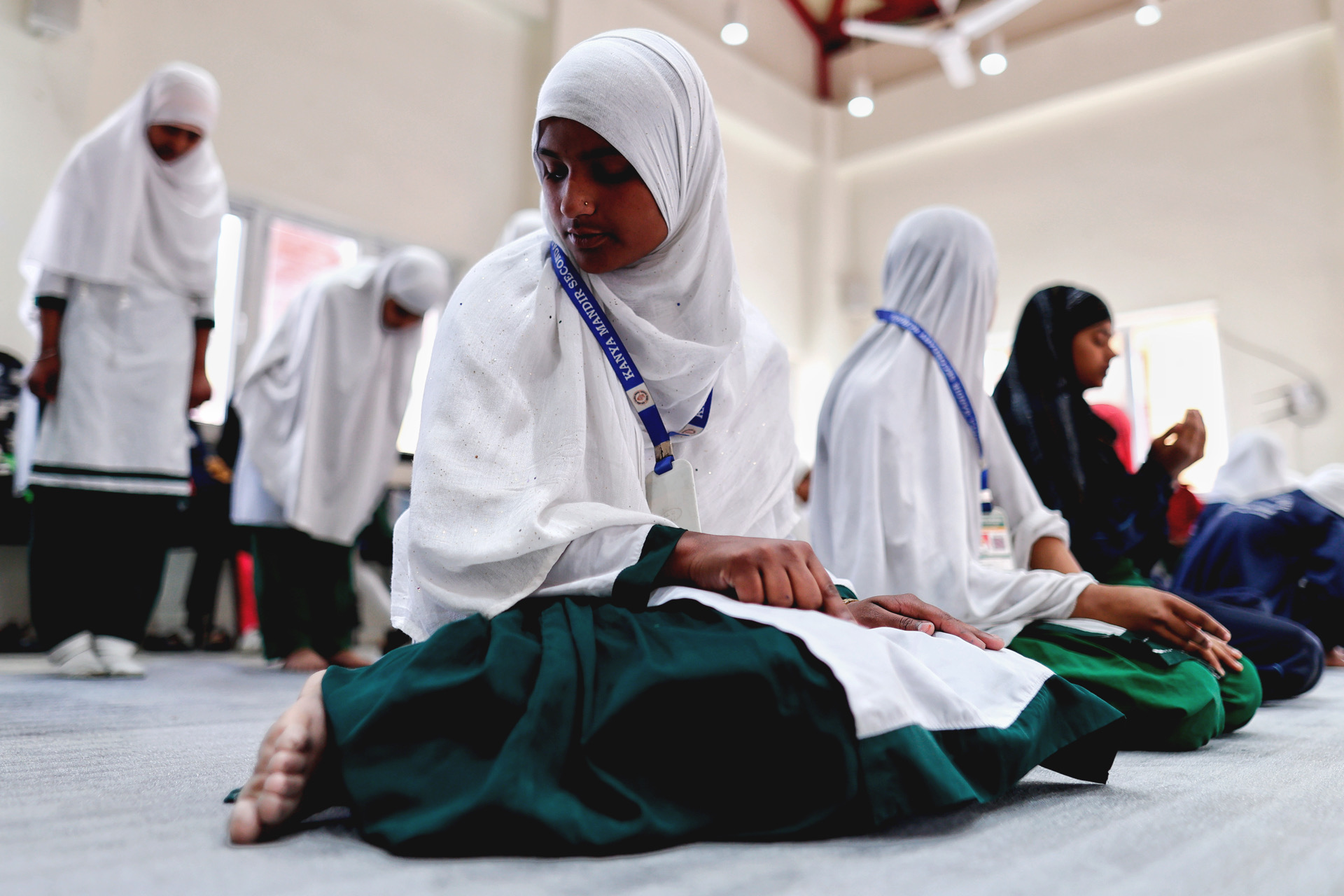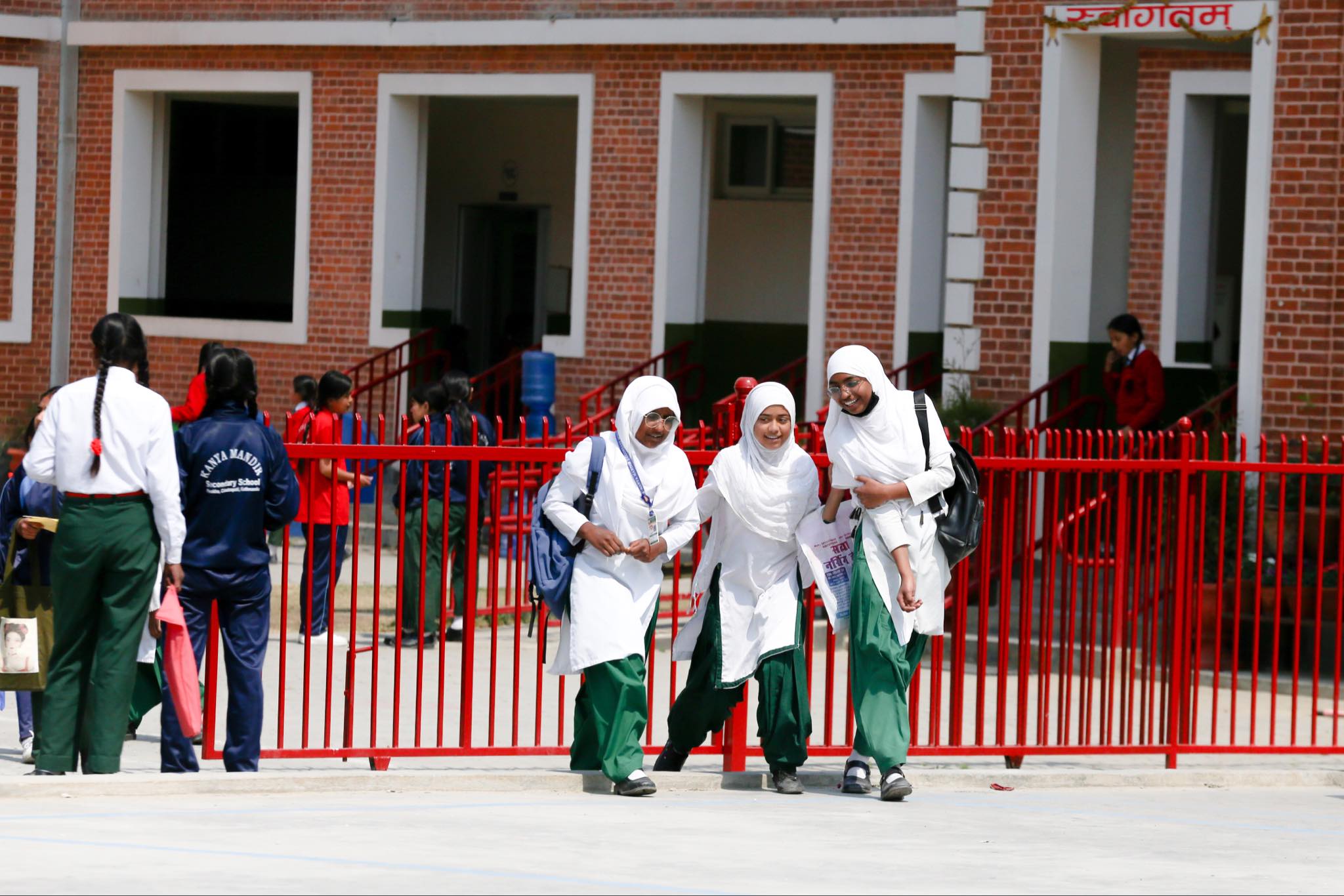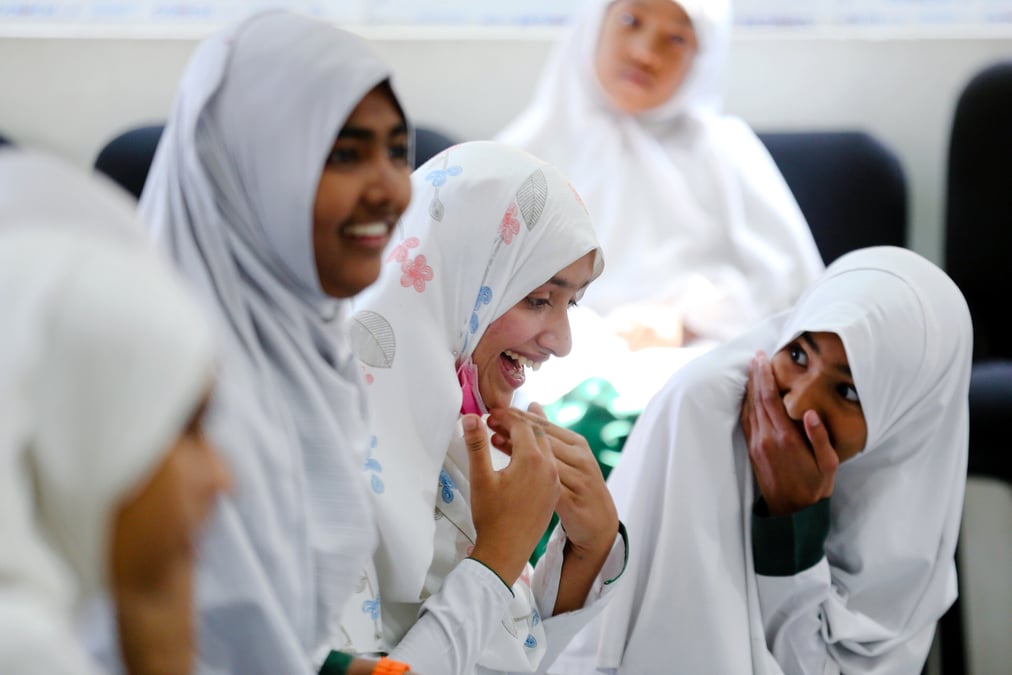
Aliya Bashar finished up her Grade 6 class exams and swiftly walked over to a room next door at her Kanya Mandir Secondary School in Kathmandu.
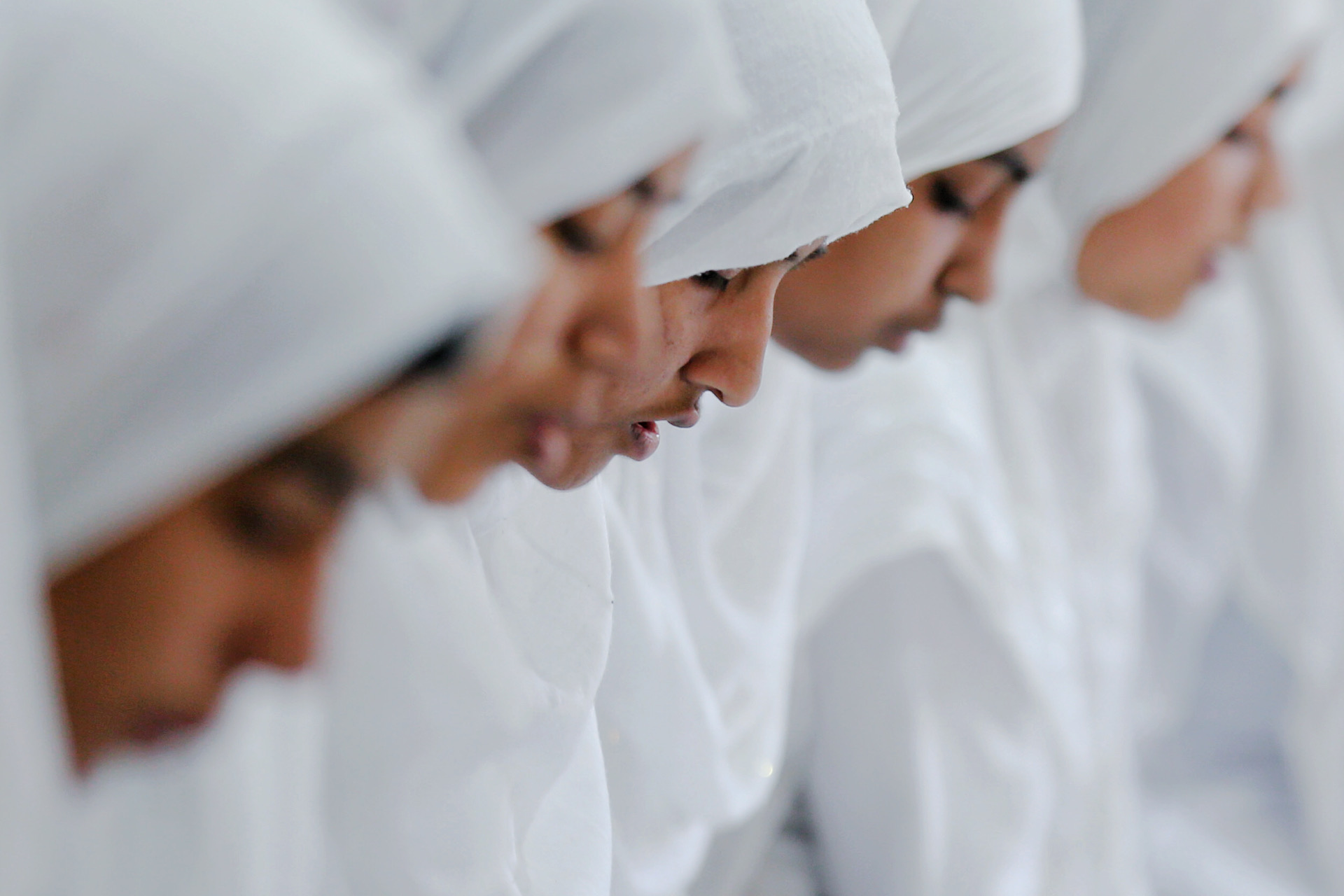
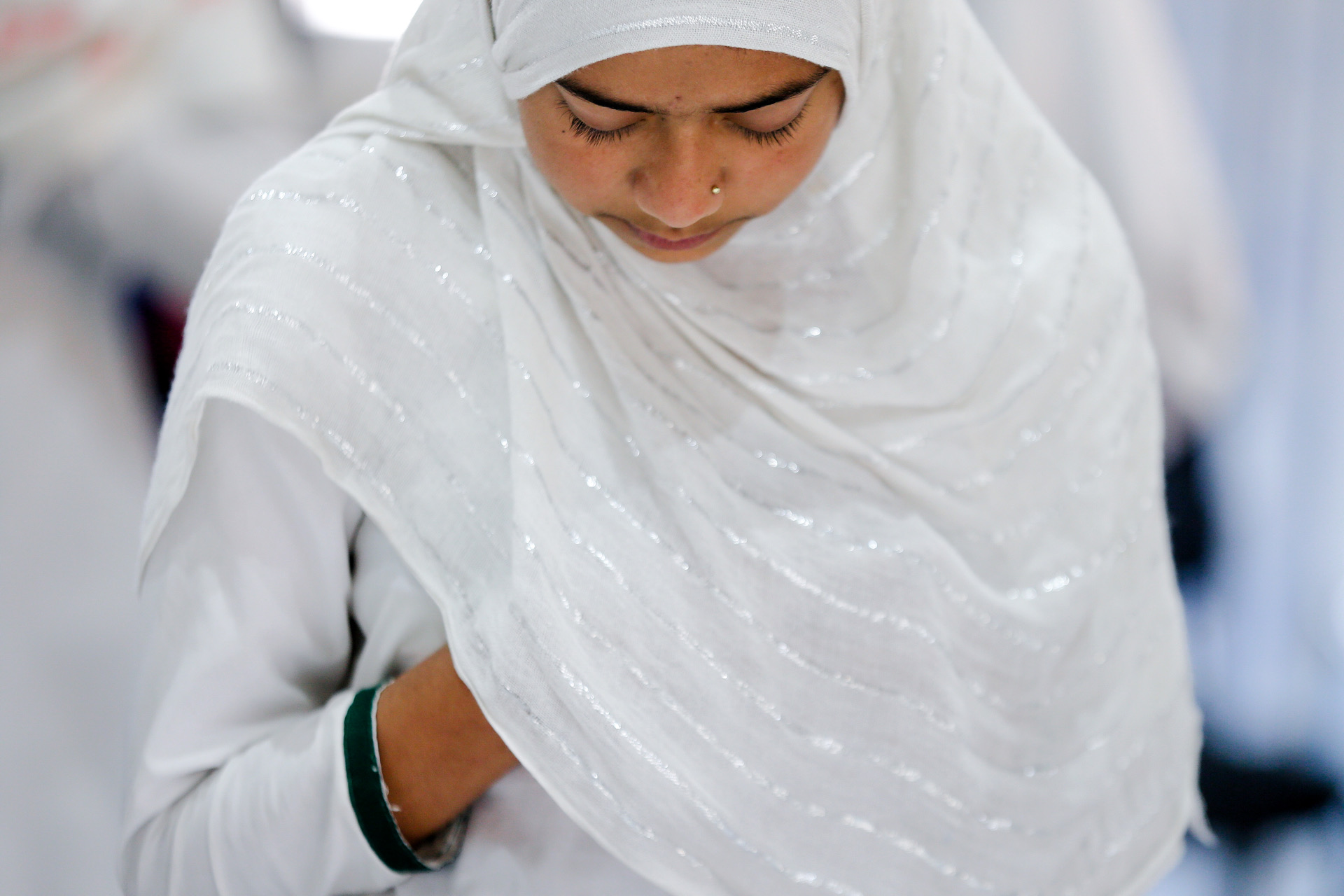
Other students join in and together they offer namaz. This is an important time of year for Bashar, not only because of her annual exams but also because of the holy month of Ramadan.
"It is a relief not to have to rush home for prayers at 1 pm," Bashar tells us later. "The school provides a space for namaz, making it easier for us to focus on exams."
With a week left for the end of Ramadan, Muslims eat before dawn and fast throughout the day with afternoon prayers at 1pm. They break fast with a collective iftar feast after sunset.
Recognising the challenges of its Muslim minority students, Kanya Mandir School provides a dedicated space for them to offer prayers immediately after the exams.
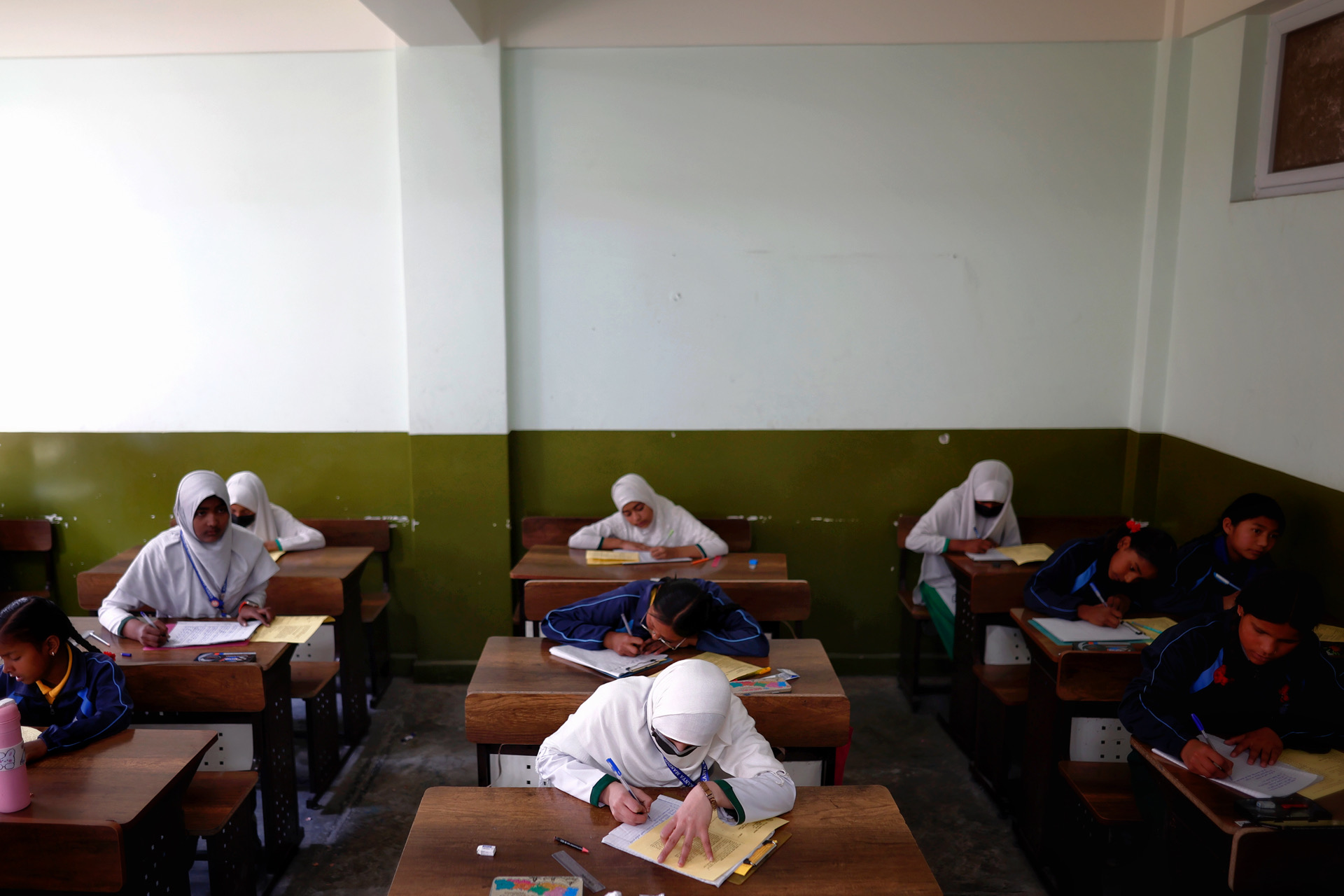
"Having a prayer room makes everything easier,” says Salma Khatun, a Grade 8 student. "And the school also allows us to dress in clothes we are comfortable in.”
The school’s inclusive environment has helped students like Bashar and Khatun thrive. They participate in sports wearing the hijab, something not possible at many other schools.
Read Also: Moving to the mainstream, Chandra Kishore
Jasmin Shaikh in Grade 7 says she faces no hate and discrimination at school. “Students of all religions are treated equally here,” she says.
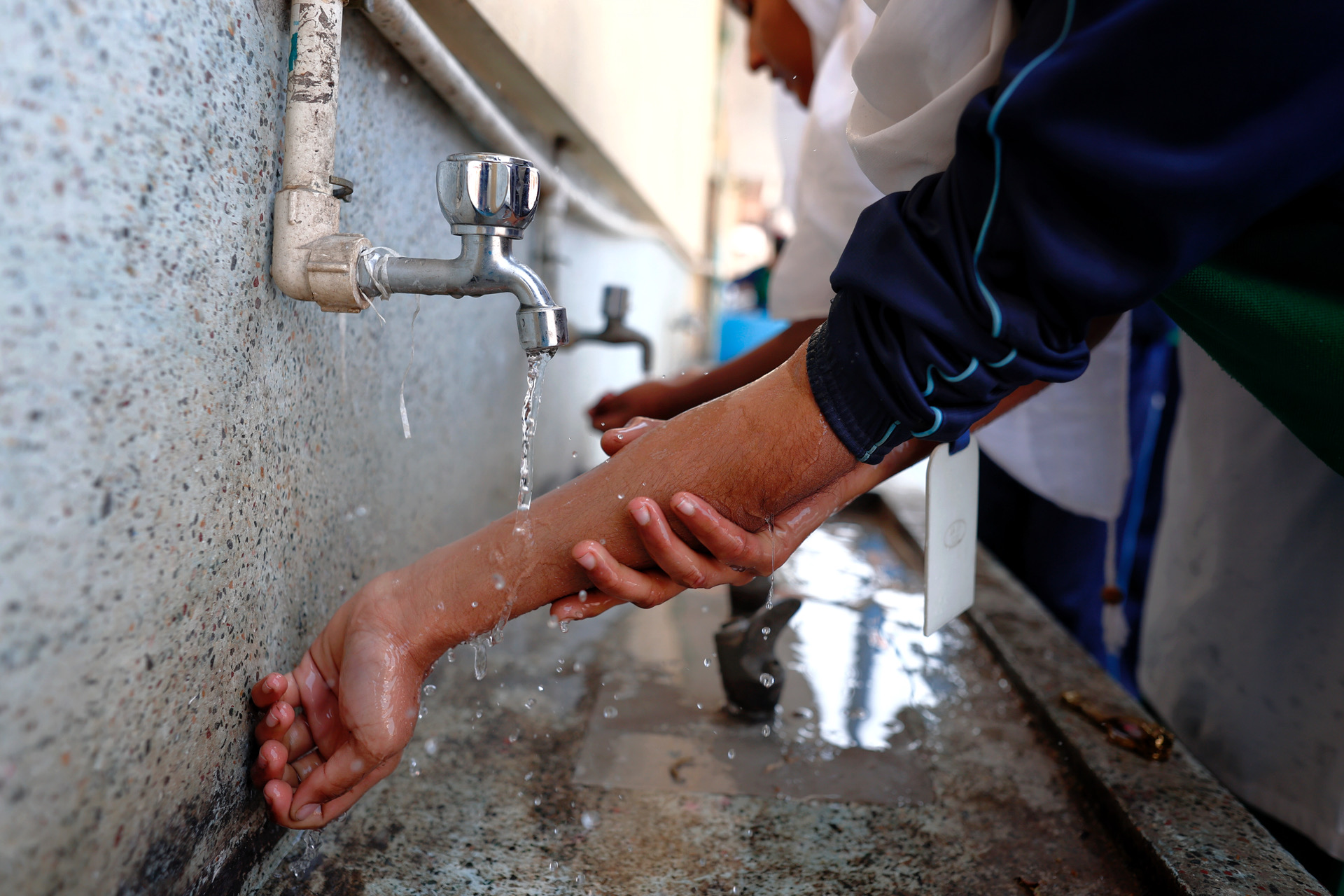
Muskan Khatun says being allowed to wear the hijab in class makes her feel safe and supported. Khatun who is originally from India says she feels a sense of belonging at the school. “There are no restrictions here, even the school feels like home,” she says, smiling.