
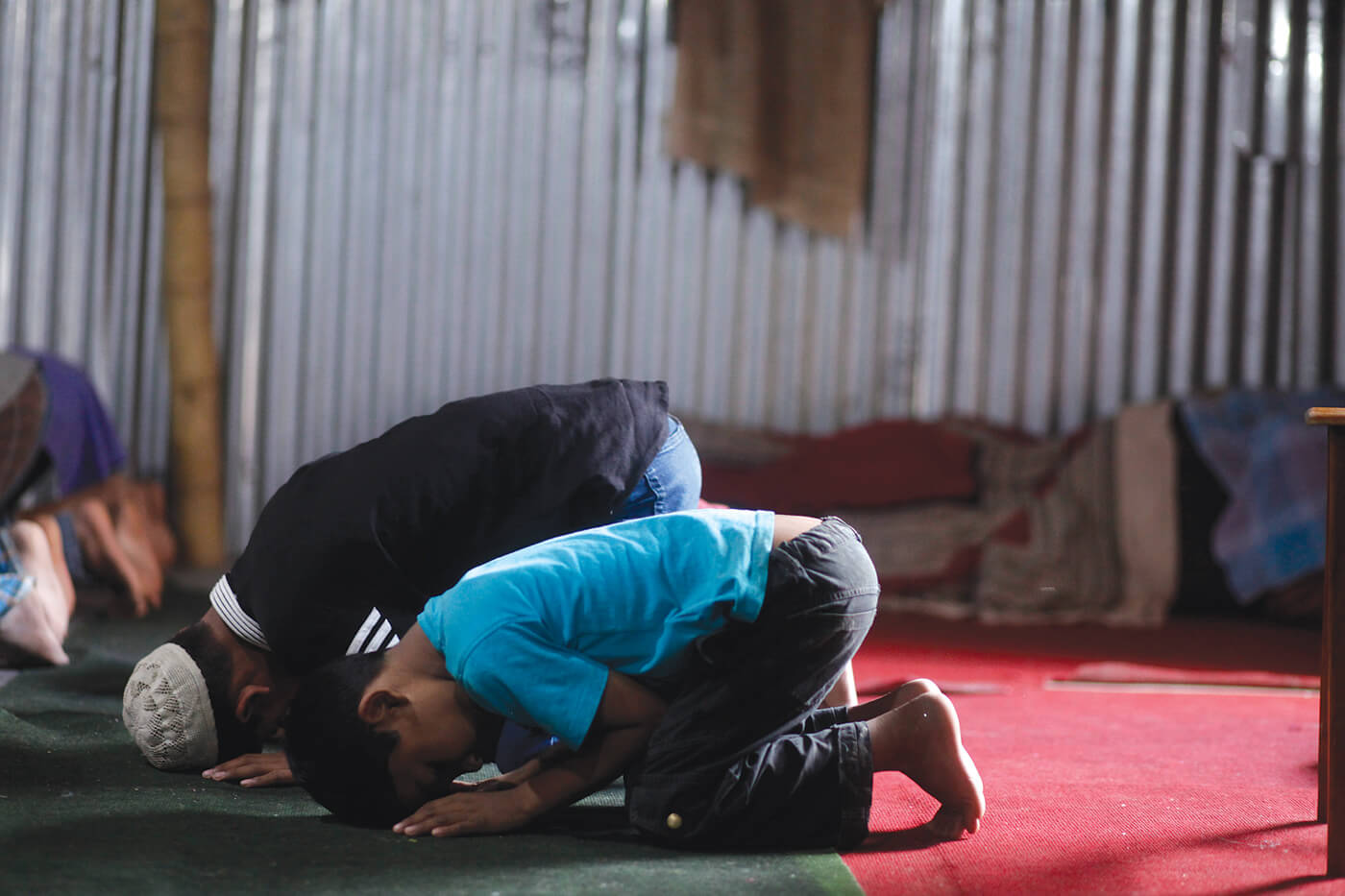
Muslims have been living in Nepal even before this country existed. Before the 15th century, Tibetan Muslims from Ladakh traded in woollen products with the kingdoms of Jumla and Mustang. King Ratna Malla sent emissaries to Lhasa and convinced Kashmiri Muslims to use Kathmandu as an entrepôt for trade with India.
The 22 and 24 Kingdoms of Central Nepal brought in Muslim gunsmiths to make muskets and train troops. Others followed in the 17th century to trade in bangles and glass beads, and many of their descendants still ply the trade in Palpa, Patan and Bhaktapur.
Today, Nepali Muslims live in all seven provinces, and form 4.4% of the country’s population. The greatest density is in the Eastern Tarai, where some districts like Bara and Rautahat are more than 15% Muslim. Many of the 28 people killed when a tornado tore through villages in Bara on the night of 31 March were Muslim.
Anthropologists divide Nepali Muslims into five groups, depending on the time of settlement in Nepal and their place of origin: Kashmiri Muslims, Indian Muslims, Tibetan Muslims, Tarai Muslims (which includes Bihari Muslims from Bangladesh settled in the eastern Tarai), Mountain Muslims and a more recent influx of Rohingya refugees from Burma. Despite the diversity within the community, Nepali Muslims have always strived for a common identity based on their Islamic faith.
Read also:
Nepali Muslims on the margins, Prakriti Kandel
Keeping ghazal alive in Nepalganj, Sewa Bhattarai
Muslims have historically struggled to be included in the socio-economic and political mainstream of the country. Despite forming a relatively small proportion of the national population, the Muslim vote bank constitutes an important enough swing vote to be wooed by the national parties.
Province 2 Chief Minister Mohammad Lalbabu Raut, of the Federal Socialist Forum Nepal, is the only Muslim chief minister under the federal system. Earlier, he was a member of the Constituent Assembly and as one of the senior-most Muslim politicians, the symbolism of his position goes beyond Province 2.