
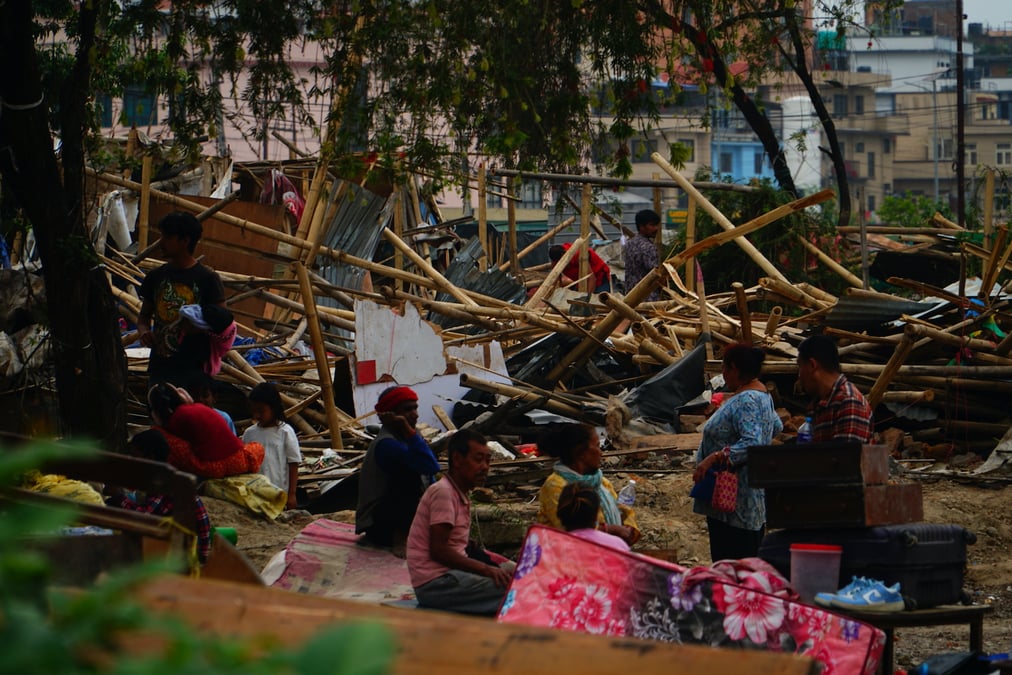
Human Rights Watch (HRW), Amnesty International, and the International Commission of Jurists (ICJ) said in a letter to Nepal’s newly-elected Prime Minister expressing concern about forced slum evictions and the passing of ordinances.
They urged the Rastriya Swatantra Party (RSP) government to use its majority in Parliament to push for lasting protection for human rights, the rule of law, transitional justice and the rights of minorities.
The letter drew attention to the RSP government’s actions in its first month in office, including the eviction of landless people from informal settlements and an ordinance that would dilute the independence of the constitutional council in making appointments of judges and commissioners to constitutional bodies. They said it appeared to violate housing rights and due process protections, showing an alarming disregard for procedure and the rule of law.
“The protests by young Nepalis were a demand to end entrenched inequities, and that can only be addressed with transparent and accountable governance,” said HRW’s Asia Director, Elaine Pearson. “Many voters have high expectations that the RSP government will deliver real change, and to achieve that, it is crucial for the authorities to hold people accused of human rights violations, abuses, and corruption to account in fair trials.”
The open letter to Prime Minister Shah urged his new government to prioritise meaningful human rights reforms, and highlighted key concerns including accountability for killings during the September protests, women’s and minority rights, forced evictions and protection of migrant workers.
The Maoist conflict ended 20 years ago, but the transitional justice process is incomplete. The groups pressed for building a culture of accountability to ensure a credible, effective and timely justice process that meets international legal standards, to provide truth accountability and reparation for war crimes and abuses. The process is stalled because political appointees to two commissions have not pushed it forward.
“Victims and survivors of crimes committed during the conflict have waited far too long for justice, while the culture of impunity that took root in that period has contributed to ongoing violations including the killing of Gen-Z protesters,” said Mandira Sharma, director for
the Asia and Pacific program at the ICJ. “Completing the transitional justice process in line with international legal standards is crucial to building a rights respecting system under the rule of law.”
The organisations called for the authorities to bring those responsible for human rights violations during the Gen-Z protest to justice, release unpublished official reports on previous incidents of lethal violence against popular movements dating back to 1990, and implement recommendations by the National Human Rights Commission to appropriately prosecute people against whom there is sufficient evidence of human rights abuses and violations amounting criminal conduct.
The letter also drew attention to impunity involving sexual violence, child marriage, and discrimination against Dalits and other marginalised communities, who are also particularly at risk. Migrant workers are often exploited and abused.
“The people of Nepal have demanded change, and that is what Balendra Shah and the RSP promised during the election campaign,” said Smriti Singh, South Asia director at Amnesty International. “Now the government needs to seize the opportunity and walk the talk to deliver real and lasting change built on respect for Nepal’s international human rights obligations.”