
 |
The trekking season is upon us, and it would be wise to remind ourselves of the warning signs of altitude sickness. Consider acute mountain sickness (AMS) to be a red flag. As you trek at about 2,500 m or higher you may suffer from hangover symptoms, headache and nausea. But if you descend a few hundred meters, you may feel these symptoms subside. With AMS, it is likely that you will get better if you don't go any higher, or descend right away.
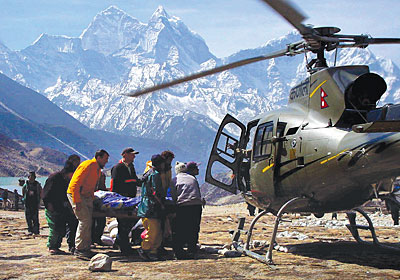
Peer pressure, an overriding ego, or wanting of their money's worth from the trek can make people with AMS go in denial of their weak condition. Dangerous complications ensue when they push themselves and try to ascend higher. Water collection in the brain (high altitude cerebral edema, HACE) or in the lungs (high altitude pulmonary edema, HAPE) occur, as water seeps out of the blood vessels in these organs due to lack of oxygen brought upon by the inability to acclimatise properly. Symptoms of HAPE and HACE thus mandate immediate descent (by foot, yak, horse, a porter's back, or a helicopter).