|
|
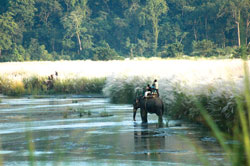
| SUCCESS STORY: Chitwan National Park, home to some of the most endangered wildlife species, owes its success to the veteran conservationists who died in the Ghunsa crash last year. |
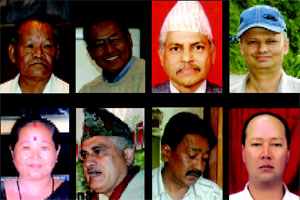
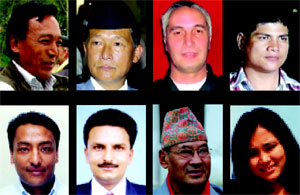
It will be one year on 23 September since a helicopter crash in Ghunsa took the lives of 24 of Nepal's leading conversationists, diplomats, officials and journalists (pictured below). The environmentalists were do-ers who had shown that tourism and conservation could go hand-in-hand.
Among those killed were Chandra Gurung and Mingma Norbu Sherpa of WWF, Tritha Man Maskey, Harka Gurung, Yeshi Lama, and Minister for Forests and Soil Conservation Gopal Rai. In one single blow, almost everyone from Nepal's conservation scene was wiped out. They weren't just armchair environmentalists.
They lived and worked alongside the people and were loved by them. Chandra Gurung's work to set up the unique Annapurna Conservation Area Project proved eco-tourism could lift living standards at the grassroots. The model has been replicated around the world. Chandra Gurung was from Sikles, spoke the language and was a son of the soil. Yeshi Lama used to be respected by the people of Dolpa and Langtang, who loved her for her open vibrant nature and her tireless work. Then there was Harka Gurung, geographer extraordinaire. His loss will perhaps be felt the most by all. Harka Gurung's geography set the standard, and was perhaps the one who most understood Nepal's cultural and natural diversity.
 The deaths of so many high-achievers has in fact catalysed and energised those left behind to do more. Led by prot?g?s of those that died in the crash, Nepal's conservationists are now working to fill the void. "Everyone thought that there was no hope for conservation," says Ghana Gurung, "we've proved them wrong; conservation is stronger than ever with more funding, more projects and more partnerships."