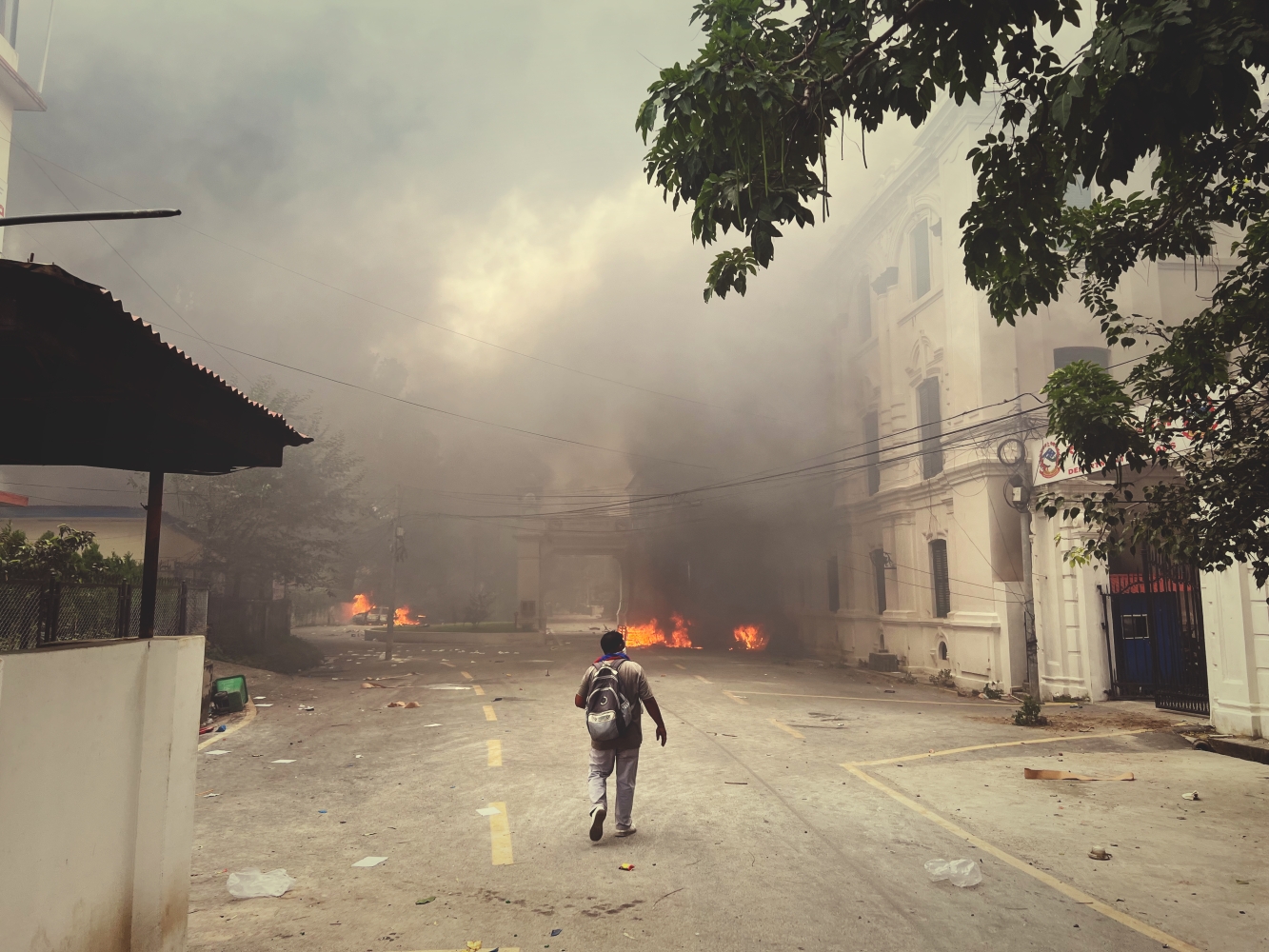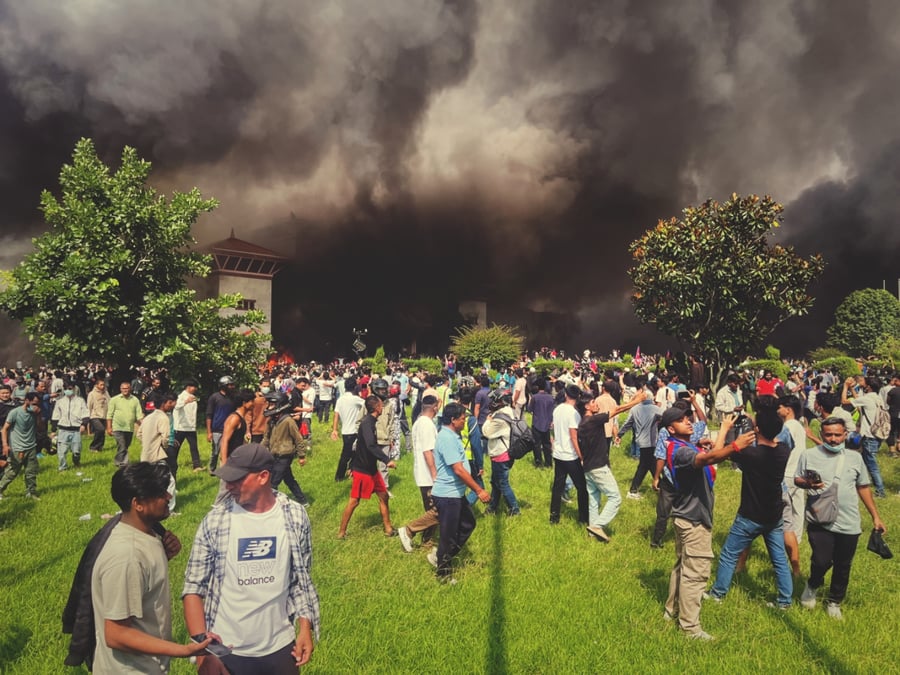
What does a journalist do when young protesters are shot in front of her? Does she do her job and stay neutral? Can you stay neutral?
As protests engulfed Kathmandu, Nepal's journalists found themselves reporting a story that was personal. While doing their job, some of them were even targeted by mobs.
Dart Asia Pacific Fellow Arun Karki visited their newsrooms and spoke with his colleagues on their experience of reporting the GenZ protests that erupted on 8 September. These are the first-hand accounts of journalists who witnessed the turmoil in the city they call home.
Sunita Karki was at a workshop in a hotel on 8 September. She saw the first waves of protests through hotel windows. Curfew alerts flooded her phone, a vehicle belonging to a human rights group sat burning across the road, young boys were taking their wounded friends on motorbikes to the Everest Hospital, and police were beating a teenager with hands raised up.
“I cried a lot,” she said, but the tears were not out of fear -- they were because she felt guilt. “I couldn’t write the news. We were witnessing these scenes from a five-star hotel.” By evening, the death toll had reached 19. On 9 September at about 3:35 p.m. her outlet, the Annapurna Post's office in Tinkune, Kathmandu, was set on fire. Staff had to leave the building as parts of the newsroom burnt down.
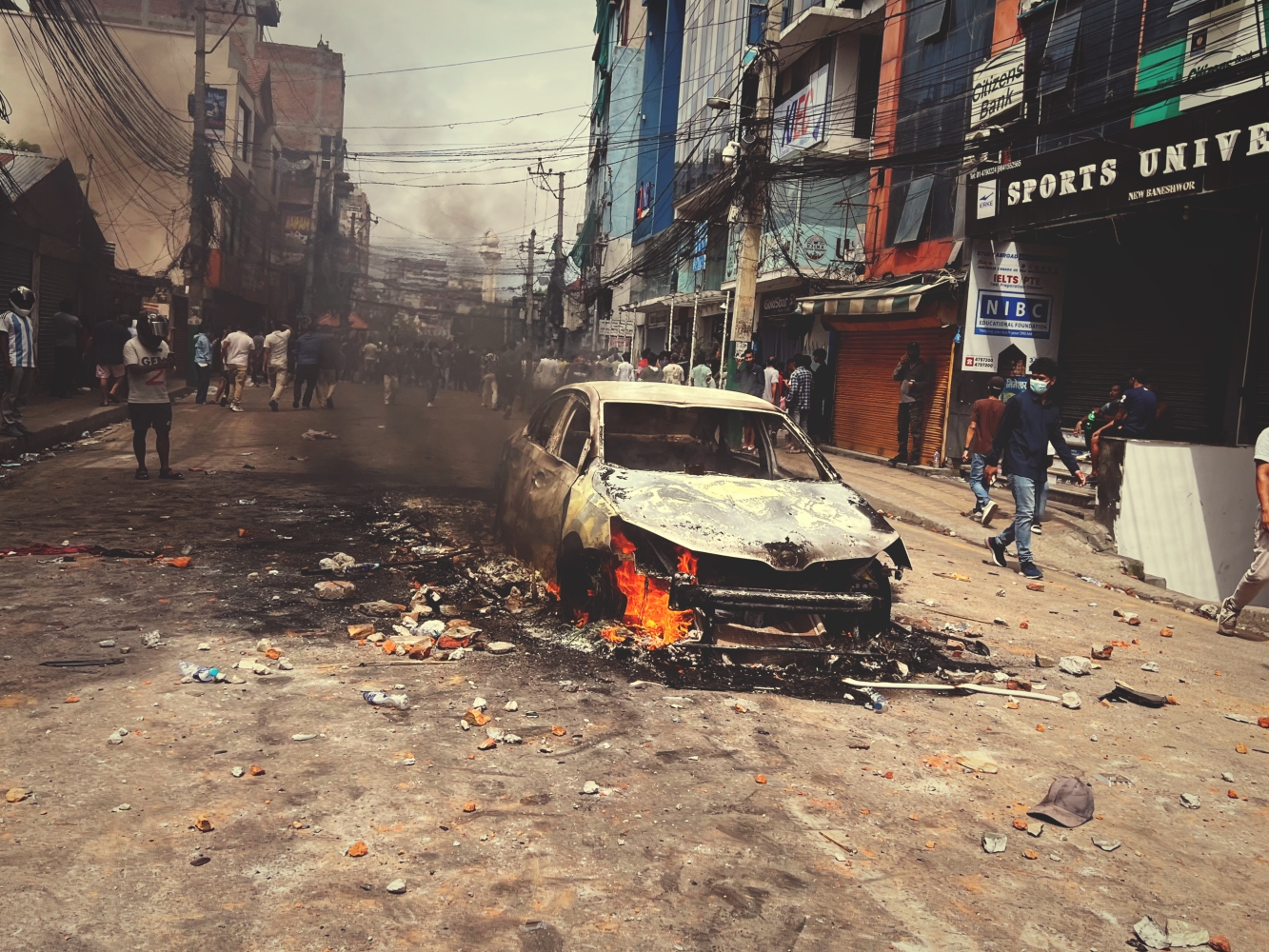
When she knew her office was burning, she anxiously told her husband that she would resign from the job: "If we have to hide our identification cards in every protest, what kind of journalist am I?" she asked herself.
She filed a story the next day, but her emotions kept bouncing between that of a journalist’s duty and shock. She said that in moments like this, it’s hard to feel truly neutral.
After watching the police beat people, she felt a strong urge to step in, not just stand back and report. The first real calm came later, when people came to the street and lit small candles together. “This was a sort of victory procession. I felt some relief after brutal days,” she said.
Angad Dhakal a photojournalist who works at Kantipur National Daily, was standing outside his office building when protesters stormed in and set parts of it on fire. He had already been informed that protesters were planning to torch his office building and rushed to his office hoping to save his hard drives containing ten years of photography work. He failed.
He raised his camera and "forcefully" pressed the shutter - more to document the scene than out of "professional enthusiasm or duty".
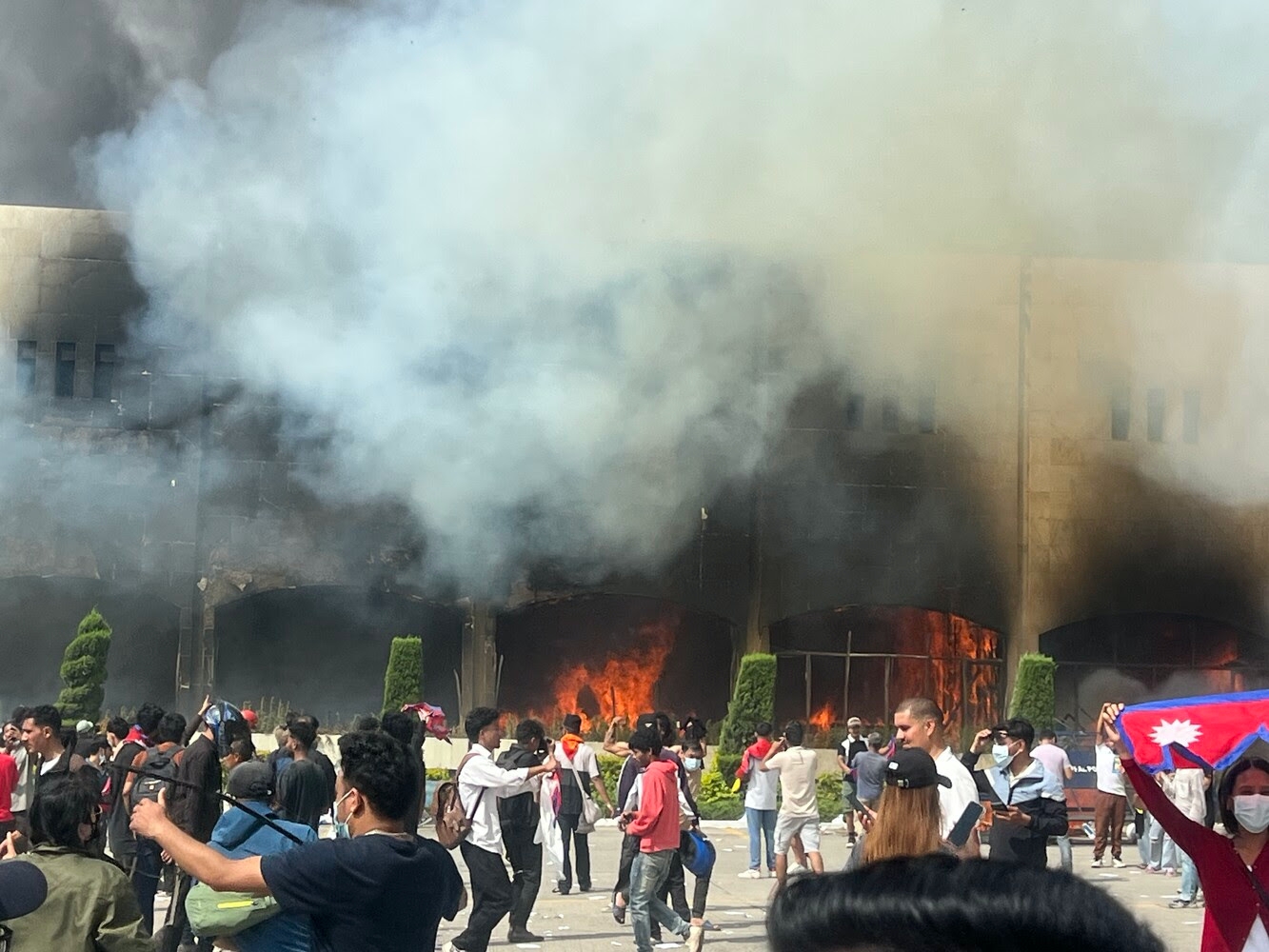
“My office was burning. What should I photograph?” he recalled. A few moments later, a protester noticed the “PHOTO” label on his yellow Press jacket. Dhakal deflected it by saying he was an early career freelancer and YouTuber. So that protesters wouldn't find out, he went to one corner and took his jacket off.