

The majestic Royal Bengal Tiger
From the air, you can see why the Jawalakhel Zoo is an oasis, a verdant square in the midst of Patan's urban sprawl. On the ground, the stately trees and the placid lake make this an ideal place to soothe one's soul. And of course, the wildlife comes for the price of a ticket. 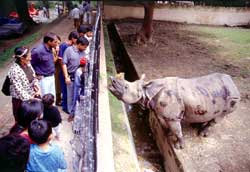 In a country where most public-sector undertakings are crumbling or have gone bankrupt, the Central Zoo is also a management oasis. The zoo now earns Rs 20 million from ticket sales, corporate donations and thelending out of animals and is ploughing the money into development and conservation work. Since the King Mahendra Trust for Nature Conservation (KMNTC) took on a 30-year management contract to run the zoo two years ago, our only zoological park is thriving.
"Luckily, the results of our management and good PR have been successful," zoo director RK Shrestha boasts. KMNTC recently secured the first donation made to the zoo by a multinational company: Toyota and the Vaidya Group gave a grant of Rs 4 million. Shrestha hopes this will open the door to future monetary assistance from other corporations, and says he finally has enough funds to begin work on redesigning parts of the zoo with an emphasis on animal welfare and visitor facilities. 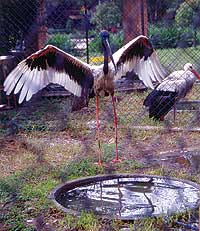 "We can't expand, so the next best thing we can do is to make the animals comfortable in the enclosures we already have," says Shrestha. The enclosures will be renovated, increasing the height and providing more facilities, particularly for the lion and the Malaysian siamang. Their living spaces will be enriched with more water bodies or fountains and rocks.
The Central Zoo houses 18 of 38 endangered species in Nepal, as well as several tropical animals. A pair of baby hippopotami arrived from Thailand last March in exchange for Danfes, Nepal's national bird. The hippos are a serious commitment. As adults, they consume 30 kgs of bananas and 120 kgs of grass every day. They like long walks that average 4km-something that can get rather monotonous after a once-around-the-cage-and can live for 45 years. "This was the first Kathmandu winter the hippos experienced," says Shrestha, "and we were very apprehensive." Their 5,000 sq ft habitat at the zoo includes a heated pool maintained at a constant 10 degrees Celsius. 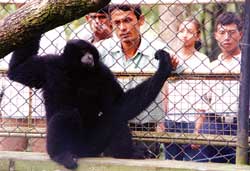 The zoo has been getting so many leopards captured by villagers on the outskirts of the Valley, that it has now started translocating them to Chitwan. The latest leopard is from Taplejung. Historically, the zoo's track record with leopards has been sketchy. They were fed buffalo meat, but leopard prey consists of smaller animals so the management switched to chicken. The keepers hope periodic inspections, medication against fleas, a controlled diet and a better living environment will make the latest addition to the family more comfortable.