
jhola
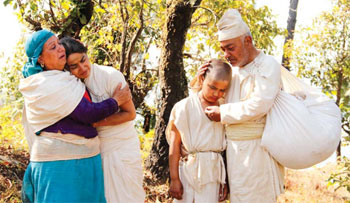
Based on author Krishna Dharabasi’s story of the same name, the film begins when an old man called Ghanashyam (Sujal Nepal) leaves his bag for a night at the writer’s home. Suspicious, the writer checks the contents of the bag only to find an old manuscript which contains 11 short stories. As Dharabasi starts reading, he is transported to Nepal of the 18th century. We are introduced to a young Ghanashyam who lives with his mother Kanchi (Garima Panta) and his ailing father (Desh Bhakta Khanal). After her husband passes away, Kanchi’s life becomes a nightmare.
Expected to sacrifice herself on the funeral pyre, Kanchi enters almost a daze like state and goes from being a strong-willed, loving mother to a helpless widow. As she prepares herself for the ceremony and Ghanashyam comes to terms with being orphaned, the anguish of both mother and son becomes palpable on screen. While expertly depicting the pain of the protagonists, director Yadav Kumar Bhattarai also explores the tender relationship between a mother and a son, which imbibes Jhola with a soul that has been missing in most Nepali movies pre and post the success of
.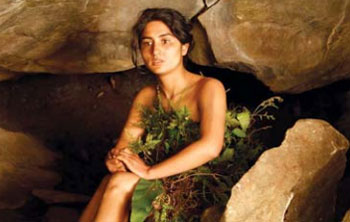
Although the Sati system was abolished decades ago, Jhola is still relevant to today’s Nepal where, unfortunately, cases of sexual harassment, violence against women, trafficking remain all too common. The film may not be technically sound or perfectly enacted, but it succeeds in leaving an impact and inspiring viewers to take a stance.
Sunaina Rana
Jhola was screened by Zonta, an international organisation working to improve the status of women in Nepal, at QFX Kumari on 2 and 5 December.