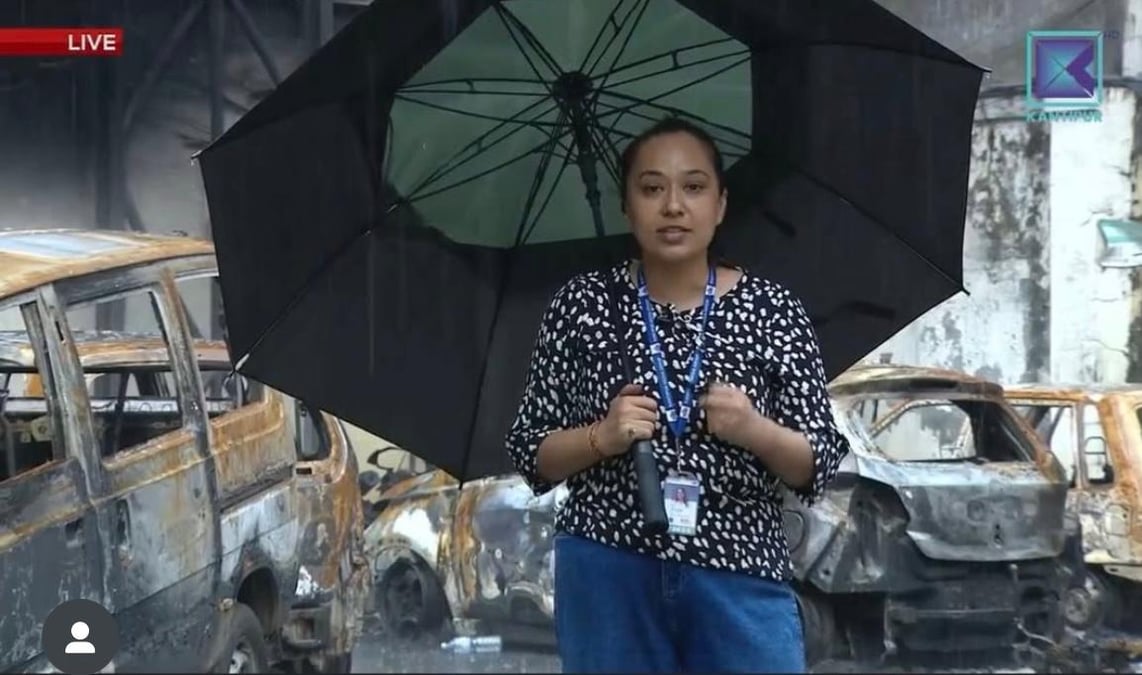
On September 9th, Dashrath Rai from Kantipur TV was reporting from the Lalitpur Satdobato area, when the station’s van with the camera crew, was stopped by protesters twice. “Kantipur Murdabad” the men shouted, and some other men in the crowd showed up to lead them away to make way for the TV van.
As someone who spent about 14 years at KTV, I worried for my former colleagues. On September 8, cameraman Shyam Shrestha Dai had been injured during the shooting at the parliament, where 19 protesters were killed. The death toll would rise later to 72.
As the reports of arson from different parts of the city came in, I texted my former colleague Rupesh Shrestha, Deputy News Chief at KTV, who was reporting from the streets. Stay safe! He said: Huss, didi. Three hours later, he was injured in an attack at KTV.
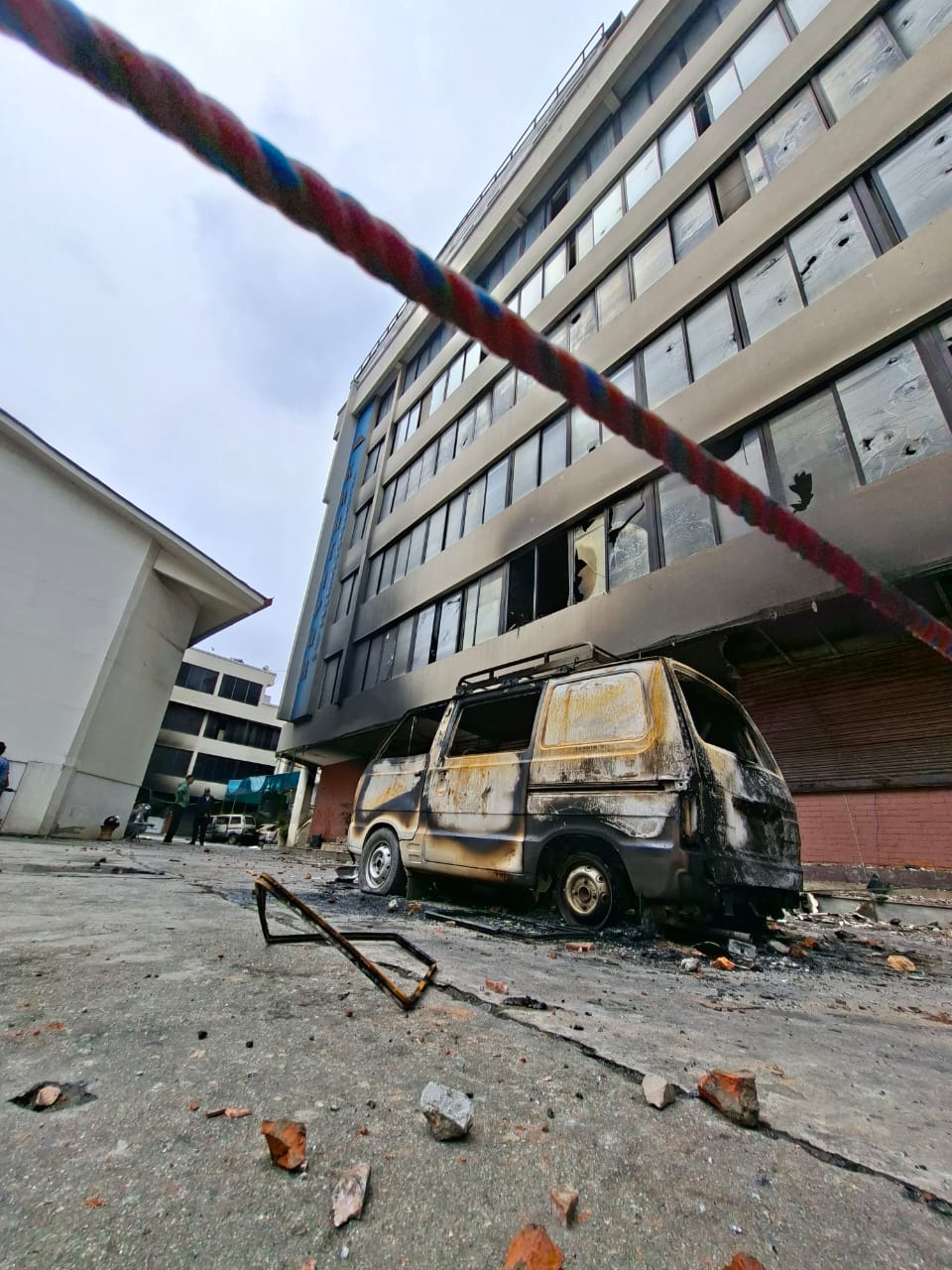
The station was preparing for the 2PM bulletin when the attacks began. First, they pelted stones, then stormed the office.
“We had been alerted of an imminent attack, but we were busy working and didn’t have the time to get away,” Sabina Karki, Presenter and Reporter, says. “I didn’t panic at first and thought we would be able to leave.”
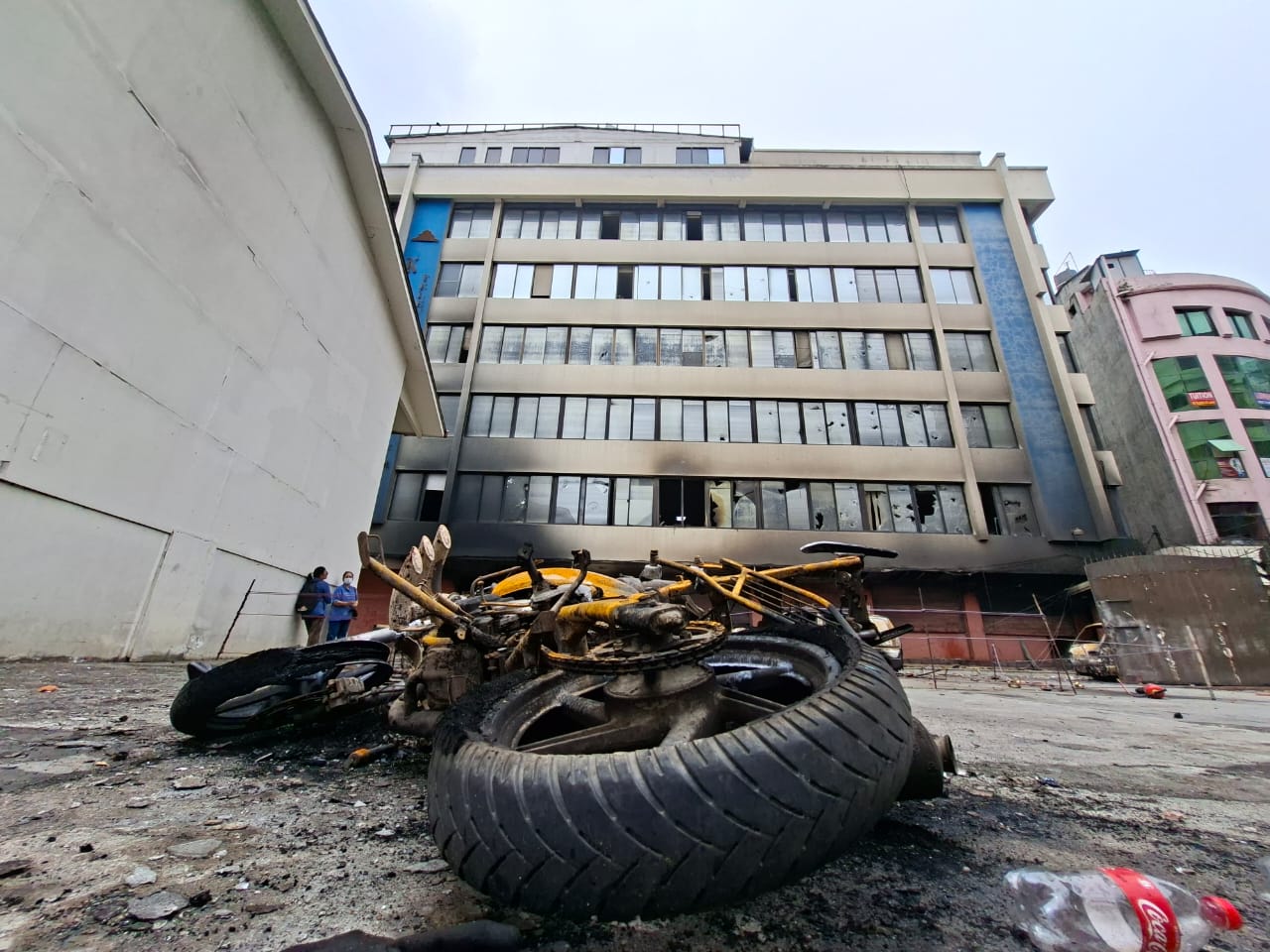
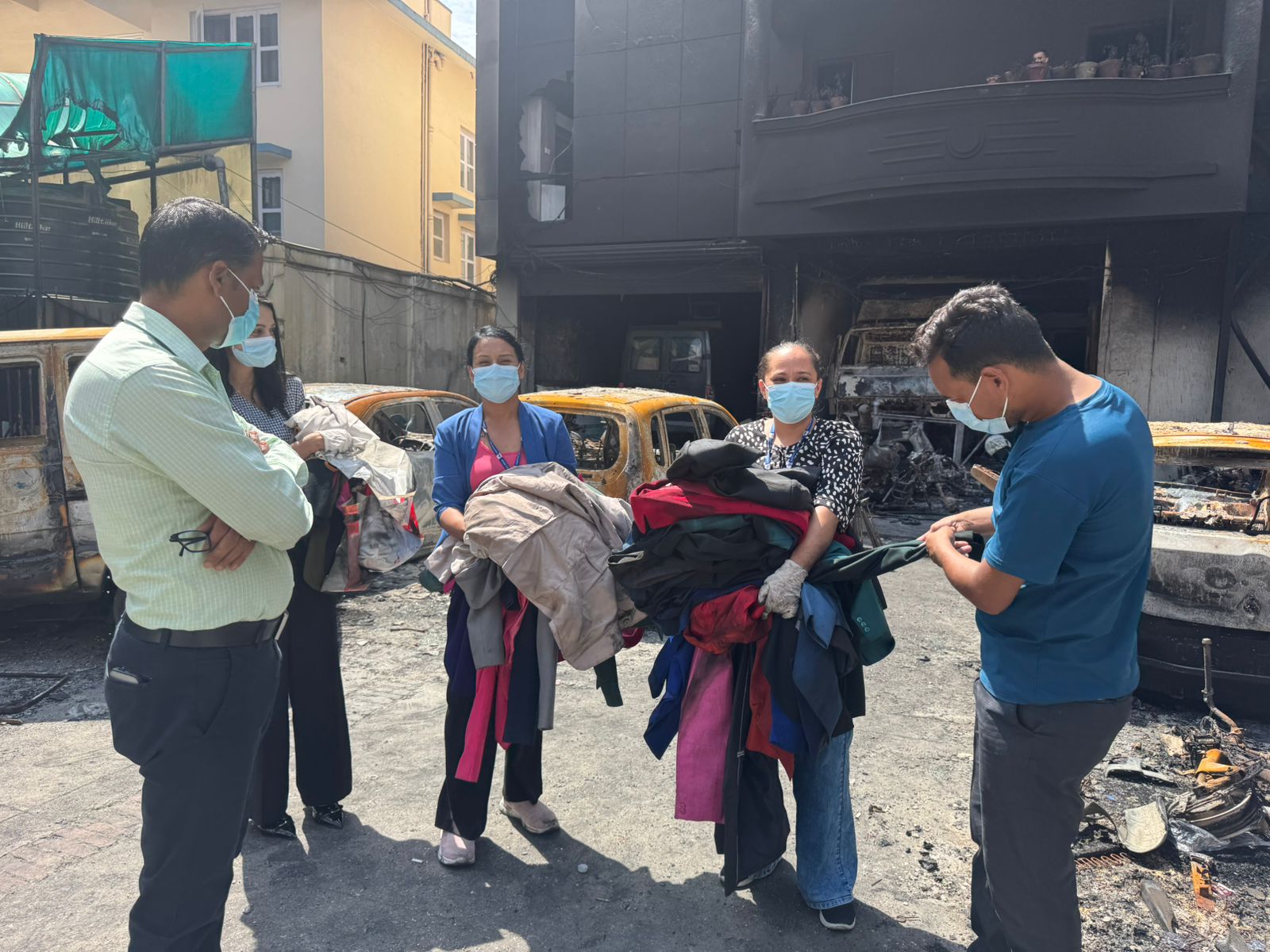
Soon after the attacks began, the staff tried to get out of the building. By the time they arrived on the ground floor, it was in shambles.
“I thought of hiding in the toilet on the ground floor, but my colleague Surendra Kattel said, if this floor is gutted, we’ll never get out. So we went back upstairs and to the studio building [using the bridge that connects the two buildings]. We alerted colleagues at the News Control Room (NCR) who had no idea what was going on outside,” Sabina says.
The staff looking for cover, converged outside the NCR and tried different exit doors but the doors didn’t give. News Chief Bijaya Poudel had to smash the glass door of the studio building so everyone could get out. He was hurt in the process.
“Once outside, we saw people had big sticks, knives and someone even had a gun. I felt like I was in a movie scene or perhaps a war zone. We were so helpless. We didn’t know what they would do to us. We stood still,” Sabina recalls. “And then a stranger grabbed my hand and said get out of here and dragged me by the hand and left me outside the office gate.”
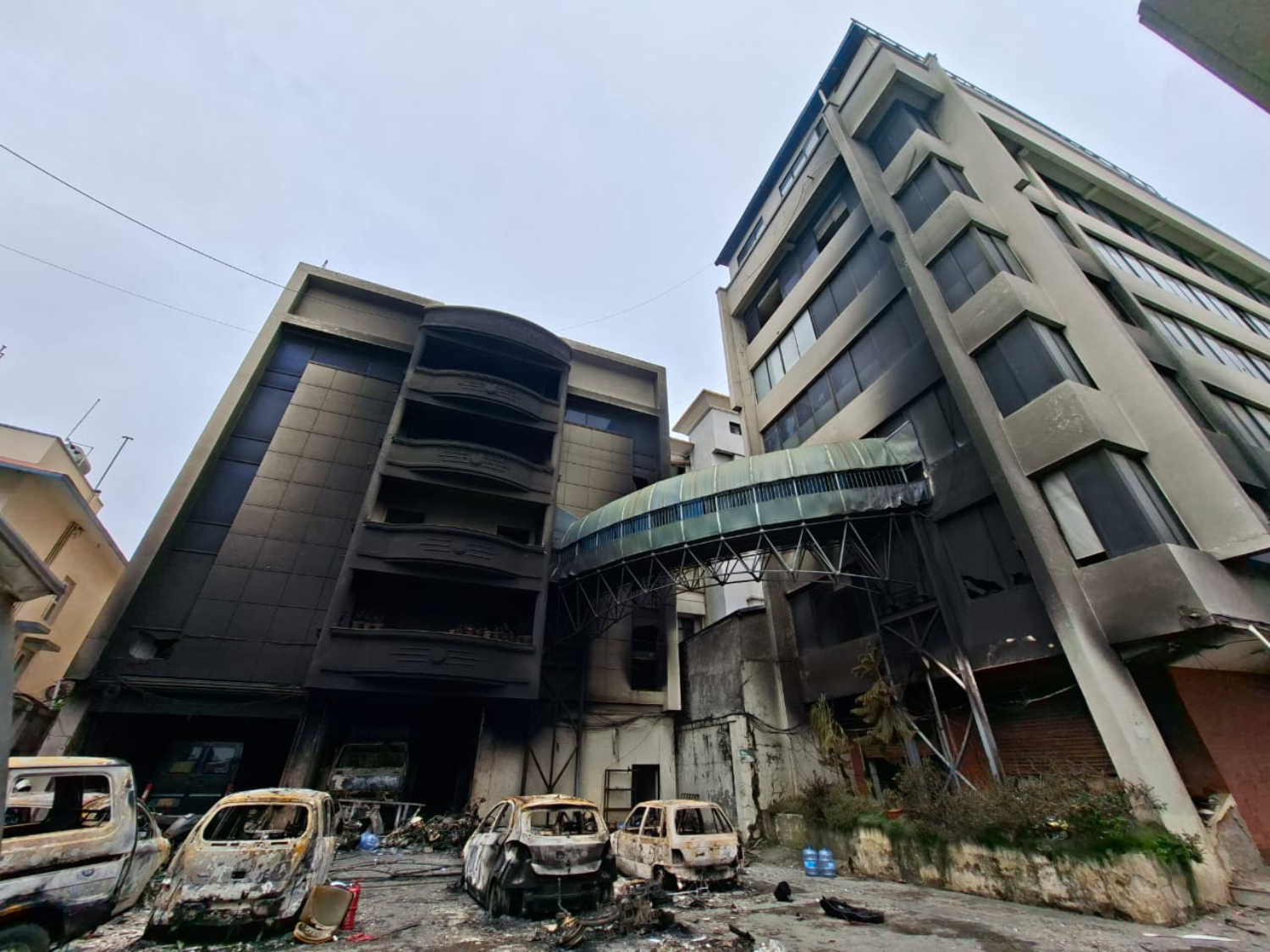
Some others were able to leave with Sabina. They pushed and jostled past protesters to get away from the building but when they tried to check on colleagues, armed men stopped them and made them leave. They ran past Kantipur Hospital and escaped into the inner lanes, navigating scenes of vandalism on the streets. A police station had been attacked.
They sought shelter at a random, private home where Sabina waited for almost two hours and then shifted to a colleague's house to shelter for another couple of hours, before she was able to get home that night.
“I couldn’t process anything. After I reached home, I felt scared.”
Rupesh, who was working on a special editorial when the attack happened, was one of the last to leave the station building. As someone who had been on TV a lot, covering some major political events in the recent past, he became an easy target.
“I had been doing live TV, so I was still wearing my studio attire and that might have made it easy for them to identify me,” Rupesh explains. “I was leaving through the gate when they started to hit me. My glasses fell and punches rained down on me. Some colleagues put their palms together and asked the vandals to let them go. They also told me to say sorry. And I said, why must I apologise when I haven’t done anything wrong? They hit me some more. I raised my arms in surrender.”