
.jpg)
It has been 15 years since cyclists in Kathmandu have been gathering on the third Saturday of every July to circumambulate the Valley rim as part of the Kora cycling challenge.
Kora is a Buddhist term meaning a meditative walk around a shrine or a sacred mountain like Kailash. This works well as a cycling loop around Kathmandu Valley, gives bicycle enthusiasts the adventure of a lifetime, and they are never far from a road, so they can take any length of the course that suits them.
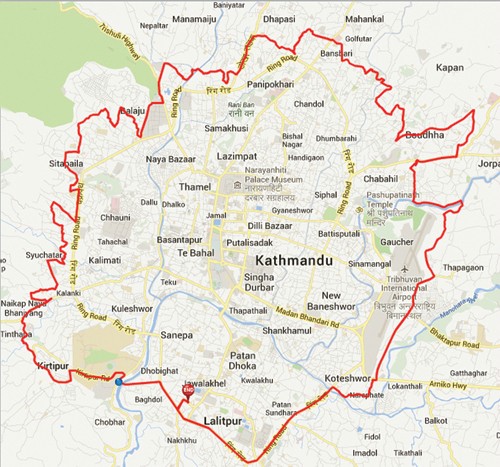
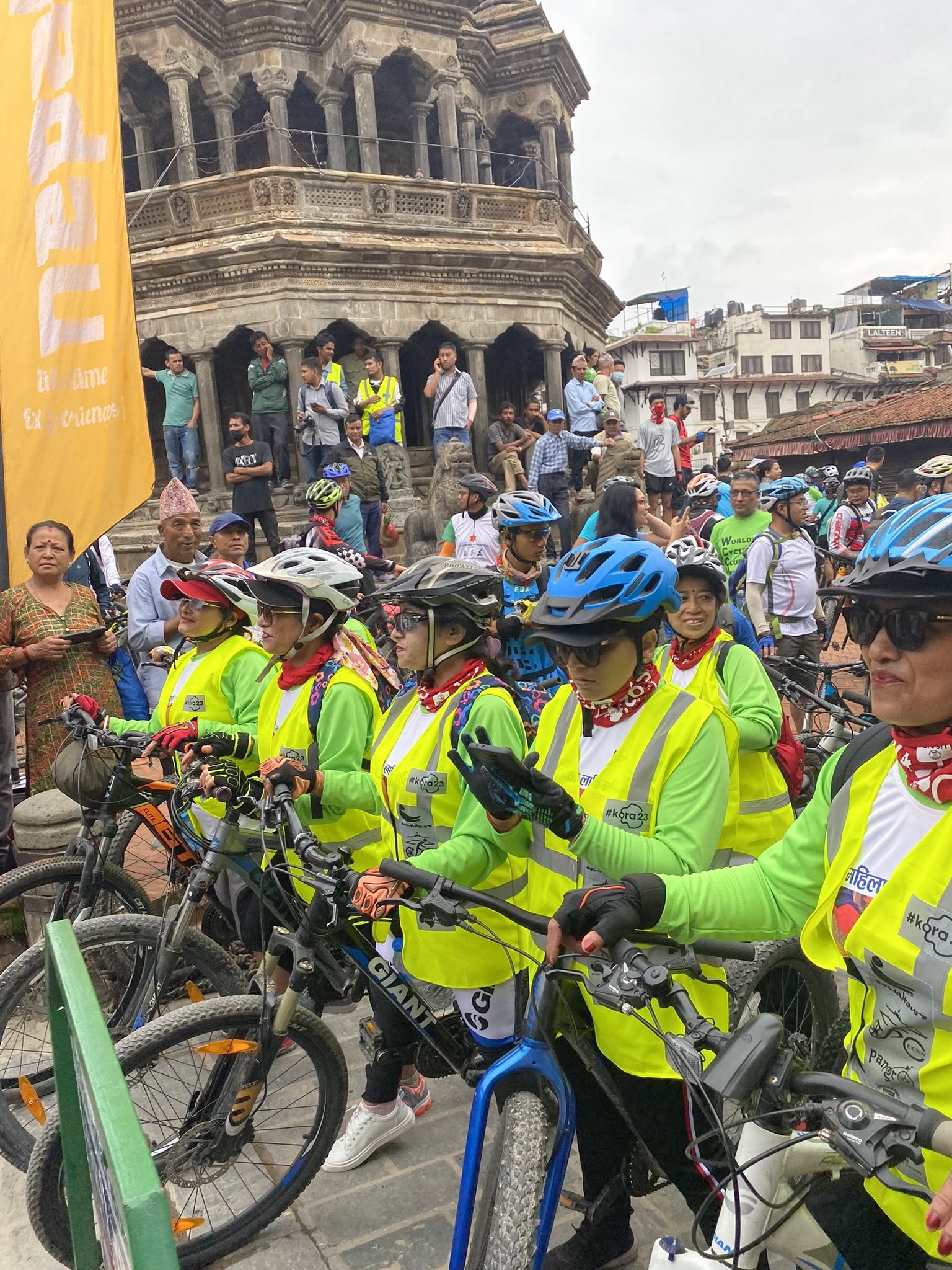
The challenge is flagged off at Patan Darbar Square, and the basic 50km route follows the Ring Road to Chobhar, Kirtipur, then up to Sitapaila, Nagarjun, circling around the north of the valley through Gongabu, Golphutar and Boudha, behind the Airport, and on to Imadol before ending up back at Patan.
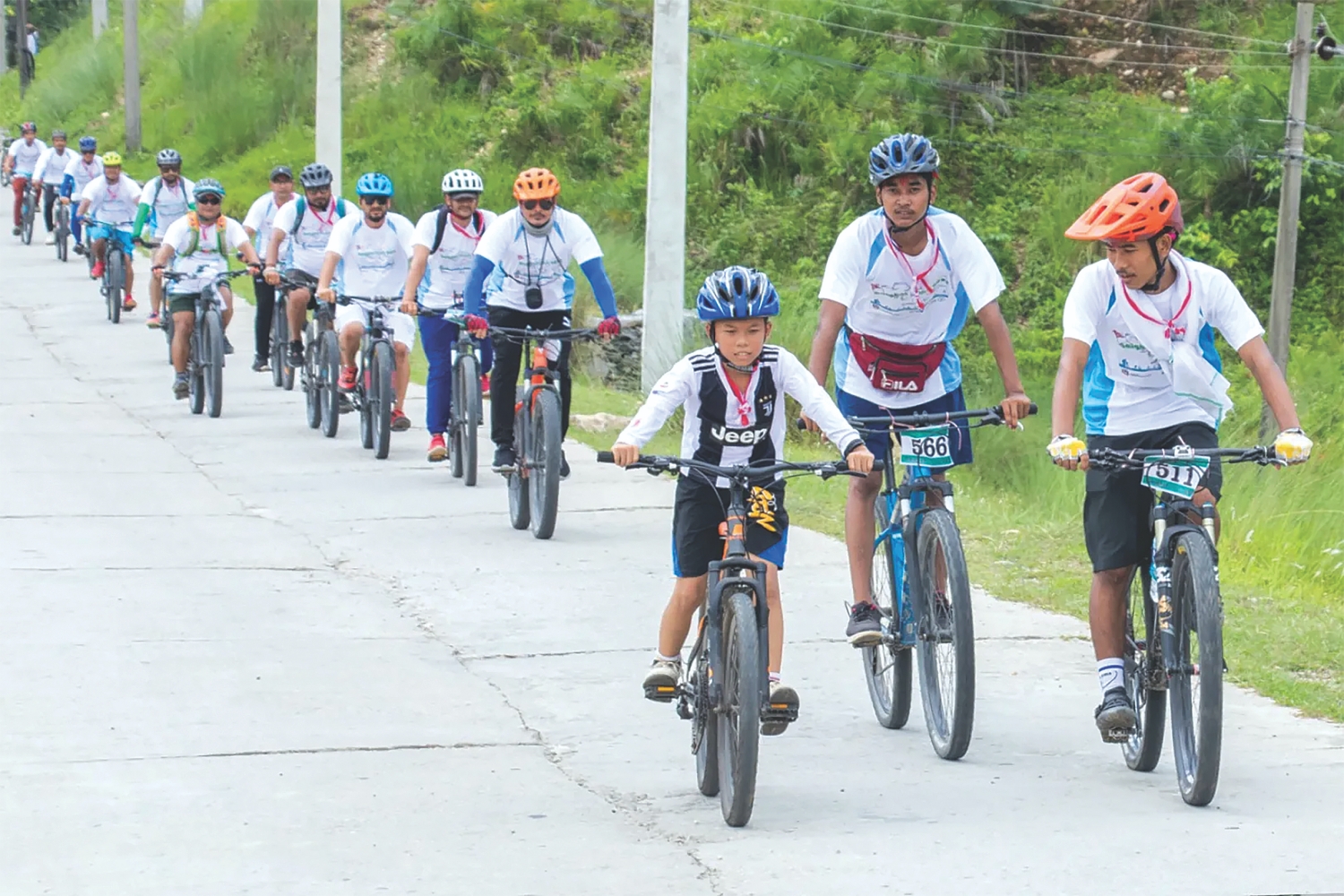
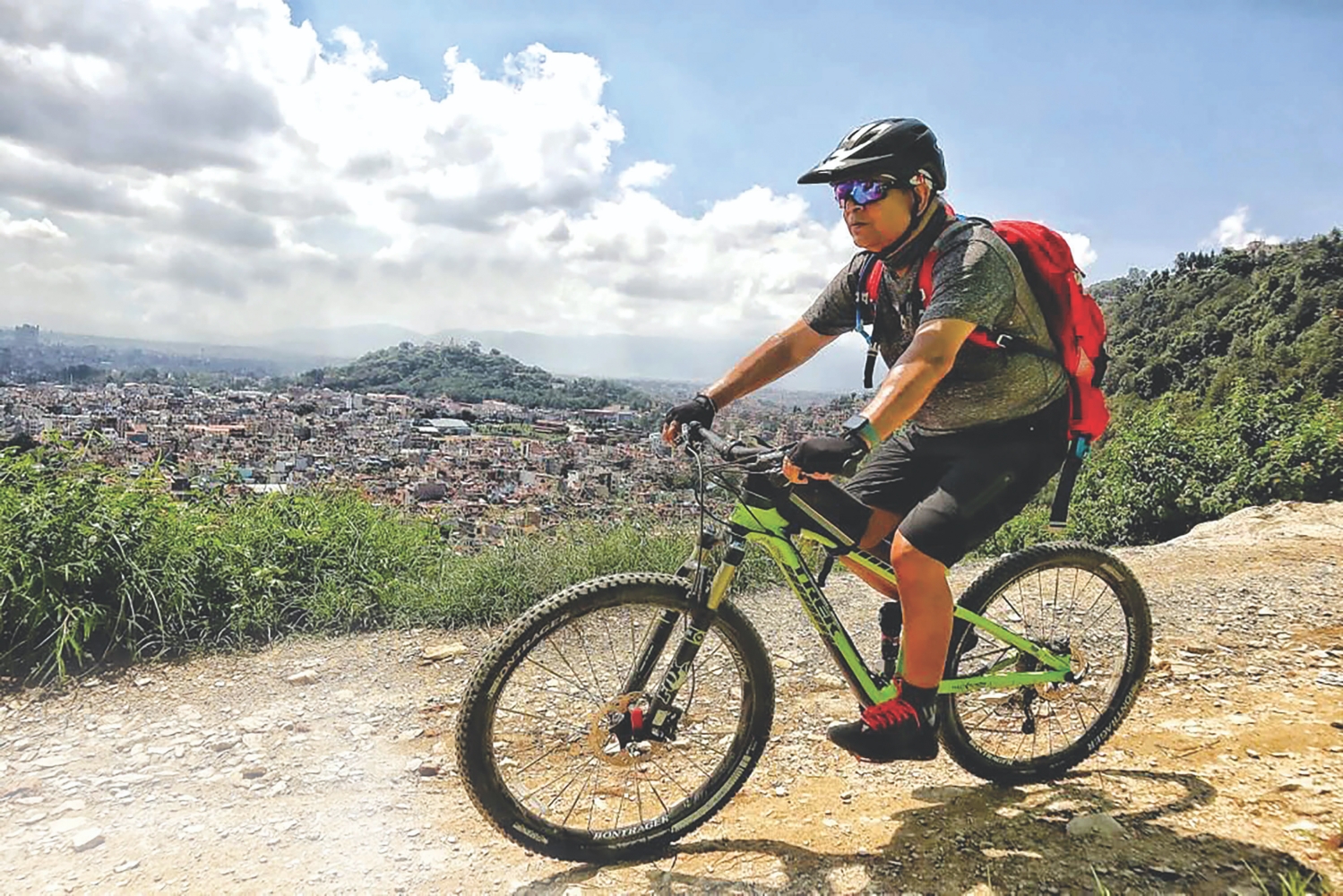
There are other distances for more fit mountain bikers who may choose to do 75, 100, or even the 165km ultra which has 4,000m of altitude gain. With the main Kora day only six weeks away, more than 1,500 riders have already registered with 51 plucky participants opting for the 165km category.
The shortest of the four rides is designed for beginners and amateurs, but can be a challenge with its brisk climbs. The Good to Expert 75km circuit involves more adventurous cycling, with steeper climbs, while the 100 and 165 are for more experienced endurance riders.
The plan is for Kora 26 to be the biggest one yet, and for it to resemble the many jatra in Kathmandu Valley during the monsoon. And this year, the entire week building up to the main ride will be a festival filled with music, DJs, night rides, events at the pump track, films, and meet-ups.
“The Kora already has all the trappings of a festival, so we thought why not make it a week-long thing,” says tourism entrepreneur Raj Gyawali and founder of the challenge. “What is fascinating from a business perspective is not that it has become such a big annual event, but how it became big.”
The first challenge in 2011 had only 35 riders going around Kathmandu Valley. It was not a race, there were no sponsors and no prize money, just some passionate cyclists riding together. This year the Kora Jatra begins a full week before the 'Mahajatra' with talks, films, music, community gatherings, workshops, skill sessions building up to the main ride on 18 July.
Over the years, the Kora has now grown into a major event, gathered over 50 sponsors like Turkish Airlines which offers Click2Win prizes for the best Instagram photographs, gifts from Kar.ma Coffee, Sasa Twa Newari Restaurant, and Tuyou Dental Care for those who register.
The Kora has now become a part of Nepal’s adventure tourism brand, and occupies a unique positive space that combines a healthy workout with endurance, charity for women’s health, education to community initiatives, and respect for nature.
The event has grown organically over the years, with social media disseminating and amplifying the message far and wide. Direct online reach of the Kora last year exceeded one million views, promoting Nepal’s tourism brand.
This year, the Kora is also being held on the same day through 'franchises' in 20 other locations across Nepal.
WOMEN RIDERS
Raj Gyawali is excited that what he started as “just a ride” has now grown into a “national cultural movement” and even spreading across the world. Asked to encapsulate what the Kora is all about he replies: “Active. Community-driven. Environmentally aware. Purpose-led. Experience-oriented.”
This year, 1,528 riders have already registered for various distances, says Shailesh Joshi who designed the Kora website and the online registration forms under his alias smjrifle. The proportion of female riders continues to grow with 22% women this year, compared to 16% in 2025. And this year there are bicycling enthusiasts coming from Singapore, India, Canada, and Finland.
Just like the Machindranath chariot festival from Bungmati to Patan, the Kora route has not changed since 2011, even though the Valley’s outskirts have now become semi-urban.
“Nobody needs to be coerced to go to the Machindranath Jatra, they go every year because it is loud and it is fun,” says Gyawali, “We want the Kora also to be a free, communal thing. It is not a rally, the point is that everyone is riding together.”
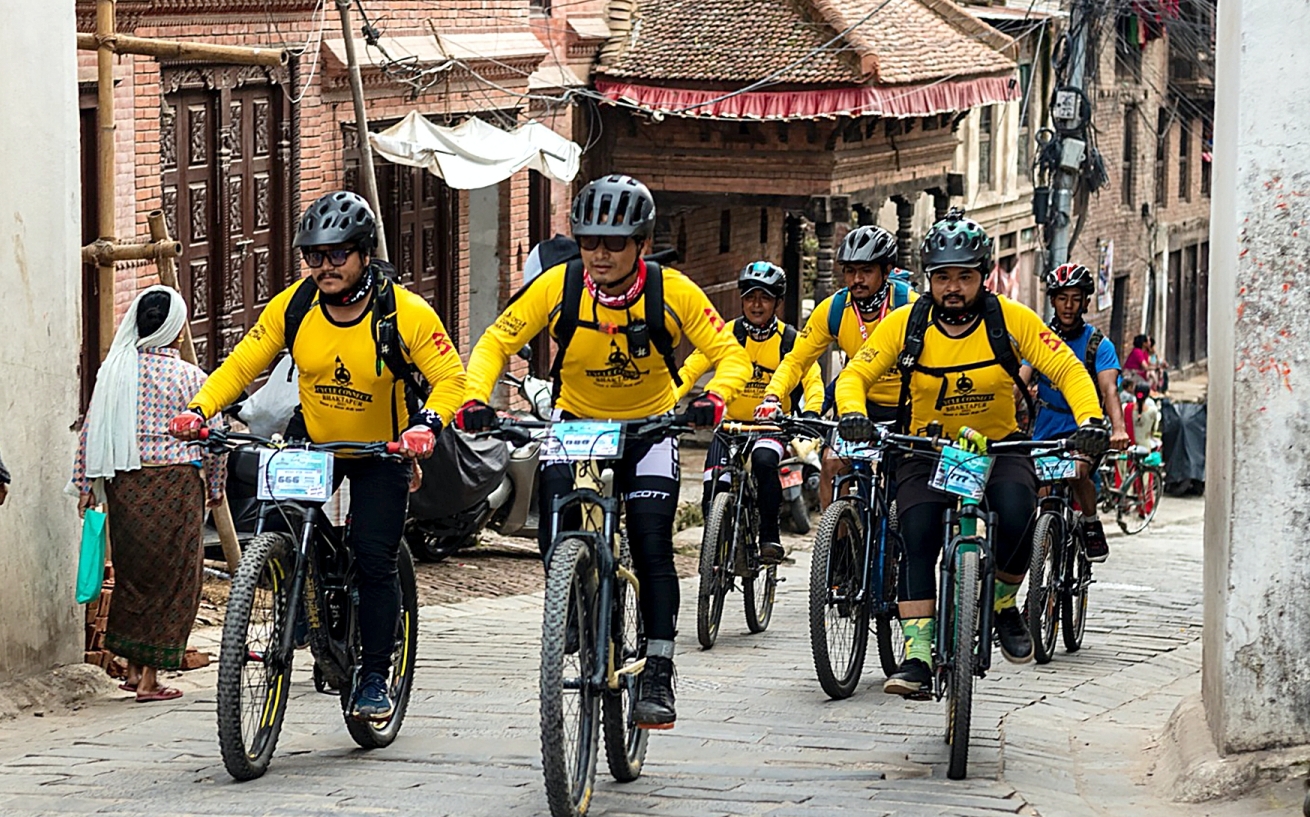
The pleasure of the riding is the focus. Like traditional jatra, the Kora also creates participation across all layers of society from children riding with parents, to university students, bankers, a sprinkling of CEOs and even a former Army chief.
“This diversity is why it has become such a powerful visibility platform,” says Gyawali. “Not visibility in the advertising sense. Visibility through emotional association.”
The Kora’s community participation has been a constant through the years. Says Bhishan Hari Silwal, who participated in the 2018 edition: “Around half an hour into it, everybody settles into groups according to their ability. Faster riders go ahead, there are all age groups, it is pretty wholesome.”
Another factor that makes participation genuine is the merchandise like the jersey, and neck buff in particular which has become a signature of a Kora participant. This year’s buff is orange coloured, and adds to the team spirit.
Finishers all receive a Made in Nepal medal, which goes with the sustainability focus of the event that discourages use of plastic, and flex banners and littering.
SPONSORS
The 2025 edition had BYD and B&B Hospital on board as sponsors, and Himalayan Everest Insurance will continue providing coverage for accidents. Turkish Airlines is also on board with its Kora Click2Win photo contest with the top prize being a roundtrip ticket to Istanbul.
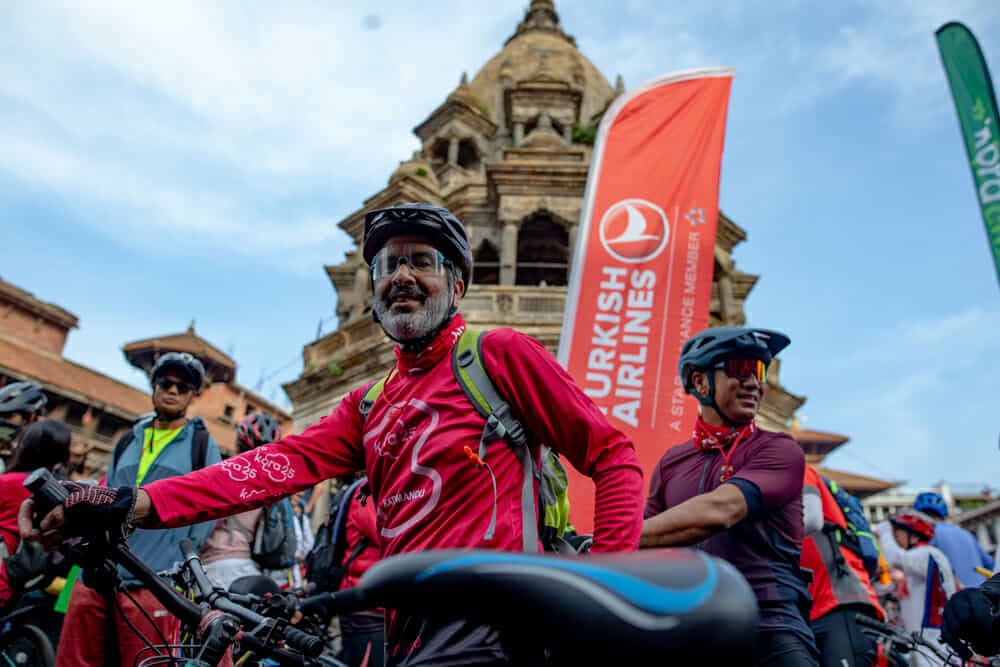
Besides sponsors, the Kora is itself a fund-raising event with non-participants contributing for each km a rider covers for collective impact. The wider public gets involved for a good cause. Past Koras have generated over Rs8 million for charity.
This year, funds go to support EDUKICK working with children in Sarlahi with football training during the FIFA World Cup happening at the same time as the Kora.
Register here.
SUSTAINABLE LIFESTYLE
The Kathmandu Valley Kora has sustainability as its focus. Although it is not designed as such, it meets in practical ways many of the 17 targets set by the United Nations for its Sustainable Development Goals to be met by 2030.
SDG 3 – GOOD HEALTH AND WELL-BEING
The Kora encourages daily physical activity, promotes mental well-being and bicycling makes streets safer.
SDG 4 – QUALITY EDUCATION
This year’s Kora is a weeklong jatra with workshops on skills-based learning for youth, first-time cyclists and awareness programs for road safety.
SDG 5 – GENDER EQUALITY
This year, more than a quarter of the expected 3,000 participants will be women, giving them visibility and confidence in public life.
SDG 8 – DECENT WORK & LOCAL ECONOMY
The Kora Jatra supports local businesses with visibility, and injects cash into the circular economy at the local level
SDG 11 – SUSTAINABLE CITIES & COMMUNITIES
By promoting people-first mobility, the Kora highlights the value of shared public spaces to make the city more sustainable, liveable and inclusive.
SDG 12 – RESPONSIBLE CONSUMPTION & PRODUCTION
Bicycles are human powered, do not burn fossil fuel and the Kora itself does more with less and has a low-waste event design.
SDG 13 – CLIMATE ACTION
By making bicycling high profile and thrilling, it helps individuals to switch to sustainable transport options, reducing petroleum imports and makes climate action do-able.
SDG 17 – PARTNERSHIPS FOR THE GOALS
The Kora is a public-private partnership of municipalities, businesses, communities, and civil society, and has collective impact.