
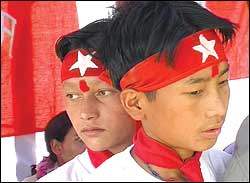
 Reshma Singkhawal was studying in her room when she heard gunshots. Family members started screaming. When she got there, the 16-year-old found her father lying in a pool of blood. Two Maoist assassins had killed Hari Krishna Singkhawal, a police officer at Gahiti Tol in Bhaktapur two weeks ago. Hari Ratna, 38, was the sole supporter of a 15-member clan, including his wife and six children.
Maoist leader Prachanda's statement this week that the group will no longer target 'low-ranking' security personnel may bring a halt to killings like these, but it is already too late for many. There are thousands of Nepali children who have witnessed horrific murders of their loved ones, forced to watch torture, survived gun battles inside their classrooms or suffered bereavement. If the conflict does not wind down, these numbers will grow, and child rights activists say there is almost nothing being done to address the psychological trauma the children continue to suffer.
Reshma went into post-traumatic shock after witnessing her father's murder and for a week her mind segued into temporary amnesia, unable to recognise even close family. Her four younger sisters don't sleep well, and are plagued by nightmares. Nilu, 14, once the most soft-spoken among her sisters, now talks of revenge. "When I grow up, I will avenge my father's death," she says. Her younger sister Nilima, 12, is more controlled. "I want to be a police officer like my father and serve my country," she says.
In the last seven years of the 'people's war', more than 7,000 children have been affected. Human rights groups have kept track of the statistics-numbers of children killed, abducted and tortured-but little is reported or done about the most serious problem facing young survivors: their trauma. Despite the crying need, no organisation has investigated the psycho-social effect of the conflict on children. Some groups are working with orphans, internally displaced children, but the need is far greater than these isolated and uncoordinated efforts. Child psychologists have noted two traits in children suffering post-traumatic shock: intense fear or obsession with revenge. Four-year-old Rabina Regmi, who survived a firebomb attack on a bus last year in which her mother died ('Why the children?', Nepali Times, # 121) still talks of killing Maoists.
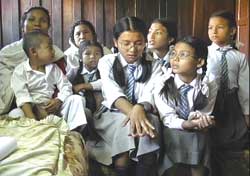 "If such children do not get enough support or counselling, the level of trauma will get severe and impede their mental development," says Gauri Pradhan of CWIN (Child Workers In Nepal). This Tihar, many children are cowering in fear when they hear firecrackers going off-it reminds them of gun battles they have witnessed.
Even away from the war-zone, children who watch gory images on television of corpses piled high after bloody battled are psychologically affected. "Images such as these not only re-traumatise children who lost parents, but also increase the psychological stress levels of children living in non-combat areas," says Pradhan. It makes children distracted, moody, not interested in studies, or sometimes more prone to violence.
A seven-year-old student of St Xavier's School was so traumatised by the images he saw of a row of Maoist dead on television, he stopped going for classes. When he finally mustered the courage to go back to school, he would cry in fear. It took long sessions of counselling from his teachers and constant support from friends and family before he felt secure again.
The Maoist targetting of schools, attacks on school teachers, closing down of schools all over the country have also given children the impression that schools are war zones. This has spread fear and panic among young children who see themselves as targets of violence. It remains to be seen if Prachanda's promise will mean that the schools will reopen and the children will get a chance to study normally. Bhola Mahat, a human rights activist based in Nepalganj says children in the rural mid-west are especially badly affected. "I have met many children who live in constant fear that they might get killed at anytime, while walking to school or playing outside," he says.
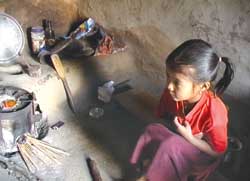 The Maoists threaten and use abusive language on children when they come to force them to join mass meetings or take adolescents away for forced recruitment and training. On the other hand, the security forces patrols are unnecessarily rough with children and teachers who refuse to tell them where the Maoists are. They keep quiet out of fear of reprisal from the Maoists, but the security forces take the silence to mean sympathy or support for the rebels. "The children are caught in the middle," adds Mahat.
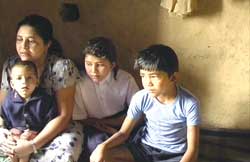 "When the problem goes straight up to the psychologists, it might end up over-medicalised and too psychologised," Jordan told us. CVICT says the most important way to deal with children's trauma is to allow them to continue with their regular routine like going to school, playing with friends and providing care.