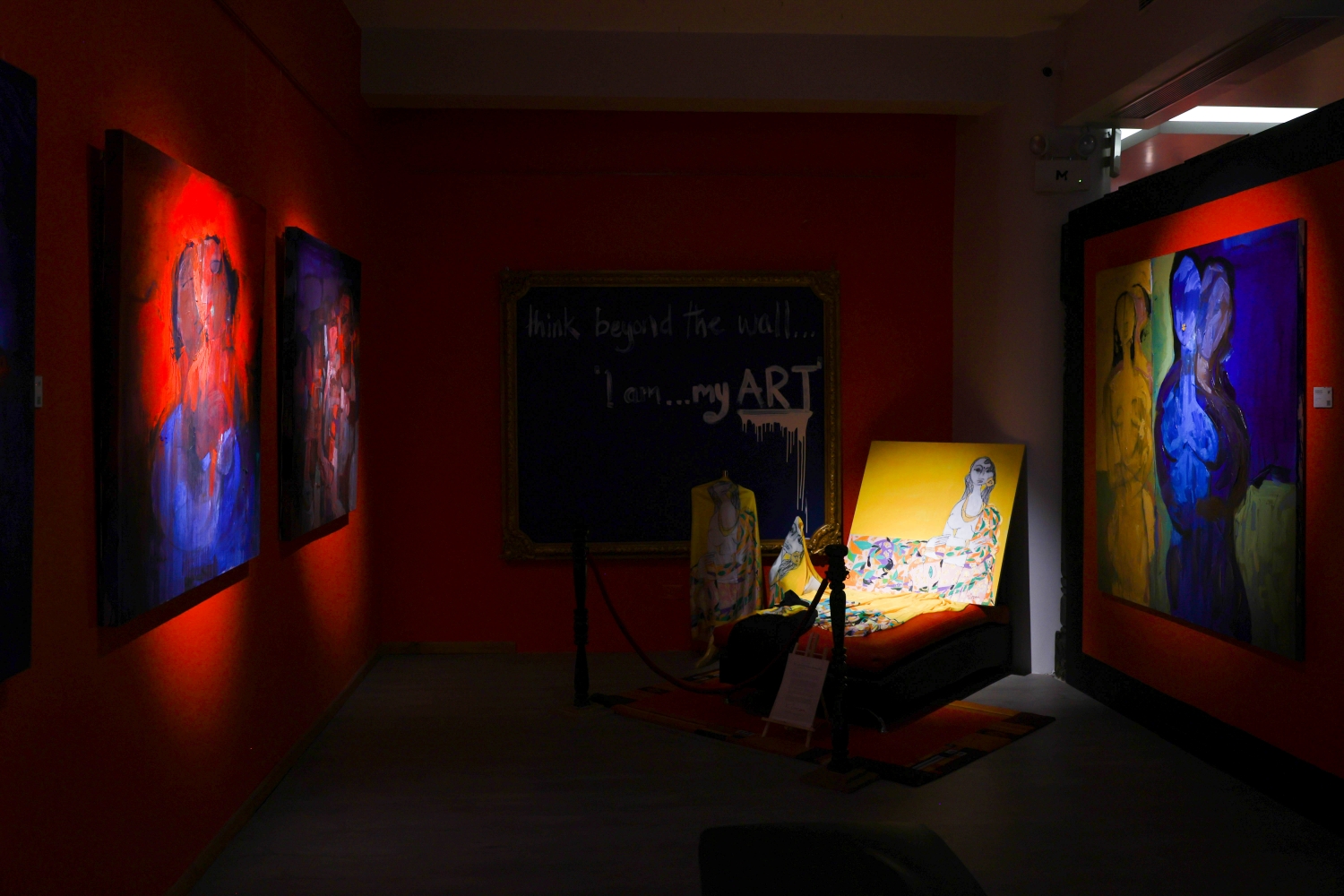
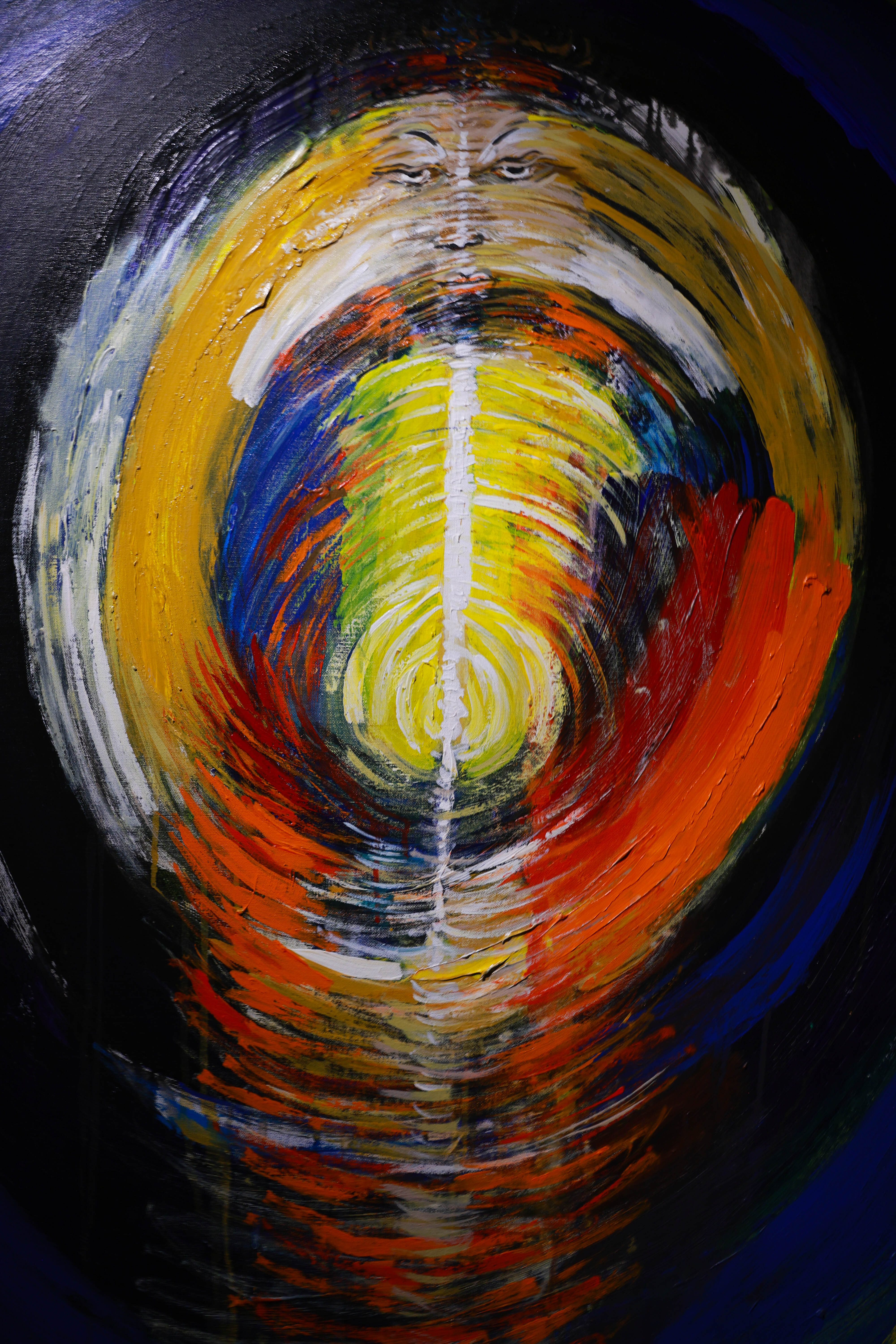
For someone who is considered a pioneer of abstract expressionism in Nepal, Kiran Manandhar is abstract about his craft.
At age 68, Manandhar does not see the need to explain himself, or his art. His bold and vibrant brush strokes on canvas capture movement in the temporal and spatial planes.
“I still do not understand what is abstract, there is no way to define it,” Manandhar told us while showing us around his exhibition. “Sometimes, even before I decide what I am about to create, a drop of colour hits the canvas. That’s the beginning of a dialogue.”
The ongoing exhibitions are bursting with the products of Manandhar’s lively palette and wide imaginings. The visuals are quick to grab the visitor’s attention, but the emotional depth lingers longer.
In his series, Women, what initially look like distorted, animalesque forms reveal themselves to be powerful abstractions of the essence of womanhood. It is all there: strength and vulnerability, nurturing and rebellion, solidarity and sorrow, compassion and love.
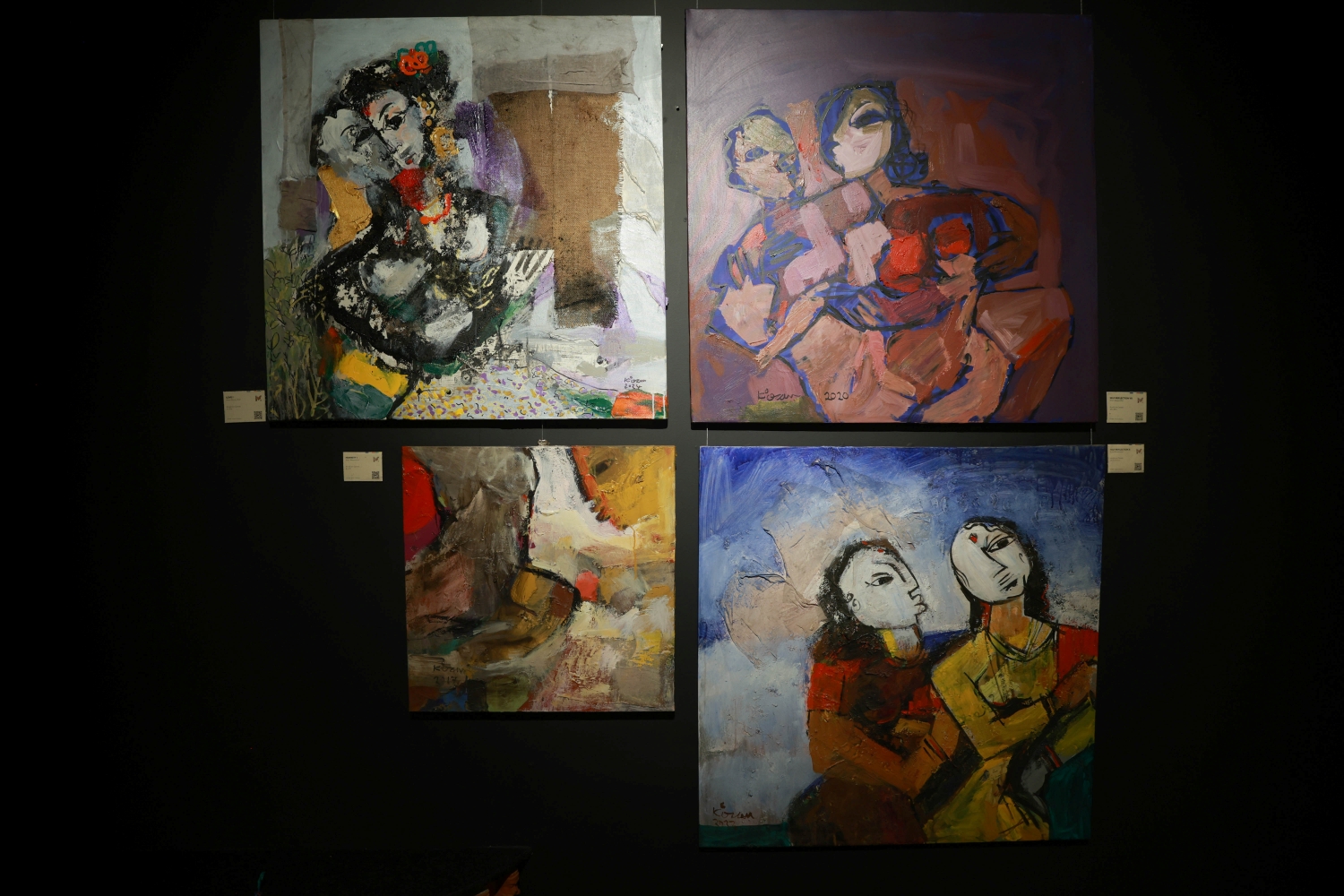
The works portray the patriarchy, and how Nepali women have become each other’s pillars. The complexities of womanhood are often best understood only by women themselves, but Manandhar seems to have the heart, mind and eyes to explore them artistically.
Several pieces from the Women series and Manandhar’s other artworks, are currently on display across Kathmandu Valley in the Museum of Nepali Art, Kathmandu Art House, Kathmandu Guest House and Patan Museum. The exhibitions honour the maestro’s five decades of artistic exploration and features not just his iconic works, but also represent a timeline of his life journey.
As a child, Manandhar used to accompany his mother to the Bishnumati River, which at the time was clean and wide. During her evening puja, he would watch the flicker of votive lamps as they floated down the dark waters.
Later, he sculpted sand figurines on the banks or rendered flowers in watercolour. Painting soon became a passion, but the young Manandhar was a rebel: rigid schools never held his interest and he preferred to roam by the river. Growing up without a job, he survived on little, searching for free meals outside mosques, and spent hours fishing and observing life unfold around him.
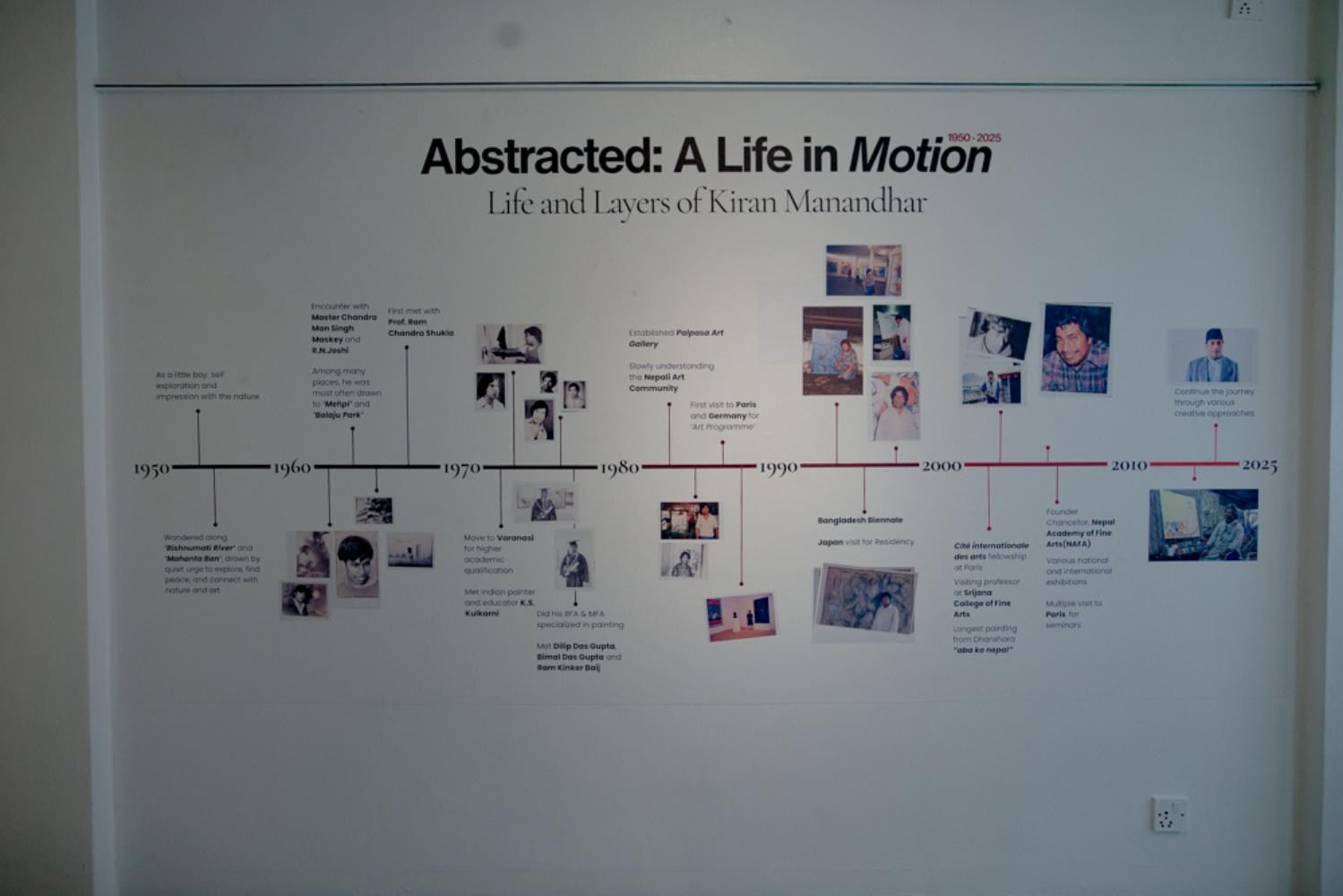
He ended up in Varanasi. He remembers sleeping on railway platforms, eating leftovers from garbage piles and being beaten and chased away by the police. Yet, in letters home, he wrote that he was staying in hotels and dining lavishly.